

Trading is like buying and selling things to make money. Imagine you buy a toy today and sell it tomorrow for more money – that’s trading! But in the real world, people trade stocks, crypto, and other things.
There are two popular ways to trade: day trading and swing trading. Day trading means buying and selling everything in one day. Swing trading means holding onto your trades for a few days or weeks.
Both styles can help you make money, but they work very differently. One needs you to watch screens all day. The other lets you check your trades just a few times. One is fast and exciting. The other is slower and calmer.
In this article, we’ll explain swing trading vs day trading in the simplest way possible. You’ll learn which one fits your life, your money, and your personality. By the end, you’ll know exactly which trading style is better for you!

What Is Day Trading and How Does It Work?
Day trading is when you buy and sell stocks, crypto, or forex within the same day. A day trader never holds anything overnight. They close all their trades before the market closes.
Think of it like this: You buy a lemonade stand in the morning and sell it by evening. You don’t keep it overnight. That’s day trading!
Day traders watch the market all day long. They look for small price changes and try to make quick profits. They might make 5, 10, or even 20 trades in a single day. The goal is to catch small movements and earn money from each one.
Day traders need to be fast thinkers. They use charts, patterns, and news to decide when to buy or sell. It’s like a video game where you need quick reflexes!

Day Trading Strategies (Beginner-Friendly)
Day traders use different strategies to make money. Here are the most common ones explained simply:
Scalping: Scalping means making lots of tiny trades. You buy, sell quickly, and make small profits many times. It’s like collecting pennies fast!
Momentum Trading: You find stocks moving up fast and jump on the ride. When they slow down, you get off. It’s like catching a fast train.
Breakout Trading: You wait for a price to “break out” from a pattern, then you buy. It’s like waiting for a balloon to pop upward.
News Trading: Big news moves prices fast. Day traders buy or sell based on news announcements.
These strategies need practice, but beginners can learn them with time.
Advantages of Day Trading
Why do people love day trading? Here are the benefits:
- Quick Results: You know if you made or lost money by the end of each day
- No Overnight Risk: You don’t worry about what happens while you sleep
- More Opportunities: You can make many trades every single day
- Exciting: It’s fast-paced and keeps you alert
- Daily Income Potential: Some traders make money every day
Day trading can be thrilling for people who love action and fast decisions.

Disadvantages & Risks of Day Trading
But day trading isn’t easy. Here are the challenges:
- Very Stressful: Watching screens all day is tiring and pressure-filled
- Requires Full Time: You need 6-8 hours daily to day trade properly
- High Risk: You can lose money very quickly
- Expensive Fees: Making many trades costs money in fees
- Needs More Capital: Some places require $25,000 minimum to day trade
- Emotional Burnout: The constant pressure can exhaust you mentally
Day trading demands dedication, discipline, and strong nerves. It’s not for everyone.
What Is Swing Trading and How Does It Work?
Swing trading is holding trades for several days or weeks. Instead of closing everything today, swing traders keep positions open longer.
Imagine planting a seed and waiting for it to grow. You don’t check it every hour. You check every few days. That’s swing trading!
Swing traders look for bigger price movements. They don’t care about tiny changes during the day. They want to catch the “swing” – when prices move up or down over several days.
A swing trader might check their trades once or twice daily. They spend maybe 30 minutes to 2 hours managing trades. The rest of the day, they can do other things – work a job, spend time with family, or enjoy hobbies.
Swing trading is perfect for people who want to trade but don’t want trading to become their whole life.

Swing Trading Techniques Explained
Swing traders use different techniques. Here are the simplest ones:
Trend Following: You find a trend going up or down and follow it for days. Ride the wave!
Support and Resistance Trading: Prices bounce at certain levels. Swing traders buy at the bottom (support) and sell at the top (resistance).
Pattern Trading: Traders look for chart patterns that repeat and predict what happens next.
Moving Average Strategy: Using lines that show average prices helps traders see trends clearly.
These techniques are easier to learn than day trading strategies because you have more time to think.
Advantages of Swing Trading
Why do many traders prefer swing trading? Here’s why:
- Less Stressful: You’re not glued to screens all day
- Works With a Job: You can swing trade and work full-time
- More Thinking Time: You can research and plan carefully
- Lower Trading Costs: Fewer trades mean fewer fees
- Better Sleep: Your trades work while you sleep
- Bigger Profit Targets: You aim for larger gains per trade
Swing trading fits real life better. You don’t need to quit your job or sacrifice everything.

Disadvantages & Risks of Swing Trading
But swing trading has downsides too:
- Slower Results: You wait days or weeks to see profits
- Overnight Risk: News can change prices while you sleep
- Requires Patience: Not everyone can wait days for results
- Fewer Trading Opportunities: You make fewer trades overall
- Holding Through Dips: Prices might drop before rising again
Swing trading needs patience and trust in your analysis. Impatient people might struggle.
Day Trading vs Swing Trading: Key Differences
Now let’s compare day trading and swing trading side by side. Understanding these differences helps you choose wisely.
Time Frame & Trade Duration
Day Trading: Trades last minutes to hours. Everything closes before market close.
Swing Trading: Trades last days to weeks. Sometimes even months.
Think of day trading as a sprint. Swing trading is a marathon.
Trading Frequency
Day Trading: You might make 5 to 50 trades daily.
Swing Trading: You might make 5 to 15 trades monthly.
Day traders are busy all day. Swing traders make fewer, bigger moves.
Time & Screen Commitment
Day Trading: Needs 6-8 hours of screen time daily.
Swing Trading: Needs 30 minutes to 2 hours daily.
Day trading is a full-time job. Swing trading is part-time friendly.
Stress Level & Emotional Pressure
Day Trading: High stress! Every minute counts. Quick decisions needed.
Swing Trading: Lower stress. More time to think and plan.
Day trading can burn you out fast. Swing trading lets you breathe.

Capital & Equipment Needed
Day Trading: Often requires $25,000+ (US pattern day trader rule). Needs powerful computers and fast internet.
Swing Trading: Can start with $500-$1,000. Regular laptop and normal internet work fine.
Day trading has bigger barriers to entry. Swing trading is more accessible.
Profit Speed vs Patience
Day Trading: Quick profits (or losses) daily.
Swing Trading: Profits come slower but potentially bigger per trade.
Day traders want money fast. Swing traders are willing to wait for better rewards.
Day Trading vs Swing Trading in Different Markets
Both trading styles work in different markets. But which style works better where?
Crypto Day Trading vs Swing Trading
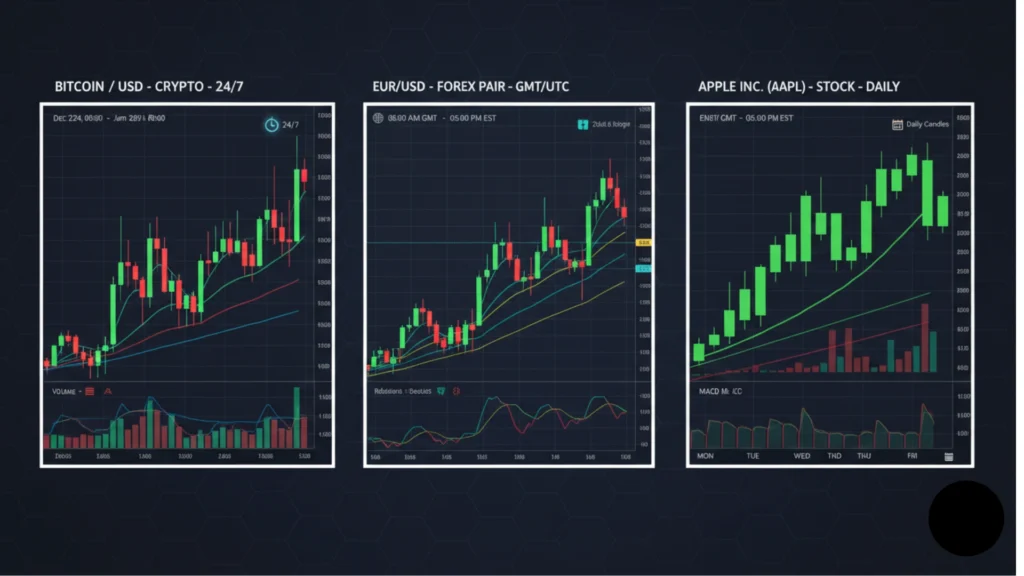
Crypto markets never sleep. They’re open 24/7.
Day Trading Crypto: Great for day traders because crypto moves fast. You can catch big movements within hours. But it’s extremely volatile and risky.
Swing Trading Crypto: Also excellent. Crypto has strong trends that last days or weeks. Perfect for swing traders who want to catch major moves without constant watching.
Winner? Both work well, but swing trading crypto is less exhausting since you don’t need to monitor 24/7.
Forex Day Trading vs Swing Trading
Forex is the currency market. It’s also open almost 24/5.
Day Trading Forex: Very popular. Forex moves fast during market sessions. Day traders love the quick action.
Swing Trading Forex: Also works great. Currency trends can last weeks. Swing traders can capture these longer movements.
Winner? Day trading is slightly more popular in forex, but both styles succeed.
Stocks: Which Style Works Better?
Stock markets have set hours (like 9:30 AM to 4 PM in the US).
Day Trading Stocks: Perfect for day trading since markets close daily. You’re forced to exit positions, which matches day trading perfectly.
Swing Trading Stocks: Excellent for stocks! Many stocks trend for days or weeks. Earnings reports and news create great swing opportunities.
Winner? Swing trading is often easier for stock beginners since you can research companies properly.
Technology & Tools Used in Trading
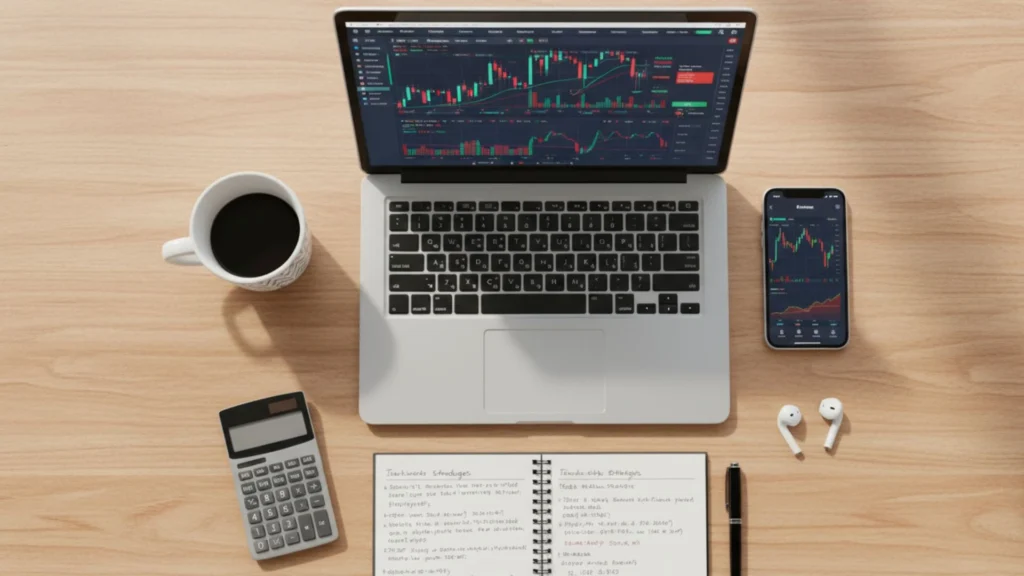
Modern trading needs technology. Let’s understand the tools simply.
Trading Platforms Explained Simply
A trading platform is like a special app where you buy and sell. Think of it as a shopping app, but for trading!
Popular platforms include:
- Robinhood (very beginner-friendly)
- TD Ameritrade (powerful tools)
- E*TRADE (good for learning)
- Interactive Brokers (for serious traders)
You choose a platform, add money, and start trading. Simple!
Tools Day Traders Use
Day traders need:
- Real-time charts (show prices every second)
- Level 2 data (shows who’s buying and selling)
- News feeds (instant market news)
- Scanners (find trading opportunities fast)
- Multiple monitors (see everything at once)
These tools help day traders make split-second decisions.
Tools Swing Traders Use
Swing traders need:
- Daily/weekly charts (longer timeframes)
- Basic technical indicators (moving averages, RSI)
- Stock screeners (find good swing opportunities)
- Alert systems (notify when prices hit targets)
- One good computer (fancy setups not required)
Swing trading tools are simpler and cheaper than day trading tools.
Risks in Day Trading and Swing Trading (And How to Reduce Them)
All trading has risks. Let’s understand them and learn how to stay safe.
Common Risks in Day Trading
Overtrading: Making too many trades loses money in fees.
Emotional Decisions: Panic buying or selling destroys accounts.
Leverage Risks: Borrowing money to trade can multiply losses.
Lack of Discipline: Breaking your trading rules leads to disaster.
Common Risks in Swing Trading
Overnight Gaps: Prices can jump or drop while markets are closed.
Holding Losers Too Long: Hoping bad trades recover can be costly.
Missing Exits: Not checking trades regularly can miss exit points.
Event Risk: Unexpected news can hurt positions held multiple days.
Risk Management Made Easy (Stop Loss, Position Size)
How do you protect yourself?
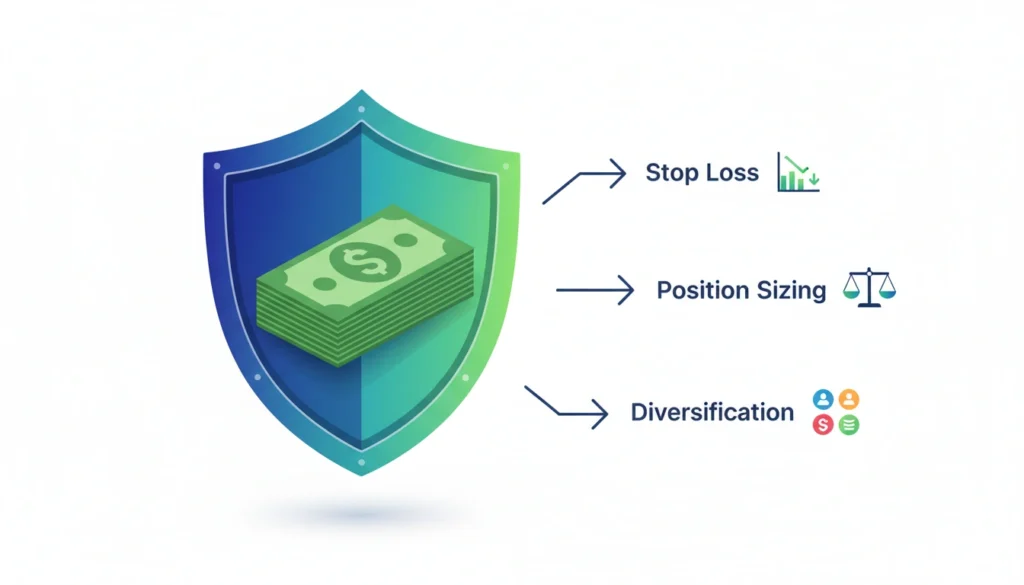
Use Stop Losses: Automatically sell if price drops to a certain level. This limits losses.
Position Sizing: Never risk more than 1-2% of your account on one trade. If you have $1,000, risk only $10-$20 per trade.
Diversify: Don’t put all money in one trade or one stock.
Have a Plan: Decide entry, exit, and stop loss before entering trades.
Start Small: Practice with small amounts before risking big money.
Risk management is more important than making profits. Protect your money first!
Which One Is Better for Beginners?
The million-dollar question! Which trading style should beginners choose?
The truth? It depends on YOUR life, personality, and goals.
When Day Trading Is a Better Choice
Choose day trading if you:
- Have 6-8 hours daily to dedicate to trading
- Love fast-paced, exciting environments
- Can handle high stress and pressure
- Have at least $25,000 to start (for US stocks)
- Want quick feedback on your trades
- Can make fast decisions without panic
Day trading suits active, focused people who can treat it like a full-time job.
When Swing Trading Is a Better Choice
Choose swing trading if you:
- Have a full-time job or business
- Prefer lower stress and more thinking time
- Can be patient and wait days for results
- Want to start with smaller capital ($500-$1,000)
- Like analyzing markets deeply
- Want trading to fit around your life, not control it
Swing trading suits busy people who want trading as a side income or part-time pursuit.
Can Beginners Do Both?
Yes! Many traders start with swing trading to learn the basics without stress. Once comfortable, some add day trading.
You can also do both simultaneously – swing trade long-term positions while day trading with a small portion of your account.
But when starting, focus on one style. Master it before mixing styles.
Beginner Recommendation: Most experts suggest swing trading for beginners. It’s less stressful, requires less capital, and allows time to learn without pressure.

Swing Trading vs Day Trading: Real-Life Example
Let’s see both styles in action with a simple example!
The Stock: Imagine a stock called XYZ trading at $50.
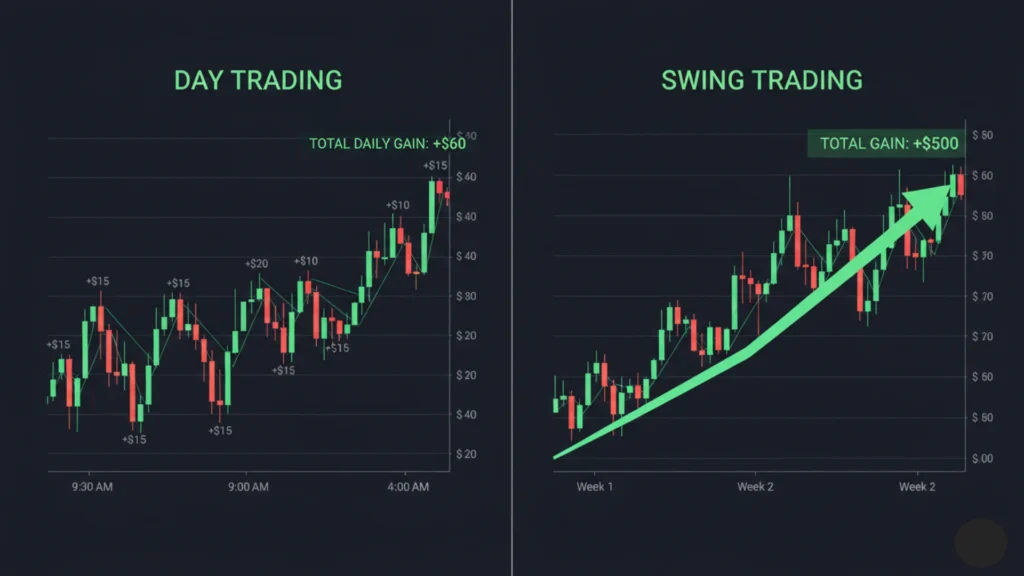
Day Trader’s Approach: Monday morning, the day trader sees XYZ at $50. Good news comes out. The price jumps to $51 in 30 minutes. The day trader buys at $50.20 and sells at $50.80. Profit: $0.60 per share. With 100 shares, that’s $60 profit in 30 minutes! The trade is done before lunch.
Swing Trader’s Approach: The same Monday, the swing trader analyzes XYZ. The stock has been trending up for weeks. The trader buys at $50 and holds. Over the next two weeks, XYZ climbs to $55. The swing trader sells at $55. Profit: $5 per share. With 100 shares, that’s $500 profit in two weeks!
The Difference: The day trader made $60 in 30 minutes but needed to watch screens constantly. The swing trader made $500 in two weeks while checking once or twice daily.
Day trading: Small gains, frequent trades, constant attention. Swing trading: Bigger gains, fewer trades, minimal daily time.
Both made money. Different paths, different lifestyles!
Profit Expectations: What’s Realistic?
Social media shows traders making millions. Is that real? Let’s talk truth.
Day Trading Profits: Realistic expectations: 1-3% monthly return for consistent traders. A $10,000 account might make $100-$300 monthly after fees. Top professional day traders might achieve 5-10% monthly, but they’re rare.
Many beginners lose money their first year. Day trading is hard!
Swing Trading Profits: Realistic expectations: 5-15% monthly return for good swing traders. A $10,000 account might make $500-$1,500 monthly. The returns are larger per trade but come less frequently.
The Truth: Most beginners don’t make money immediately. It takes months or years to become consistently profitable. Anyone promising “get rich quick” is lying.
Trading is a skill. Like learning piano or cooking, you get better with practice and time.
Avoid These Profit Myths:
- “Turn $100 into $10,000 in one month!” – Not realistic
- “I made $50,000 last week!” – Probably showing one lucky trade, not consistent results
- “My secret Asian strategy wins 95% of trades!” – No strategy wins that often
Focus on consistent small wins, not home runs. Protect your capital. Learn continuously. That’s real trading success.

Psychology of Trading (Simple Explanation)
Trading isn’t just about charts and numbers. Your mind matters most!
Fear: When trades go wrong, fear makes you sell too early or freeze completely. Fear is normal but must be controlled.
Greed: When trades go well, greed makes you hold too long or risk too much. Greed destroys accounts.
Discipline: This means following your plan even when emotions scream at you. Discipline separates winners from losers.
Patience: Especially for swing traders, patience means waiting for the right setup. Don’t force trades.
Emotional Control: Learn to stay calm whether winning or losing. Trading is a marathon, not one race.
Day Trading Psychology: The constant decision-making exhausts your brain. Day traders need strong mental endurance and quick emotional recovery.
Swing Trading Psychology: Holding overnight requires trust in your analysis. You must resist constantly checking prices and panicking over normal fluctuations.
Mental Tricks That Help:
- Trade small enough that losses don’t scare you
- Keep a trading journal to learn from mistakes
- Take breaks after big wins or losses
- Never trade when angry, tired, or emotional
- Celebrate small wins, learn from small losses
Your psychology determines your success more than any strategy. Work on your mind!

Common Beginner Mistakes to Avoid
Learn from others’ mistakes! Here are the biggest errors beginners make.
Day Trading Mistakes
Overtrading: Making too many trades because you’re bored or chasing losses. Quality over quantity!
No Trading Plan: Jumping into trades without clear entry and exit rules. Always have a plan.
Ignoring Fees: Commission and fees add up fast with many trades. Calculate costs!
Revenge Trading: Losing money, then immediately trading again to “get it back.” This usually makes losses worse.
Trading Without Practice: Starting with real money before practicing on demo accounts. Practice first!
Swing Trading Mistakes
Impatience: Closing winning trades too early because you can’t wait. Let winners run!
Not Setting Stop Losses: Hoping losing trades will recover. Always protect yourself.
Ignoring News: Major news can move swing trades significantly. Stay informed about your positions.
Checking Too Often: Looking at trades every hour defeats the purpose of swing trading. Check once or twice daily.
Poor Entry Timing: Entering trades randomly instead of waiting for good setups. Patience pays!
General Mistakes for Both:
- Trading with money you can’t afford to lose
- Not keeping a trading journal
- Listening to random internet “gurus”
- Giving up after first losses
- Not continuously learning
Avoid these mistakes and you’re ahead of 90% of beginners!

Frequently Asked Questions (People Also Ask)
Is day trading riskier than swing trading?
Yes, generally. Day trading is riskier because you make more trades, face more fees, and need quick decisions that can go wrong. Swing trading gives you time to think and research, reducing emotional mistakes. However, swing trading has overnight risk – news can gap prices while you sleep.
Is swing trading more profitable than day trading?
Not necessarily more profitable, but potentially more consistent for beginners. Swing traders aim for bigger gains per trade but trade less often. Day traders make smaller gains but trade more frequently. Your profitability depends on your skill, discipline, and which style fits your personality. Neither is “more profitable” automatically.
How much money do I need to start?
For day trading US stocks, you legally need $25,000 minimum (Pattern Day Trader rule). For swing trading, you can start with $500-$1,000, though $3,000-$5,000 gives you better flexibility. For crypto and forex, some brokers allow starting with even $100, but more capital gives better risk management options.
Can I switch from day trading to swing trading?
Absolutely! Many traders start with one style and switch later. You can also do both simultaneously. Some traders day trade in the mornings and swing trade longer positions. Start with one to learn properly, then experiment. Your trading style can evolve as your life, goals, and skills change.
Key Takeaways (Final Summary)
Let’s wrap up everything simply:
Day Trading:
- Fast-paced, exciting, but very demanding
- Requires full-time commitment and focus
- Higher stress, higher time requirement
- Can start seeing results daily
- Best for active, focused individuals with significant capital
Swing Trading:
- Slower, calmer, fits around your life
- Part-time friendly, lower stress
- Requires patience but smaller time commitment
- Results come over days or weeks
- Best for busy people or beginners
Key Differences: Time commitment, trade duration, stress levels, capital requirements, and lifestyle fit are the main differences between Swing Trading vs Day Trading
Which Should You Choose? Ask yourself:
- How much time do you have?
- How much stress can you handle?
- How much capital can you start with?
- Do you want trading as a full-time job or side income?
Your answers point to your best choice.
Final Advice: Start small, practice first, learn continuously, manage risk obsessively, and be patient with yourself. Trading success takes time. Whether you choose day trading or swing trading, respect the markets, protect your capital, and never stop learning.
Both styles can succeed. The best trading style is the one that fits YOUR life!