
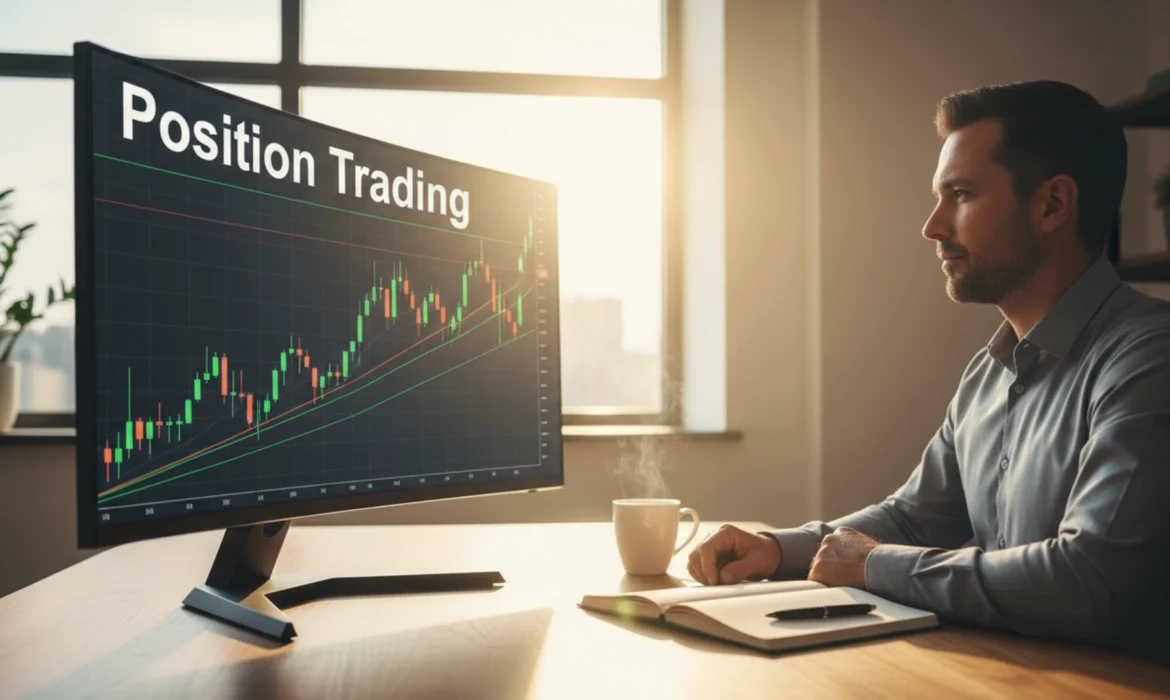
Have you ever heard someone say, ‘Buy and hold’? That is the heart of position trading. It is a long-term trading strategy where you buy something — like a stock, forex pair, or crypto — and hold it for weeks, months, or even years.
Unlike day trading, position trading is slow and calm. You do not need to sit in front of a screen all day. You wait for the right moment, enter a trade, and let it grow over time.
In this guide, you will learn everything about position trading — what it is, how it works, the best strategies, tools, risks, and tips to get started. Whether you are a total beginner or just exploring long-term trading ideas, this guide is for you.
Position Trading in Simple Words
Position trading means buying an asset and holding it for a long time to earn a profit when the price goes up. It is based on the idea that big trends take time to develop. So instead of making quick trades, you wait for the market to move in your favor.
Here is a simple example: Imagine you buy 10 shares of Apple stock at $150. You believe Apple will grow over the next 6 months. You hold your shares. Six months later, Apple is at $200. You sell and earn a profit. That is position trading!
It is sometimes called the ‘buy and hold trading method’ because you simply buy, wait, and hold until your target is reached.
What Is a Position Trader?
A position trader is someone who trades with patience. They do not panic when the market drops a little. They look at the big picture. They study long-term trends and use that knowledge to decide when to buy and when to sell.
Position traders are usually not glued to their screens all day. They check their trades once a day or even a few times a week. They trust their research and wait calmly for the market to move in their direction.
A position trader meaning is simple: it is a trader who plays the long game.

How Position Trading Works
Understanding how position trading works is easy when you break it into steps:
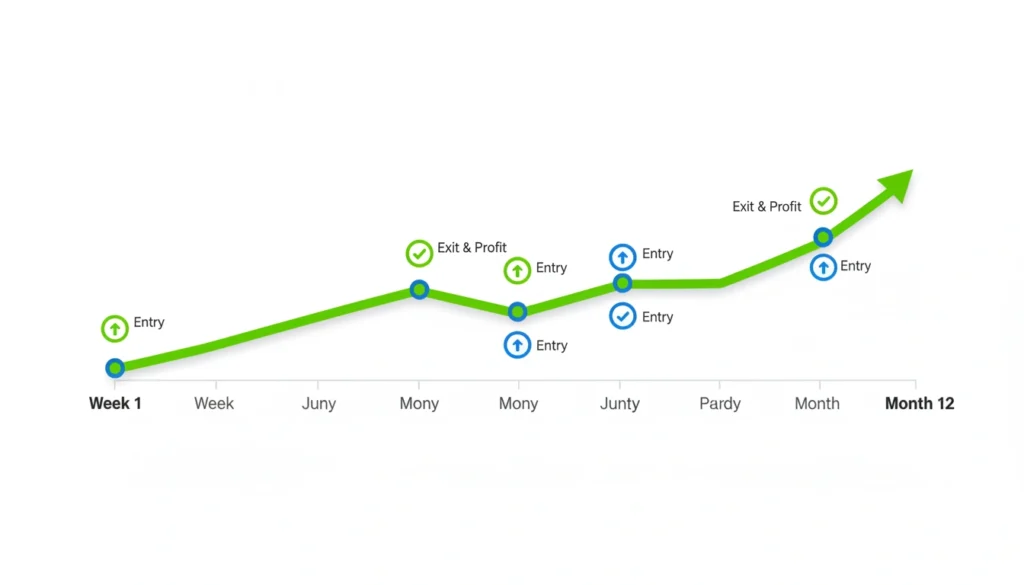
- Finding trends: First, you look for a market that is moving in one direction for a long time. This is called a trend. If prices are going up, it is an uptrend. If prices are going down, it is a downtrend.
- Opening a trade: Once you spot a strong trend, you enter the trade. For an uptrend, you buy. For a downtrend, you may sell short.
- Holding for weeks or months: After entering, you hold the trade. You are not looking for small daily moves. You want the big price change that comes over weeks or months.
- Closing for profit: When your target price is reached — or when the trend shows signs of ending — you close the trade and take your profit.
This is the basic flow of a position trading strategy: spot the trend, ride it, and exit at the right time.
How Long Do Position Traders Hold Trades?
The position trading time frame is much longer than day trading or swing trading. Most position traders hold their trades for a few weeks to several months. Some even hold for a year or more.
Here is a simple timeline example:
- Short position trade: 2 to 6 weeks
- Medium position trade: 2 to 6 months
- Long position trade: 6 months to 2+ years
The exact time depends on the market and the trend. Some strong trends in stocks or crypto can last for years. Others in forex might last a few months.
5. Step-by-Step Guide to Start Position Trading
Here is a simple position trading tutorial to help you begin:
- Step 1 — Learn the basics: Read about how markets work, what trends are, and how to read a chart. This guide is a great start!
- Step 2 — Choose a market: You can do position trading in stocks, forex, commodities, or crypto. Pick one that interests you and that you can research easily.
- Step 3 — Open a trading account: Choose a trusted broker that offers low fees and the market you want to trade. Popular ones include TD Ameritrade, eToro, and Interactive Brokers.
- Step 4 — Start with small trades: Never risk all your money. Start small. Learn from your trades. Add more capital as you grow in confidence.
Position trading for beginners is very doable. Just be patient and take one step at a time.
6. How Much Money Do You Need for Position Trading?
Good news: you do not need a lot of money to start! Many brokers let you start with as little as $50 or $100.
A smart rule in risk management in position trading is the 1-2% rule. This means: never risk more than 1-2% of your total money on a single trade.
- If you have $100, risk only $1 to $2 per trade.
- If you have $1,000, risk only $10 to $20 per trade.
This keeps you safe even when trades go wrong. Over time, your small wins can grow into big gains. The key is to protect your capital and trade smart.
7. Position Trading vs Other Trading Styles
7.1 Position Trading vs Day Trading
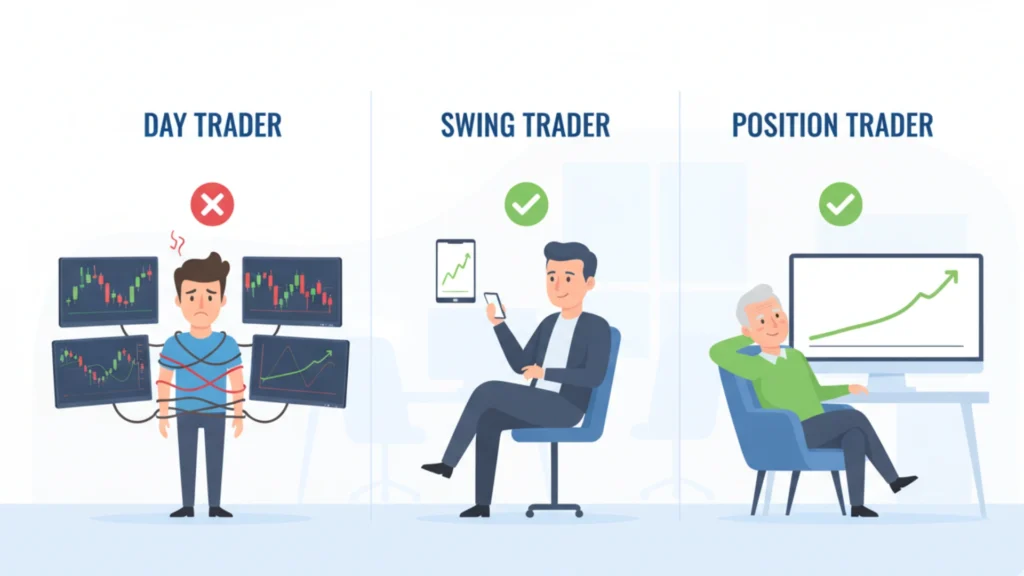
Day trading means buying and selling within the same day. It is fast, stressful, and requires constant screen time. Position trading vs day trading is like a marathon vs a sprint. Day traders may make many trades daily and need to be very quick. Position traders are slow and steady. They care about the big picture, not the small daily moves.
7.2 Position Trading vs Swing Trading
Swing trading sits in between. Swing traders hold trades for a few days to a few weeks. Position trading vs swing trading comes down to time and patience. Swing traders react to short-term price swings. Position traders ignore those and wait for major long-term moves.
7.3 Position Trading vs Long-Term Investing
Long-term investing (like buying and forgetting) can mean holding for 5, 10, or 20 years. Position traders are more active. They still use charts and signals. They may enter and exit several times a year. Investing is passive. Position trading is active but slow.
8. Best Position Trading Strategies
8.1 Trend Following Strategy
This is the most popular position trading strategy. You simply follow the trend. If a market has been going up for several weeks, you buy and ride that upward trend. Tools like Moving Averages help you spot and confirm the trend. This is also called the trend-following trading strategy.
8.2 Breakout Strategy
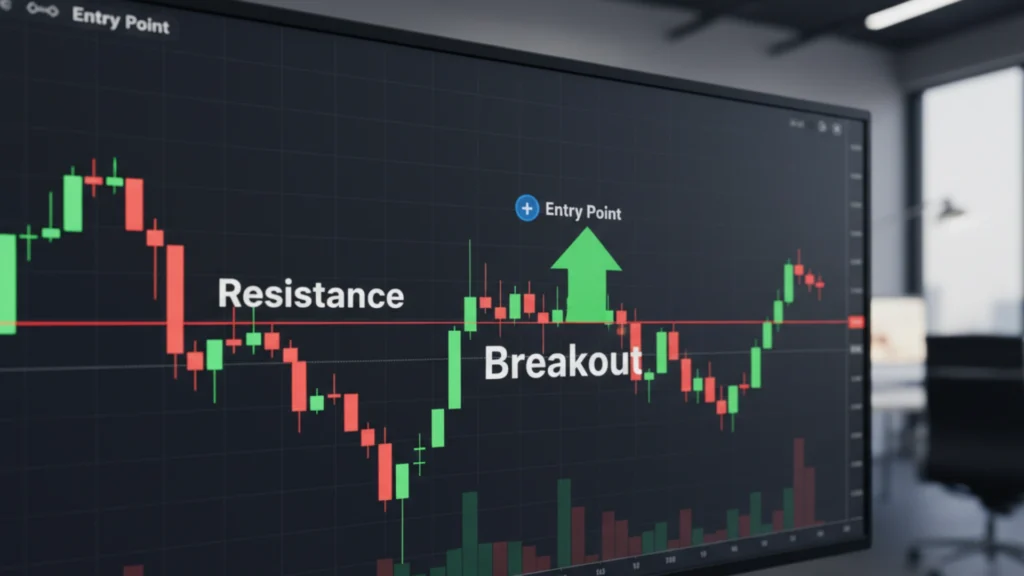
A breakout happens when the price moves above a level it has been stuck at for a while. Position traders watch these breakout points carefully. When the price breaks out with strong momentum, they enter the trade and hold it as the new trend begins.
8.3 Pullback Strategy
Sometimes, prices go up a lot and then drop a little before going up again. That small drop is called a pullback. Smart position traders use this as a chance to buy at a better price. It is a safe entry point in a long-term uptrend.
8.4 Value-Based Position Trading
This strategy looks at whether an asset is priced too low compared to its real value. If a stock is ‘on sale’ compared to what the company is worth, traders buy it and hold until the market corrects the price. This is similar to the value investing idea used by Warren Buffett.
8.5 Sector Rotation Strategy
Markets move in cycles. Some industries boom during certain economic periods. For example, tech stocks may boom during low interest rates, while energy stocks may do better when inflation rises. The sector rotation strategy means moving your money into the sectors that are set to grow next.
9. Best Tools for Position Trading
Having the right position trading tools makes a huge difference. Here are the most important ones:
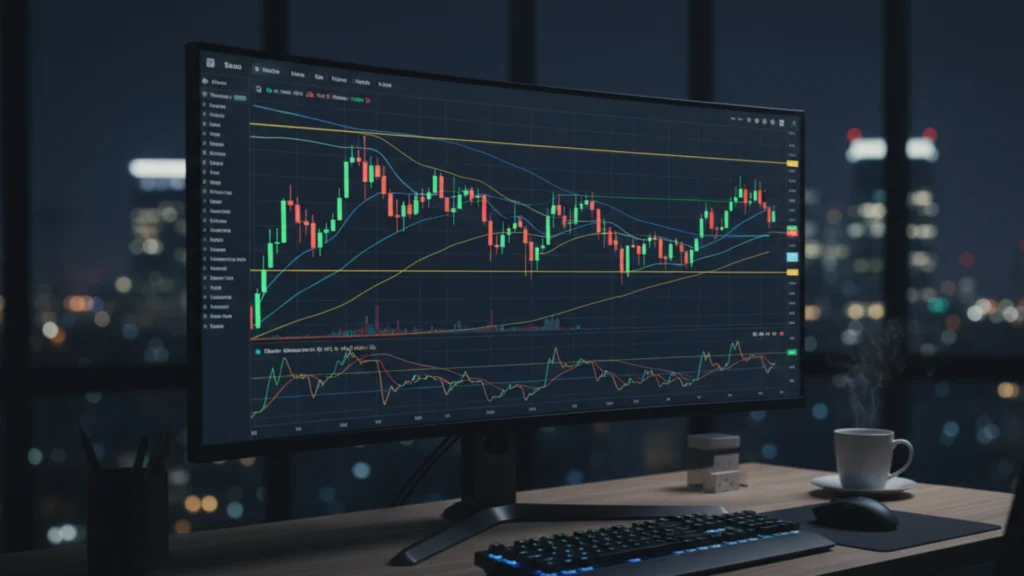
- Trading Charts: TradingView and MetaTrader are the most popular platforms. They let you view price charts, add indicators, and spot trends easily.
- Indicators — The best indicators for position trading include: Moving Averages (MA) to spot the trend direction; RSI (Relative Strength Index) to see if an asset is overbought or oversold; Support and Resistance levels to find safe entry and exit points.
- News and Economic Calendars: Big news events move markets. Tools like Forex Factory or Investing.com show you upcoming events so you are not caught off guard.
10. Position Trading in Different Markets
10.1 Position Trading in Stocks
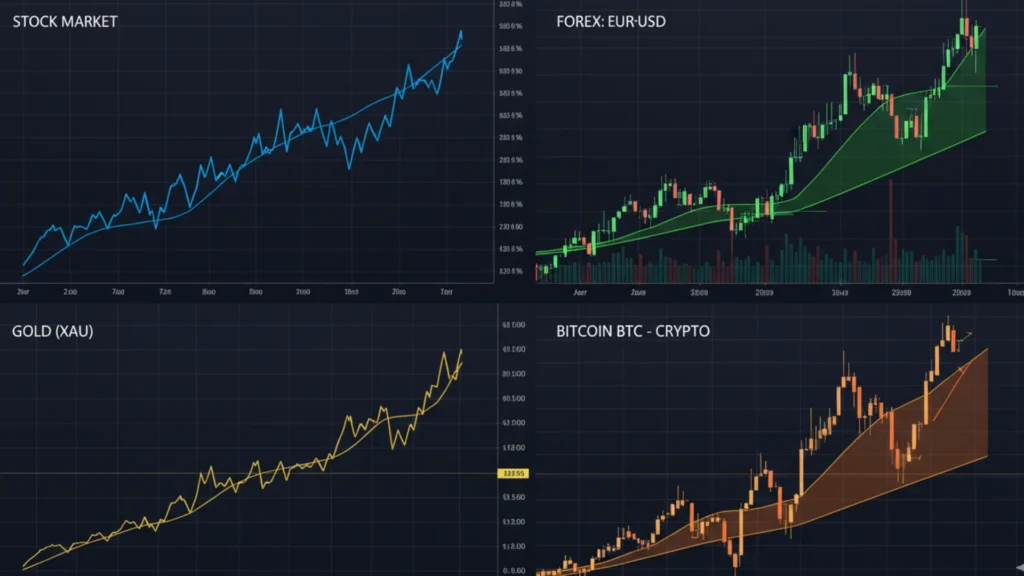
Position trading stocks is very common. Traders look for companies with strong growth trends, great earnings, or an industry boom. They buy shares and hold for months as the company grows. Stocks like Apple, Tesla, and Amazon have given huge returns to patient position traders.
10.2 Position Trading in Forex
Position trading forex means holding a currency pair for weeks or months. Currency trends are driven by economic events, interest rates, and government policies. Forex position traders study macro trends and hold through short-term price noise to catch big moves.
10.3 Position Trading in Commodities
Gold, oil, and silver are popular commodities for position traders. These assets often move in long, slow trends based on global supply and demand. A macro trend trading strategy works very well here. For example, gold often rises during economic uncertainty, offering great position trade opportunities.
10.4 Position Trading in Crypto
Position trading crypto has become popular in recent years. Cryptocurrencies like Bitcoin and Ethereum have shown massive long-term trends. Position traders buy during early uptrends and hold as crypto grows. It is volatile, but the rewards can be enormous for patient traders.
11. Risk and Reward Explained Simply
Every trade has risk. But smart position trading rules help you protect your money.
- Stop Loss: A stop loss is a price level where you automatically exit the trade if it moves against you. For example, you buy Bitcoin at $40,000 and set a stop loss at $37,000. If Bitcoin falls to $37,000, your trade closes automatically, limiting your loss.
- Take Profit: A take profit is the price where you exit with your planned gain. For example, you set a take profit at $50,000. When Bitcoin hits that level, you lock in your profit.
- Risk-Reward Ratio: A good rule is to aim for at least a 1:3 ratio. This means if you risk $100, you aim to make $300. Even if you lose half your trades, you still make money overall.
Understanding position trading profit targets and stop loss levels is one of the most important parts of any position trading system.
12. Mindset of a Successful Position Trader
Position trading psychology is just as important as strategy. Here is the mindset you need:
- Patience: Trends take time. You cannot rush the market. Learn to wait for your trade to develop without panicking.
- Discipline: Stick to your plan. Do not change your stop loss because you are scared. Do not exit early because of a small dip. Trust your analysis.
- Avoid emotions and fear: When markets drop, fear kicks in. When markets rise too fast, greed takes over. The best position traders stay calm and follow their system, not their feelings.

13. Common Mistakes Position Traders Make
Even experienced traders make mistakes. Here are the most common ones to avoid:
- No Stop Loss: Skipping your stop loss can lead to huge losses. Always set one before you enter a trade.
- Trading too much: More trades do not mean more profit. In position trading, quality matters more than quantity.
- Following fake news: Social media is full of tips and rumors. Do your own research. Do not buy or sell based on hype.
- Using too much leverage: Leverage boosts your profits but also your losses. Using too much leverage on a long position trade can wipe out your account if the market moves against you.
14. Real-Life Position Trading Example
Here is a simple story to show how position trading works in real life:
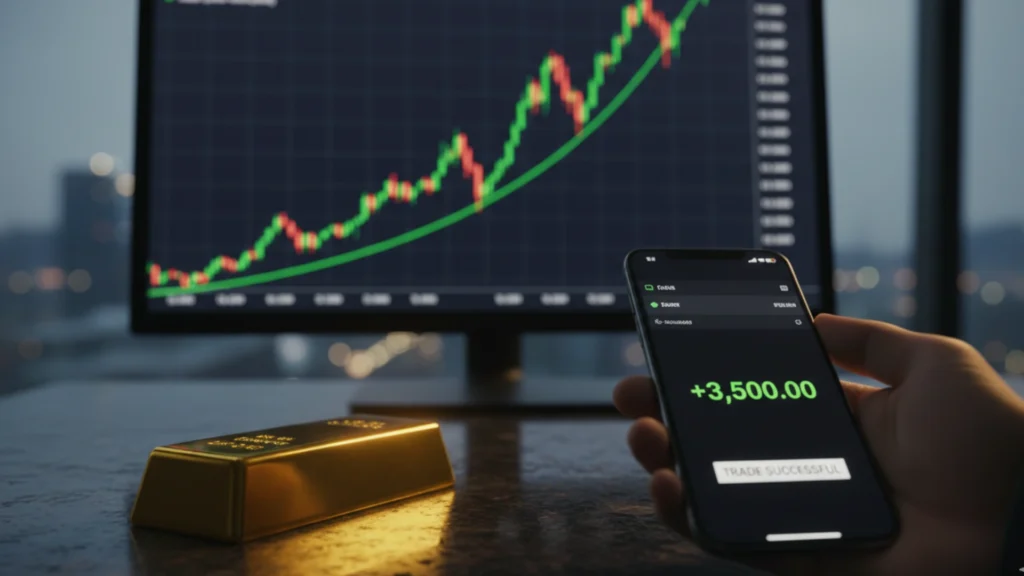
In early 2020, Alex noticed that gold was trending upward. The world was facing uncertainty, and people were buying gold as a safe asset. Alex studied the long-term technical analysis on the gold chart and saw a clear uptrend.
He bought gold at $1,600 per ounce and set a stop loss at $1,500. He set his take profit at $1,900.
Over the next 6 months, gold climbed steadily. He held patiently through a few small dips. In August 2020, gold hit $1,900. Alex closed his trade and made a profit of $300 per ounce.
This is a classic position trading example — spot the trend, enter wisely, hold patiently, and exit at your target.
15. Pros and Cons of Position Trading
Let us look at the advantages of position trading and its downsides:
Advantages
- You do not need to watch the market every day
- Less stress compared to day trading
- Big profit potential from major trends
- Works well for busy people who cannot trade full-time
- Lower trading fees because you make fewer trades
Disadvantages
- Your money is tied up for a long time
- Overnight swap fees can add up in forex
- Requires patience — not good for people who want quick results
- Large price swings can be scary during the holding period
16. Is Position Trading Safe for Beginners?
Yes! Position trading is actually one of the best styles for beginners. Here is why:
Who should try it: If you have a job and cannot trade all day, position trading is perfect. If you are patient and like research, this style suits you. If you want a simple, low-stress approach, go for it.
Who should avoid it: If you need money in the short term, this style is not for you. If you get very stressed seeing your account value go up and down, you may struggle. And if you want fast results, look into swing trading first.
17. Beginner Checklist for Position Trading
Here is a quick position trading tutorial checklist to get started right:
- Choose a market with a clear long-term trend
- Set your risk per trade (use the 1-2% rule)
- Pick your entry, stop loss, and take profit before entering
- Open the trade and be patient — do not keep changing it
- Review your trades every week to learn and improve
- Keep a trading journal to track your progress
18. Fees, Taxes, and Costs in Position Trading
Position trading is not completely free. Here are costs to be aware of:
- Broker Fees: Most brokers charge a small commission per trade. Some charge a spread (difference between buy and sell price). Always compare fees before choosing a broker.
- Swap/Holding Costs: In forex, holding a trade overnight can cost you a small daily fee called a ‘swap.’ Over weeks or months, this can add up significantly. Factor this into your profit target.
- Taxes: In most countries, profits from trading are taxable. The exact rules vary by country. It is always a good idea to consult a tax professional about your trading gains.
19. Future of Position Trading
The world of position trading is evolving fast. Here is what to watch:
- AI Tools: Artificial intelligence is now helping traders spot trends faster and more accurately. AI-powered position trading signals and tools are becoming more common and accessible even to beginners.
- Crypto Growth: As crypto markets mature, more institutional investors are using long-term trend trading strategies in Bitcoin, Ethereum, and other assets. This makes crypto a growing space for position traders.
- Long-Term Market Trends: Global megatrends like clean energy, technology, and healthcare are creating new opportunities for macro trend trading strategy. Patient position traders who spot these early can benefit greatly.

20. Conclusion
Position trading is one of the smartest and most relaxed ways to trade the financial markets. It suits people who are patient, disciplined, and willing to let their trades breathe over time.
You do not need to be glued to a screen. You do not need thousands of dollars. You just need a solid plan, the right tools, and the patience to wait for the market to do its thing.
Remember: the best position trading strategy is the one you can stick to through ups and downs. Start small, learn constantly, and treat every trade as a lesson.
Now go out there, pick your market, spot a trend, and let your first long-term trading strategy journey begin!
❓ Frequently Asked Questions (FAQ)
Q1: What is the typical holding time in position trading?
Most position trades are held for a few weeks to several months. Some traders hold for a year or more depending on the strength of the trend. The position trading time frame depends on the market and the trader’s goal.
Q2: Is position trading profitable?
Yes, position trading can be very profitable when done correctly. Catching a major trend and riding it for months can generate significant returns. However, like all trading, there is risk. Proper risk management in position trading is essential to long-term success.
Q3: Is position trading better than day trading?
It depends on your lifestyle and personality. Position trading is less stressful, requires less screen time, and is great for people with busy lives. Day trading can be more exciting but is also harder and more stressful. For beginners, position trading is generally the safer and easier choice.
Q4: Can beginners do position trading?
Absolutely! Position trading for beginners is one of the best starting points. The slower pace gives you time to learn and research. You do not need advanced skills — just basic chart reading and a solid plan.
Q5: What indicators are best for position trading?
The best indicators for position trading include Moving Averages (50-day and 200-day), the RSI (Relative Strength Index), MACD (for trend strength), and Support & Resistance levels. These tools help you identify long-term trends and find good entry points.
Q6: Can position trading work in crypto?
Yes! Position trading crypto works well because crypto markets have shown powerful long-term trends. Bitcoin, for example, has had several massive multi-month uptrends over the years. Position traders who caught those trends early earned huge profits. Just remember — crypto is volatile, so always use a stop loss.
