
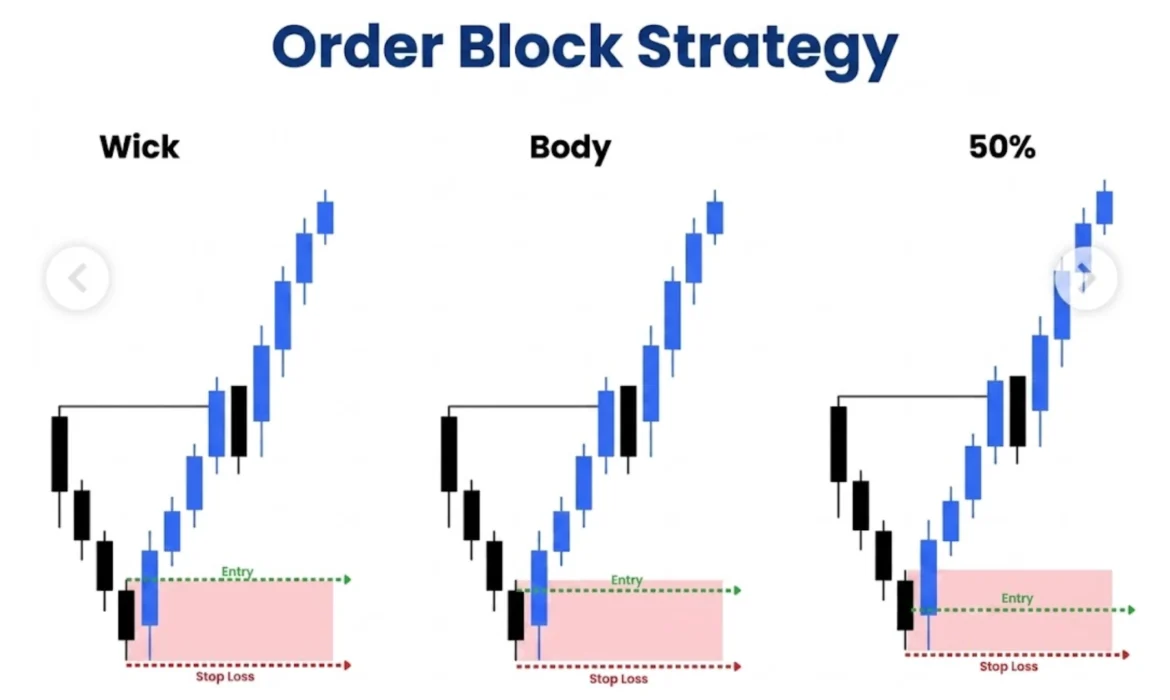
Why Order Block Strategy Works in Trading
The order block strategy is one of the most powerful tools in trading today. It is used by smart money traders, institutions, and beginners who want to trade like the pros. But why does it actually work?
Why Institutions Create Order Blocks
Big banks and institutions cannot buy or sell millions of dollars in one go. They need to split their orders. So they leave behind a “block” of orders at certain price zones. These zones are called institutional order blocks. When price comes back to these zones, institutions fill the rest of their orders. That is why price reacts strongly there.

How Price Reacts to Order Blocks
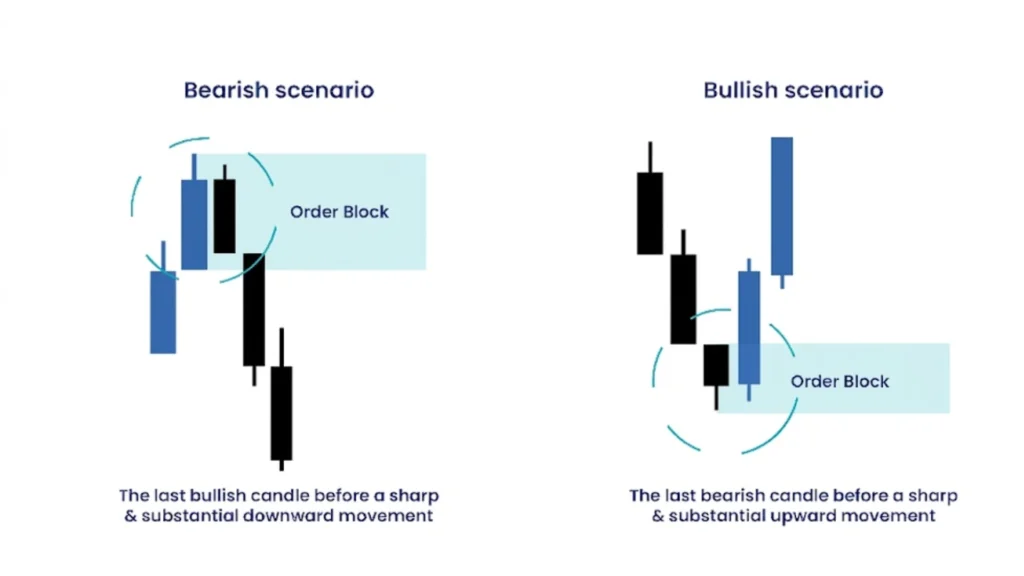
When price reaches an order block zone, it often bounces sharply. This is because big players are waiting there. A bullish order block causes price to rise. A bearish order block causes price to fall. The reaction is fast and strong.
Why Traders Trust Order Block Zones
Traders trust these zones because they are based on real buying and selling by institutions. Unlike random lines, smart money order blocks have a reason behind them. They are not guesses. They are logical zones where price has reacted before.
Step-by-Step Order Block Strategy for Beginners
Learning order block trading strategy for beginners is easier when you break it into simple steps.
Step 1: Find the Market Trend
Always start with the big picture. Is price going up or down? Use a higher timeframe like the daily or 4-hour chart. If price is making higher highs and higher lows, it is bullish. If it is making lower highs and lower lows, it is bearish. Only trade order blocks in the direction of the trend.
Step 2: Mark the Order Block Zone
Look for the last bearish candle before a big bullish move. That is your bullish order block. For a bearish order block, look for the last bullish candle before a strong drop. Mark the high and low of that candle as your zone.
Step 3: Wait for Price Retest
Do not jump in right away. Wait for price to come back and retest the order block zone. This is called a retest or pullback. Patience here is everything.
Step 4: Confirm Entry Signal
Once price enters the zone, look for a confirmation signal. This could be a strong rejection candle, a fair value gap, or a break of structure. Never enter without a signal.
Step 5: Manage the Trade
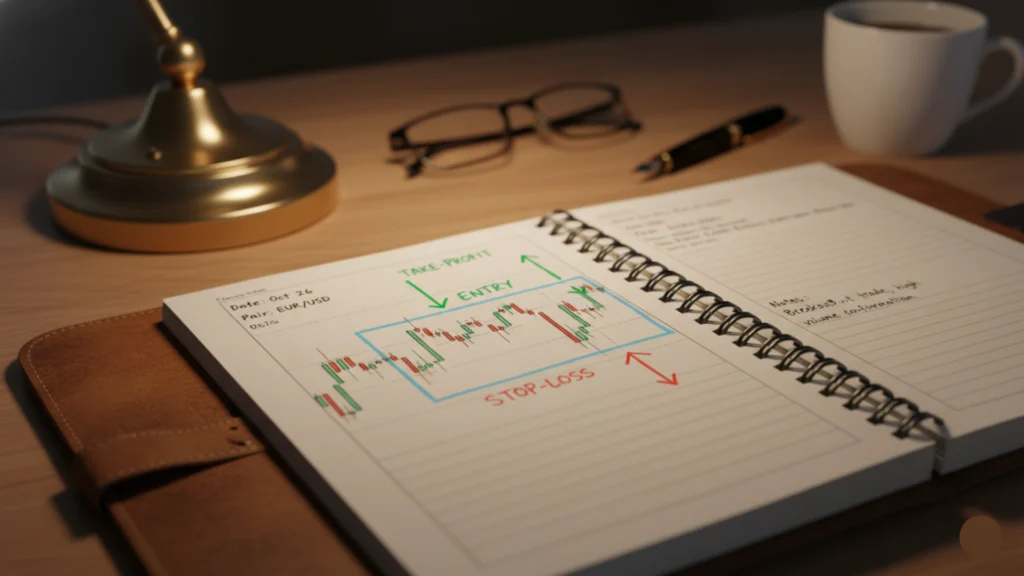
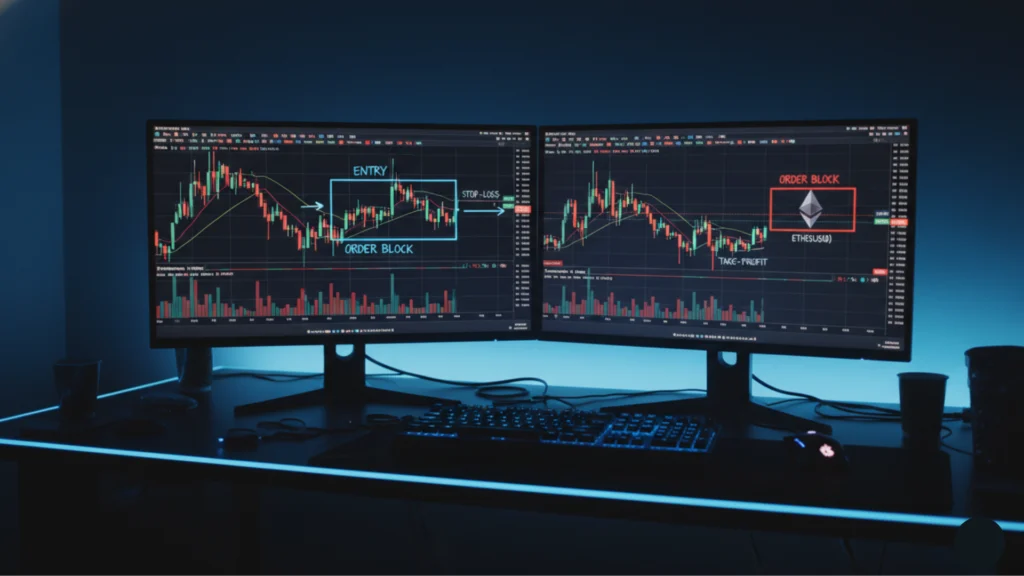
Set your stop-loss below the order block. Set your take-profit at the next key level. Follow your plan and do not move your stop-loss out of emotion.
How to Confirm an Order Block Strategy Setup
A good order block setup needs confirmation. Without it, you are just guessing.
Confirm with Break of Structure (BOS)
A break of structure order block setup means price broke a previous high or low. This tells you momentum is real. When BOS happens near your zone, it is a strong signal.
Confirm with Liquidity Sweep
An order block liquidity sweep happens when price briefly dips below a low or above a high to grab stop-losses. This is a trap set by smart money. After the sweep, price reverses. This is a great time to enter.
Confirm with Fair Value Gap (FVG)
A fair value gap and order block setup is very powerful. FVG is a gap between candles where price moved too fast. When an FVG is inside your order block zone, it adds extra strength to the setup.
Confirm with Strong Candlestick Rejection
Look for a big bullish or bearish candle with a long wick inside the zone. This shows that price tried to move one way but got pushed back hard. That is order block confirmation in action.
Order Block Strategy and Market Structure
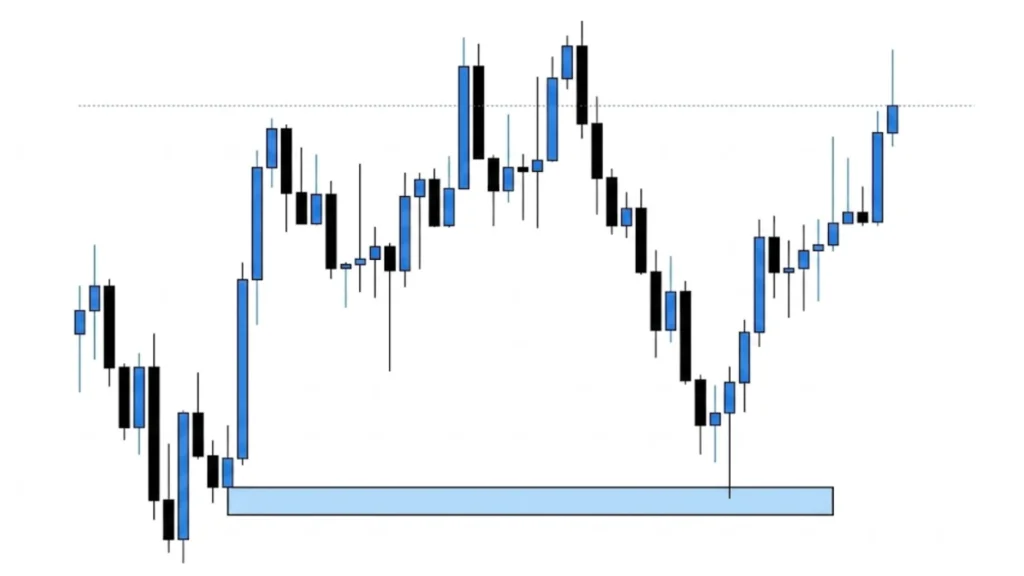
Market structure and order block go hand in hand. You cannot trade order blocks without understanding structure.
Understanding Higher Highs and Higher Lows
In a bullish market, price makes higher highs (HH) and higher lows (HL). This tells you buyers are in control. You should look for bullish order blocks at the HL areas.
Understanding Lower Highs and Lower Lows
In a bearish market, price makes lower highs (LH) and lower lows (LL). Sellers are in control. Look for bearish order blocks at LH areas.
Change of Character (CHOCH)
Change of character and order block is a key concept. CHOCH happens when price breaks the pattern. For example, in a downtrend, price suddenly makes a higher high. This may signal a reversal. Look for order blocks after CHOCH for early entries.
Break of Structure in Order Block Trading
BOS confirms that price is continuing in one direction. If you see a BOS after a retest of your order block zone, that is a clean signal to enter the trade.
Best Entry, Stop-Loss, and Take-Profit in Order Block Strategy
Order block risk management is just as important as finding the zone.
Best Entry Point in an Order Block
The best entry is at the top of a bullish order block or the bottom of a bearish order block. You can also wait for a rejection candle inside the zone. This gives you the tightest stop-loss and best reward.
Where to Place Stop-Loss
Place your order block stop loss a few pips below the order block for buys. For sells, place it above the zone. This protects you if the zone fails.
How to Set Take-Profit Targets
Your order block take profit should be at the next major high or low. You can also aim for the next liquidity pool or imbalance zone. Use the higher timeframe chart to identify these levels.
Ideal Risk-to-Reward Ratio
Always aim for at least 1:2 or 1:3 risk-to-reward. This means if you risk $100, you should aim to make $200 or $300. This is how professional traders stay profitable even with losses.
How to Use Order Block Strategy on TradingView
Order block strategy on TradingView is simple once you know the steps.
How to Draw Order Blocks on TradingView
Use the rectangle tool on TradingView. Draw from the high to the low of your chosen candle. Color bullish zones blue or green. Color bearish zones red or orange. Keep it clean and simple.
Best Order Block Indicators
The best order block indicator tools on TradingView include the “ICT Order Block” script and “Smart Money Concepts” indicator. These automatically mark zones for you. They save time and reduce errors.
Setting Alerts for Order Blocks
Use TradingView alerts to notify you when price enters a zone. Set an alert on the rectangle border. This way, you do not have to stare at the chart all day.
TradingView Tips for Beginners
Use the multi-timeframe view. Check the 1-hour, 4-hour, and daily charts together. Always zoom out before zooming in. Clean charts are better than busy ones.
Order Block Strategy for Scalping
Order block scalping strategy uses small timeframes to catch quick moves.
Best Timeframes for Scalping Order Blocks
Use the 1-minute, 5-minute, or 15-minute charts. Mark your zones on the 15-minute and enter on the 1-minute or 5-minute.
Fast Entry Techniques
Wait for a rejection wick inside the zone. Enter on the close of the rejection candle. Move your stop-loss to breakeven once price moves in your favor.
Scalping Risk Management
Never risk more than 0.5% to 1% per scalp trade. Scalping requires discipline. Keep your losses small and let your wins grow.
Swing Trading with Order Block Strategy
Order block swing trading is slower but offers bigger rewards.
Best Timeframes for Swing Trading
Use the daily or 4-hour chart to find zones. Enter on the 1-hour for a better price. Swing trades can last days or even weeks.
Holding Trades for Bigger Moves
Be patient. Once you enter, give the trade space to breathe. Do not close early because of small pullbacks. Let the market structure guide your exit.
Combining Swing Trading with Market Structure
Always align your swing trade with the higher timeframe trend. If the daily is bullish, only take bullish order block setups on the 4-hour. This adds extra confidence to your trades.
Order Block Strategy in Forex, Crypto, and Stocks
The order block strategy works across multiple markets.
Order Block Strategy in Forex Trading
Forex order block strategy is very popular. Currency pairs like EUR/USD and GBP/USD create clean order blocks. Trade during London and New York sessions for best results.
Order Block Strategy in Crypto Trading
Order block for crypto trading works well because crypto is driven by whale activity. Whales behave like institutions. Their footprints show up as order blocks on Bitcoin and Ethereum charts.
Order Block Strategy in Stock Trading
Order block for stock market trading works best on liquid stocks. Use it on daily and 4-hour charts. Earnings seasons can disrupt zones, so be careful around news events.
Order Block Strategy for Bitcoin and Ethereum
Bitcoin Order Block Example
On a Bitcoin daily chart, mark the last bearish candle before a big bullish rally. That zone often gets retested before the next move up. This is a classic order block in Bitcoin trading setup.
Ethereum Order Block Example
Ethereum often forms cleaner order blocks than Bitcoin. Use the 4-hour chart. Watch for strong moves away from zones. When price comes back, the reaction is usually fast.
Crypto Market Volatility and Order Blocks
Crypto is more volatile than forex. Use wider stop-losses. Do not be scared by wicks. Focus on the zone and confirmation, not every small candle.
Common Signs of a Fake Order Block
Not every zone is valid. Knowing the difference between a valid order block and an invalid order block saves you money.
Weak Price Reaction
If price barely moved away from the zone the first time, it is probably not a strong order block. Look for zones that caused big, fast moves.
No Strong Displacement
A real order block creates strong displacement. If the move away from the zone was slow and weak, skip the zone.
Multiple Retests Without Bounce
If price has already touched the zone two or three times, it is likely used up. A fresh order block or unmitigated order block has only been tested once.
Lack of Market Structure Confirmation
If there is no BOS or CHOCH near the zone, be careful. Structure confirmation makes the setup much stronger.
Order Block Strategy Checklist Before Entry
Always run through this checklist before entering any order block trading setup.
Is the Trend Clear?
Check the higher timeframe. Is the trend up or down? Only trade in that direction.
Is the Order Block Fresh?
Has the zone been tested before? A fresh, unmitigated order block is always stronger than a used one.
Is There Liquidity Nearby?
Is there a cluster of stop-losses near the zone? Liquidity nearby makes the setup more attractive for smart money.
Is Risk-to-Reward Worth It?
Is your take-profit at least twice your stop-loss? If not, skip the trade. Protect your capital always.
Best Indicators to Combine with Order Block Strategy
RSI and Order Blocks
When RSI is oversold at a bullish order block, it adds confidence. When it is overbought at a bearish order block, it is a strong sell signal.
Moving Average and Order Blocks
Use the 50 or 200 EMA. If price is above the 200 EMA and retests a bullish order block, the setup is stronger.
Fibonacci Retracement
Draw Fibonacci from a swing high to swing low. When the 61.8% or 78.6% level aligns with your order block, it is a very strong zone.
Volume Analysis
High volume near your order block zone confirms institutional activity. Low volume means little interest.
VWAP Confirmation
VWAP is great for intraday trading. If price bounces off VWAP and your order block at the same time, it is a strong signal.
Common Order Block Strategy Mistakes to Avoid
Marking Too Many Order Blocks
More is not better. Mark only the strongest, freshest zones. Too many zones create confusion.
Ignoring Higher Timeframe Trend
Always check the big picture. Trading against the trend is one of the most common order block trading mistakes.
Entering Without Confirmation
Never enter just because price is in the zone. Always wait for confirmation like a rejection candle or BOS.
Poor Risk Management
Even the best setup can fail. Always use a stop-loss. Never risk more than 1% to 2% of your account per trade.
How Professional Traders Use Order Block Strategy
Institutional Trading Concepts
Institutions plan their moves in advance. They create zones intentionally. Understanding institutional trading zones helps you see the market through their eyes.
Smart Money and Order Blocks
Smart money concept trading is all about following the big players. Order blocks are the footprints they leave behind. Find the footprints and trade with them.
Combining Liquidity and Order Blocks
Professional traders combine order block liquidity sweep with their entries. They wait for price to grab liquidity before entering. This gives them a much better entry price.
Can You Use Order Block Strategy Without ICT?
Understanding ICT Concepts
ICT order block concepts were developed by Inner Circle Trader (ICT). They include market maker models, PD arrays, and more. They are detailed but powerful.
Using Order Blocks Independently
Yes, you can use the order block strategy without studying all ICT concepts. The basic idea of marking zones and waiting for reactions works on its own.
Which Approach Is Better for Beginners
Start with the basics. Learn how to mark and trade order blocks first. Then slowly add ICT concepts as you grow. Do not overwhelm yourself at the start.
How to Backtest an Order Block Strategy
Using Replay Mode
TradingView has a bar replay feature. Go back in time and practice finding and trading order block setups. This builds skill fast without risking real money.
Recording Trade Results
Write down every backtest trade. Note the timeframe, entry, stop-loss, result, and what you learned. Over time, patterns will emerge.
Improving Strategy Accuracy
After 50 to 100 backtested trades, look for what worked and what did not. Adjust your rules based on data, not emotion.
Order Block Trading Journal Template
What to Record in a Trading Journal
Write down: Date, asset, timeframe, order block type (bullish/bearish), entry price, stop-loss, take-profit, result, and notes about the setup.
Tracking Wins and Losses
Track your win rate and average risk-to-reward. If your win rate is 50% and your RR is 1:2, you are profitable. Numbers do not lie.
Learning from Past Trades
Review your journal weekly. Look for repeated mistakes. Learning from losses is how you grow as a trader.
Best Time to Trade Order Block Strategy
London Trading Session
The London session (8 AM to 12 PM GMT) is the most active forex session. Many order block trading setups trigger during this time.
New York Trading Session
The New York session (1 PM to 5 PM GMT) is the second most active. Combine it with London for the best volatility.
Asian Session
The Asian session is quieter. Price often consolidates. Use this time to plan your trades, not execute them.
Session Overlaps
The London-New York overlap (1 PM to 5 PM GMT) is the most volatile period. This is when the biggest moves happen. Perfect for order block day trading.
Is Order Block Strategy Good for Beginners?
Benefits for New Traders
The order block trading strategy for beginners is great because it is logical and visual. You can see the zones on the chart. It teaches you to think like institutions, not just react to price.
Challenges Beginners Face
Beginners often mark too many zones or enter too early. It takes time to develop patience and discipline. The strategy is simple, but the mindset takes practice.
Tips to Learn Faster
Start on a demo account. Backtest 100 trades before going live. Watch experienced traders apply the order block strategy on real charts. Practice every single day.

The order block strategy is not just a trading method. It is a complete way of understanding how markets move. When you learn to see the market through institutional eyes, everything changes. Start simple, be patient, and trust the process.
