

Introduction to AI Trading
Trading used to be something only big banks and expert investors could do well. But today, things have changed. AI is now helping everyday people trade smarter.
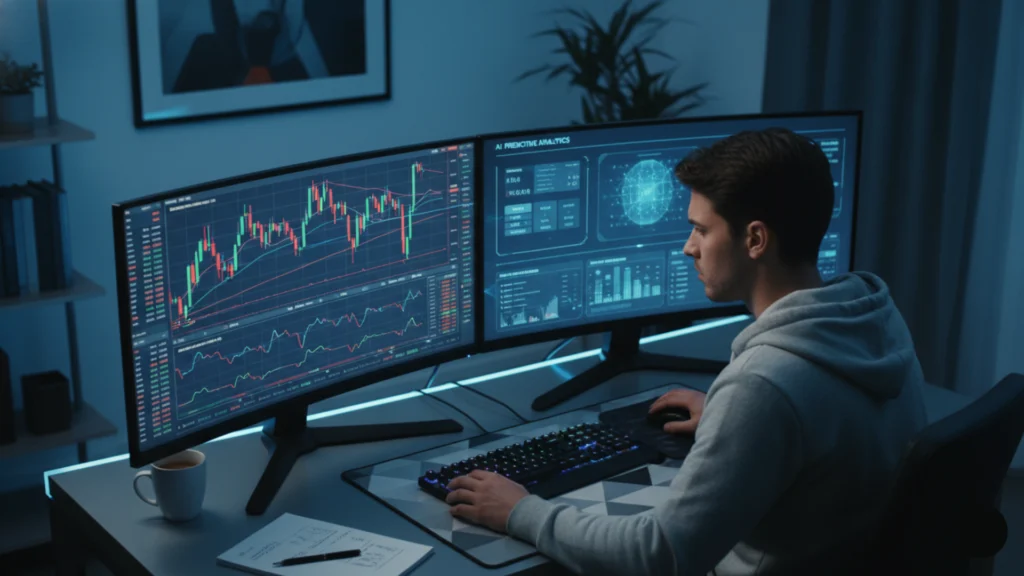
What AI means in trading AI in trading means using computer programs that can think, learn, and make decisions. These programs study market data and find patterns that humans might miss.
Why AI is changing the way people trade AI trading strategies work faster than any human. They can read thousands of charts in seconds. This speed gives traders a big advantage.
How AI helps traders make faster decisions Instead of waiting and guessing, AI systems give signals right away. They react to market changes in real time. This helps traders avoid missing good opportunities.
Why more beginners are using AI tools today AI tools are now simpler and cheaper than before. Many platforms require zero coding. Even a beginner can set up an automated trading system today with just a few clicks.
What Makes a Trading Strategy High-Performing?
Not every strategy makes money. A high-performing strategy does more than just win sometimes.
Understanding performance in trading Performance means how well your strategy works over time — not just once or twice.
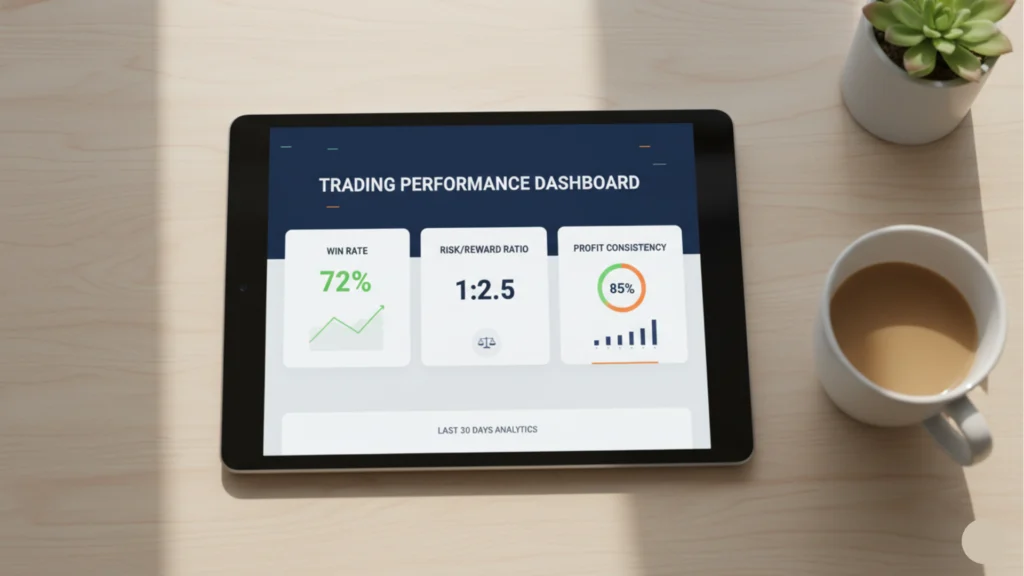
Win rate vs profit consistency A strategy with 60% wins but tiny profits is not great. You want consistent profits. Even a 45% win rate can be profitable with the right risk-to-reward ratio.
Risk-to-reward ratio explained simply If you risk $10 to make $30, your ratio is 1:3. That is good. AI-powered trading models help you find trades with better ratios.
Why high returns alone are not enough Big returns with huge risks are dangerous. A smart AI trading strategy balances both returns and safety.
What Is Artificial Intelligence in Trading?
Simple meaning of AI in financial markets AI in financial markets means using smart software to study prices, volumes, and news. It then makes predictions about what might happen next.
How AI learns from market data AI uses past data to find patterns. This is called machine learning for stock trading. The more data it studies, the smarter it gets.
Difference between AI trading and manual trading Manual trading depends on human judgment. AI trading depends on data and logic. AI does not get tired, emotional, or distracted.
Common examples of AI in trading platforms Many brokers now offer AI trading signals. Tools like QuantConnect and MetaTrader 5 use intelligent trading algorithms to help users automate strategies.
Why Traders Use AI to Build Strategies
Faster market analysis Real-time AI trading analysis can process news, price movements, and indicators in milliseconds. A human cannot match that speed.
Emotion-free decision making Fear and greed ruin many trades. AI does not feel emotions. It just follows the rules you set.
Automation of trade execution Once your strategy is ready, the system trades for you automatically. This is the core benefit of automated trading with artificial intelligence.
Better pattern recognition AI finds patterns in charts and price action that the human eye easily misses. This is why AI-enhanced technical analysis is so powerful.
Handling large amounts of market data Markets produce millions of data points daily. AI tools for trading process all of it quickly and efficiently.

Core Components of an AI Trading System
Every successful AI trading system has five key parts.
- Data collection system — gathers market prices, news, and indicators
- AI model or prediction engine — the brain that finds patterns
- Backtesting system — tests the strategy on old data
- Trade execution system — places buy and sell orders
- Risk management system — protects your capital
All five parts must work together for the strategy to succeed.
Data: The Fuel That Powers AI Trading
Why data is important for AI Without data, AI cannot learn anything. Data is like food for your AI model.
Historical market data This is old price and volume data. It helps train your model on past market behavior.
Real-time market data This is live data. Your AI uses it to make decisions right now.
News and sentiment data AI can read news headlines and social media. This is called sentiment analysis. It helps predict sudden market moves.
Alternative data sources Things like satellite images, credit card transactions, and web traffic are used by advanced AI trading systems to find hidden market clues.

How to Collect Trading Data for AI Models
Free sources for market data Yahoo Finance, Alpha Vantage, and Quandl offer free historical data. These are great starting points for beginners.
Paid market data providers Bloomberg and Refinitiv offer high-quality data. These are better for professional AI trading software users.
Broker APIs Many brokers like Interactive Brokers or Alpaca provide APIs. You can pull live data directly into your model.
Web scraping for financial insights You can collect news and social media data using Python scraping tools. This helps build better predictive trading models with AI.
Cleaning and preparing data for AI Raw data often has errors. You must clean it before using it. This step is called data preprocessing and it is very important.
Choosing the Right Market for AI Trading
- Stocks — good for long-term AI strategies, lots of data available
- Forex — fast-moving, great for AI forex trading strategies
- Crypto — volatile but full of opportunities for AI crypto trading strategy
- ETFs — lower risk, good for portfolio trading
- Futures — advanced, better for experienced users
Which market is best for beginners? Stocks or crypto are easiest to start with. There is tons of free data and many beginner-friendly tools available.
Choosing the Right AI Model for Trading
Machine learning models These include Random Forest, XGBoost, and Linear Regression. They are great for quantitative trading with machine learning.
Deep learning models Neural networks can process complex data. They are used in deep learning for trading strategies.
Natural language processing NLP reads news and social media to predict market sentiment. It is great for AI-based stock market prediction.
Reinforcement learning This model learns by trying actions and getting rewards. It is used in advanced AI trading bot development.
Which model suits which strategy? Short-term trades work well with deep learning. Long-term strategies work well with simpler machine learning models.
How AI Finds Hidden Market Patterns
- Trend detection — finds uptrends and downtrends automatically
- Price action recognition — reads candlestick patterns like a pro
- Volume analysis — checks if moves are backed by real buying
- Correlation between assets — finds links between stocks, forex, and crypto
- Predicting market sentiment — reads mood of the market from news and social data
This is how AI-driven market analysis gives traders an edge.
Step-by-Step Guide to Building High-Performing Trading Strategies with AI
Step 1: Learn Basic Trading Concepts
Before touching any AI tool, learn the basics.
- Understanding charts — learn how to read candlestick and bar charts
- Technical indicators — study RSI, MACD, Moving Averages
- Risk basics — understand stop-loss and position sizing

Step 2: Pick a Trading Goal
Your goal shapes your entire strategy.
- Scalping — tiny profits, very fast trades
- Day trading — open and close within one day
- Swing trading — hold for days or weeks
- Long-term strategy — hold for months
Pick one and focus on it fully.
Step 3: Gather Quality Data
- Historical prices from free sources
- Add technical indicators like RSI and Bollinger Bands
- Include news sentiment data for better accuracy
Step 4: Train Your AI Model
- Feed your clean data into the model
- Let it create prediction rules from patterns
- Test if predictions match real past results
Step 5: Create Buy and Sell Rules
- Entry conditions — when should the AI enter a trade?
- Exit conditions — when should it take profit?
- Stop-loss logic — when should it cut the loss?
These rules are the heart of your order block strategy.
Step 6: Backtest the Strategy
Backtesting means testing your strategy on old data to see if it would have worked.
- Use tools like QuantConnect or TradingView
- Measure win rate, drawdown, and profit factor
- AI strategy backtesting shows weaknesses before going live
Step 7: Paper Trade First
- Set up a demo account with your broker
- Run your strategy on live prices without real money
- Forward testing shows if results match backtesting
This step saves beginners from costly mistakes.
Step 8: Go Live with Small Capital
- Start with money you can afford to lose
- Track every trade carefully
- Scale up only after consistent performance

Real Example of an AI Trading Strategy
Stock example: Use machine learning to find stocks breaking above 50-day moving average with rising volume. Enter on breakout, exit at 5% profit.
Crypto example: Use sentiment analysis on Twitter and Reddit. Buy when positive sentiment spikes. Sell when sentiment drops.
Forex example: Use deep learning to predict EUR/USD direction based on economic news and price patterns.
Beginner case study: A beginner used QuantConnect with a simple moving average crossover strategy. After backtesting and paper trading for 30 days, they went live with $500 and made a 12% return in 6 weeks.
Best AI Tools for Building Trading Strategies
- TradingView — great for chart analysis and strategy alerts
- MetaTrader 5 — popular for forex and automated trading
- QuantConnect — full Python-based algorithmic trading platform
- TensorFlow / PyTorch — for building deep learning models
- ChatGPT — for generating ideas, writing code, and strategy debugging
- AlgoBuilder and no-code AI platforms — perfect for beginners without coding skills
How to Use ChatGPT to Build Trading Strategies
ChatGPT is a powerful AI tool for traders. Here is how to use it:
- Generate strategy ideas — ask for new strategy concepts based on indicators
- Write trading scripts — request Python code for your strategy
- Explain technical indicators — understand RSI, MACD, Fibonacci in simple words
- Improve backtesting code — ask ChatGPT to fix or optimize your existing code
- Debug trading bots — paste your code and ask what is wrong
This makes build trading strategy with AI much easier for beginners.
Risk Management for AI Trading Strategies
Why risk management matters Even the best AI strategy can lose. Proper risk management protects your account.
- Stop-loss setup — always define your maximum loss per trade
- Position sizing — never risk more than 1-2% of your account on one trade
- Daily loss limits — stop trading if you lose more than 3% in a day
- Portfolio diversification — spread risk across multiple assets
Risk management is what separates winners from those who blow their accounts.
Common Mistakes When Building AI Trading Strategies
- Using poor quality or dirty data
- Overfitting the model to past data — it works on history but fails live
- Ignoring transaction costs like spreads and commissions
- Trusting AI without monitoring it regularly
- Starting with real money too soon
Avoid these mistakes and your AI stock trading strategy will last longer.
How to Improve Your AI Strategy Over Time
- Retrain the model every few months with new data
- Add new data sources like sentiment or macro indicators
- Remove weak indicators that add noise
- Adjust to changing market conditions — what worked last year may not work today
- Continuous testing keeps your strategy sharp
Trading strategy optimization with AI is an ongoing process, not a one-time task.
AI Trading Strategy vs Traditional Trading Strategy
| Feature | AI Trading | Traditional Trading |
|---|---|---|
| Speed | Milliseconds | Minutes or hours |
| Accuracy | Data-driven | Experience-based |
| Emotions | None | High influence |
| Automation | Full | Manual |
Both approaches have merit. Combining human insight with AI power is often the best approach.
How Much Money Do You Need to Start AI Trading?
- Free tools setup — $0 (use demo accounts and free platforms)
- Low-budget setup — $100–$500 to go live
- Mid-level setup — $1,000–$5,000 for better results
- Professional setup — $10,000+ with premium data and tools
Hidden costs include data subscriptions, broker fees, and server hosting for bots.
Is AI Trading Safe for Beginners?
Benefits: faster decisions, no emotions, automation
Risks: models can fail, markets change, bugs can cause big losses
Learning curve: it takes time to understand both trading and AI
Always use a demo account first. Start with a no-code AI trading platform if coding feels hard.
Can AI Beat Human Traders?
AI strengths: speed, consistency, data processing, no emotions
Human strengths: intuition, common sense, adapting to news events
Where humans still win: during unexpected global events, AI often fails. Humans understand context better.
Best approach: use AI for execution and analysis. Use human judgment for big decisions.
Future of AI in Trading
- AI trading in 2026 and beyond will be even more accessible
- Self-learning bots will adjust to market changes automatically
- Multi-agent systems will manage complex portfolios autonomously
- AI hedge funds are already beating many human-managed funds
- Retail trader opportunities will grow as tools get cheaper and easier
Beginner Roadmap to Start AI Trading
- Learn trading basics
- Learn simple Python coding
- Choose one market to focus on
- Collect and clean your data
- Build your first simple strategy
- Backtest thoroughly
- Paper trade for at least 30 days
- Go live with small capital
- Improve slowly over time
Checklist Before Launching Your AI Trading Strategy
✅ Strategy rules clearly defined
✅ Data quality checked and cleaned
✅ Backtesting completed with good results
✅ Paper trading results stable for 30+ days
✅ Risk management rules added
✅ Broker connection tested and working
Frequently Asked Questions
Question: Can AI guarantee profits in trading?
Answer: No. AI improves your odds but cannot guarantee profits. Markets are unpredictable and all trading involves risk.
Question: Do I need coding skills to build AI trading strategies?
Answer: Not always. No-code AI trading platforms let you build strategies without writing a single line of code.
Question: Can beginners use AI for trading?
Answer: Yes. Many AI tools for trading beginners are simple, visual, and easy to use even with no experience.
Question: Which AI tool is best for strategy building?
Answer: TradingView and QuantConnect are great starting points. ChatGPT is useful for generating and debugging strategies quickly.
Question: How long does it take to create an AI trading strategy?
Answer: A basic strategy can take 1–2 weeks. A well-tested, optimized strategy may take 2–3 months.
Question: Is AI trading legal?
Answer: Yes. Automated and algorithmic trading is legal in most countries. Always check your local broker and financial regulations.
Question: Can ChatGPT build trading bots?
Answer: Yes. ChatGPT can write Python code for trading bots, explain logic, and help fix errors. It is a great coding assistant.
Question: What is the safest way to start AI trading?
Answer: Start with a demo account, backtest your strategy, paper trade for 30 days, then go live with very small capital.
Conclusion
Building high-performing trading strategies with AI is possible for anyone — even beginners. The key is to start simple, learn step by step, and always test before going live.
Key takeaways:
- AI makes trading faster, smarter, and more consistent
- Always backtest and paper trade before using real money
- Risk management is more important than any strategy
- AI is a tool — human oversight is still needed
- Keep improving your strategy as markets change
AI is not a magic money machine. But when used correctly, it is one of the most powerful tools a trader can have. Start small, stay patient, and let data guide your decisions.
