
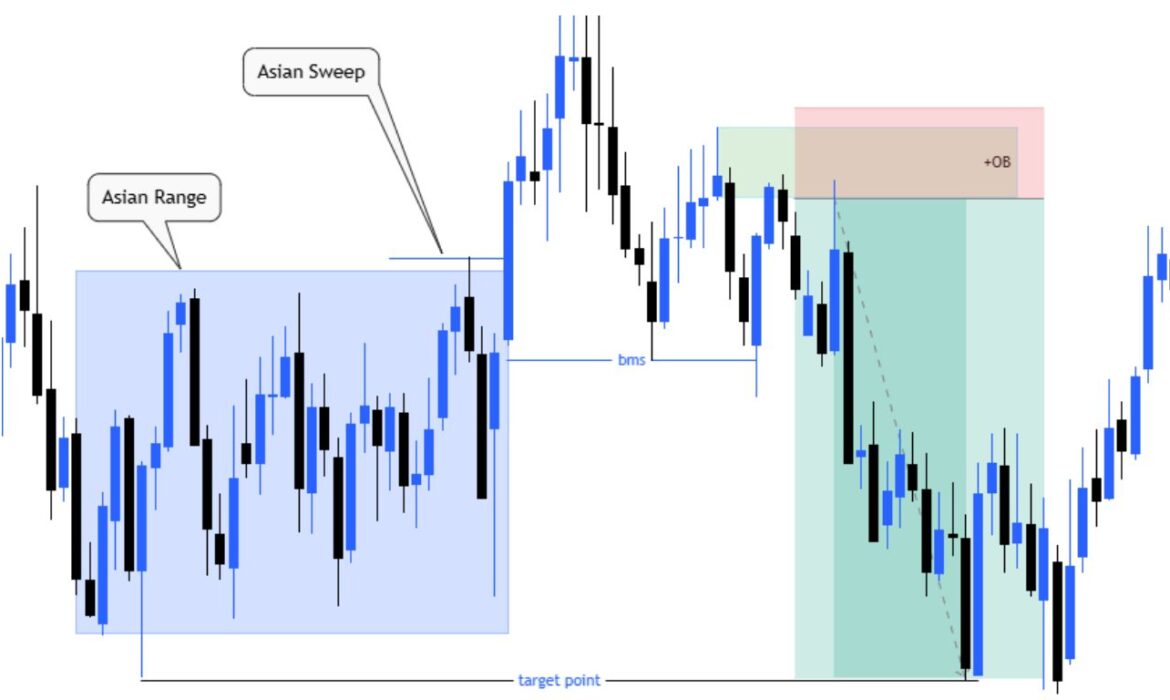
What is the Asian Range Strategy?
The Asian range strategy is a trading method where you mark the highest and lowest price during the Asian trading session. Then you wait for price to break out of this range during the London or New York session.
Think of it like this. The Asian session is when the market takes a nap. Price moves in a small box. Smart traders draw this box on their charts. When London traders wake up, they often push price out of this box.
The Asian range strategy helps you catch this move. It works because the market follows patterns. Low activity during Asian hours creates a setup. High activity during London hours creates the breakout. This simple idea forms the foundation of profitable Asian session trading.
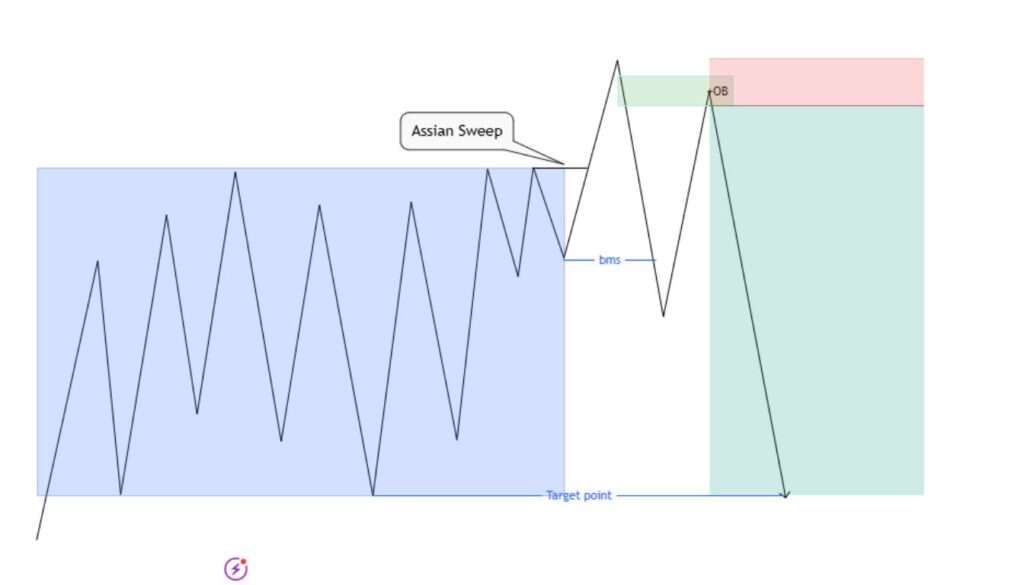
How to Mark the Asian Range
Marking the Asian range is easy. Follow these simple steps every day. This is an important part of the Asian range strategy.
Step 1: Know Your Session Times
The Asian session starts at 00:00 UTC. It ends at 08:00 UTC. In Tokyo time, this is 9:00 AM to 5:00 PM. If you live in New York, this is 7:00 PM to 3:00 AM. Convert these times to your local timezone. Knowing these times helps you apply the Asian range strategy correctly.
Step 2: Draw the High and Low
Wait for the Asian session to end. Look at your chart. Find the highest candle wick. Draw a horizontal line there. Find the lowest candle wick. Draw another line there. This box is your Asian range. This step is the core of the Asian range strategy.
Step 3: Label Your Lines
Mark the top line as “Asian High.” Mark the bottom line as “Asian Low.” Use different colors so you can see them clearly. Many traders use blue or green lines.
This simple process takes less than two minutes. Do it every day before London opens. The trading the Asian range method requires this foundation, and it is essential for using the Asian range strategy effectively.
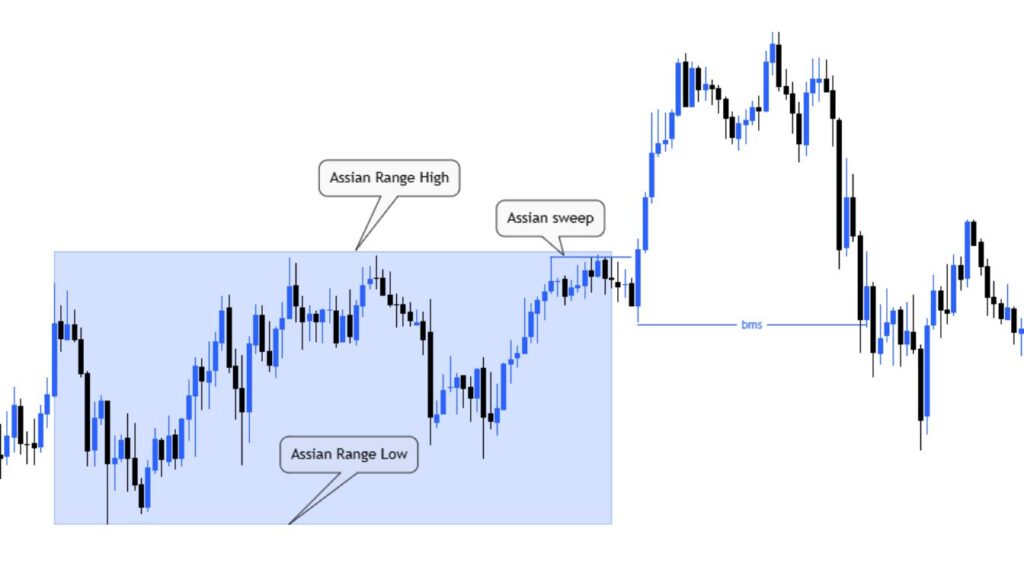
Why the Asian Range Matters
During Asian hours, big banks in London and New York are sleeping. Trading volume drops. Price moves slowly in a tight range. This creates something special for anyone studying or using the Asian range strategy.
Think of a spring being compressed. The less it moves, the more energy builds up. When London opens, this spring releases. Price often shoots in one direction. Smart money waits for this moment.
They know where retail traders placed their stops. These stops sit just above the Asian high or below the Asian low, which is exactly why the Asian range strategy focuses on these levels.
The Asian session forex strategy matters because it gives you a roadmap. You know where price might go. You know where other traders are waiting. This edge makes the Asian range strategy powerful.
Which Pairs Work Best for the Asian Range (and Why)
Not all currency pairs work well for this Asian range strategy . Some pairs move during Asian hours. Others sleep completely.
Best Pairs for Asian Range Trading
JPY pairs work great. Think USD/JPY, EUR/JPY, and GBP/JPY. Japanese traders are active during Asian hours. This creates clean ranges that fit perfectly with the Asian range strategy.
AUD and NZD pairs also work well. AUD/USD and NZD/USD show good movement during the overlap. Australian and New Zealand markets open during Asian hours, making these pairs reliable for the Asian range strategy.
Pairs to Avoid
EUR/USD can be tricky. It often moves too little during Asia. The range becomes too small.
GBP/USD is similar. Low volume makes the range unreliable.
The best Asian range strategy for forex focuses on pairs with natural Asian activity. Stick to JPY, AUD, and NZD crosses for consistent results.
Exact Entry Rules
Follow this checklist for every trade. Do not skip any step.
Entry Checklist
- Wait for price to touch the Asian high or Asian low
- Look for a rejection candle (wick showing price bounced back)
- Check if higher timeframe agrees with your direction
- Wait for a confirmation candle to close in your favor
- Enter on the next candle open
- Set your stop-loss immediately
This Asian session breakout method keeps you disciplined. No confirmation means no trade. Simple rules protect your account and help you execute the Asian range strategy with consistency.
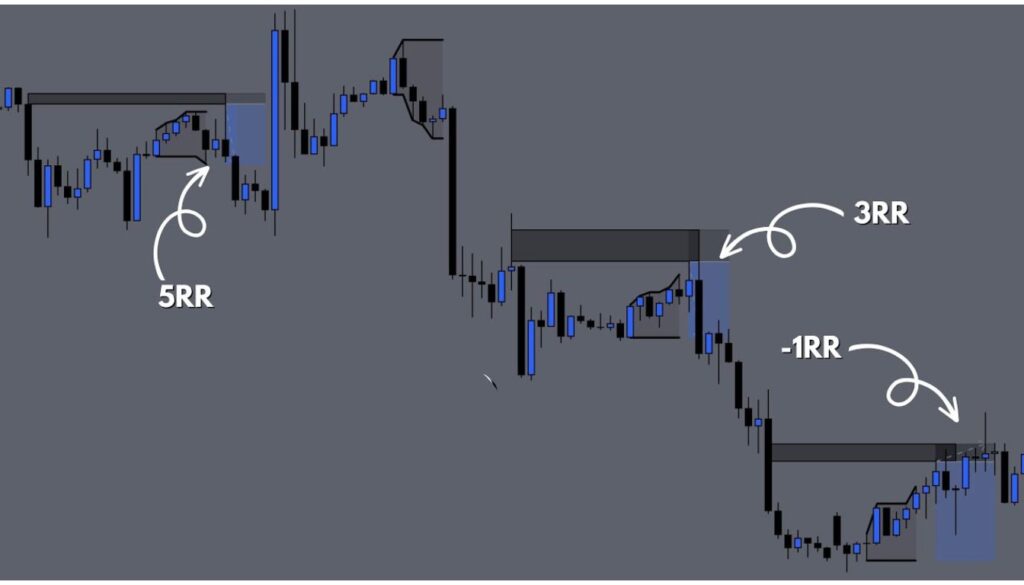
Exact Stop-Loss & Take-Profit Rules (with Examples)
Your stop-loss protects you from big losses. Your take-profit locks in gains. These rules are important when using the Asian range strategy.
Stop-Loss Placement
Place your stop 5–10 pips beyond the opposite side of the range. If you buy at the Asian low, put your stop below the low. Add a small buffer for spread and wicks. This keeps your Asian range strategy trades safe from fake moves.
Take-Profit Targets
Aim for 1:1.5 or 1:2 risk-to-reward. If your stop is 20 pips, your first target should be 30–40 pips. This aligns well with the Asian range strategy, which often gives clean breakout moves.
Simple Example
Asian high: 1.0850. Asian low: 1.0820. Range size: 30 pips. You enter a buy at 1.0825. Stop-loss at 1.0815 (10 pips below low). Take-profit at 1.0855 (30 pips up). Risk: 10 pips. Reward: 30 pips. R:R = 1:3. This example clearly shows how the Asian range strategy creates high-reward setups with small risks.
This Asian range support and resistance strategy gives you clear numbers every time.
How to Size Your Position (Risk Per Trade, Step-by-Step)
Never risk more than 1-2% of your account per trade. Here is the simple math.
Position Sizing Formula
Account size × Risk percentage = Dollar risk. Dollar risk ÷ Stop-loss in pips ÷ Pip value = Lot size.
Worked Example
Account size: $1,000. Risk: 1% = $10. Stop-loss: 20 pips. Pip value for 0.01 lot on EUR/USD: $0.10.
$10 ÷ 20 pips = $0.50 per pip needed. $0.50 ÷ $0.10 per pip (for 0.01 lot) = 0.05 lots.
Trade 0.05 lots. If you lose, you lose $10. This Asian session risk management tip keeps your account safe.
Trade Management: Scaling, Moving Stops, and Partial Profits
Good traders manage their trades actively. Here are simple rules.
Moving Stop to Break-Even
When price moves 1:1 in your favor, move your stop to break-even. This means you cannot lose money anymore.
Taking Partial Profits
Close 50% of your position at 1:1. Let the rest run to 1:2 or beyond. This locks in some profit while allowing bigger gains.
Scaling In
Only add to winners. Never add to losing trades. If your first entry works, you can add a smaller position on pullbacks.
These trade management rules work for any profitable Asian session strategy.
When to Avoid Trading the Asian Range (News, Holidays, ADR extremes)
Some days are bad for trading. Know when to sit out, especially when using the Asian range strategy.
Skip trading during major news events. Think interest rate decisions, NFP, and CPI releases. These create wild moves that ignore technical levels, making the Asian range strategy less reliable.
Avoid bank holidays. When Japanese or Australian markets close for holidays, volume drops further. Ranges become unreliable, which can disrupt the Asian range strategy setup.
Watch for extreme ADR days. If the average daily range is 80 pips but price already moved 70 pips during Asia, the breakout potential shrinks.
These Asian market trading tips save you from unnecessary losses while keeping your Asian range strategy clean and safe.
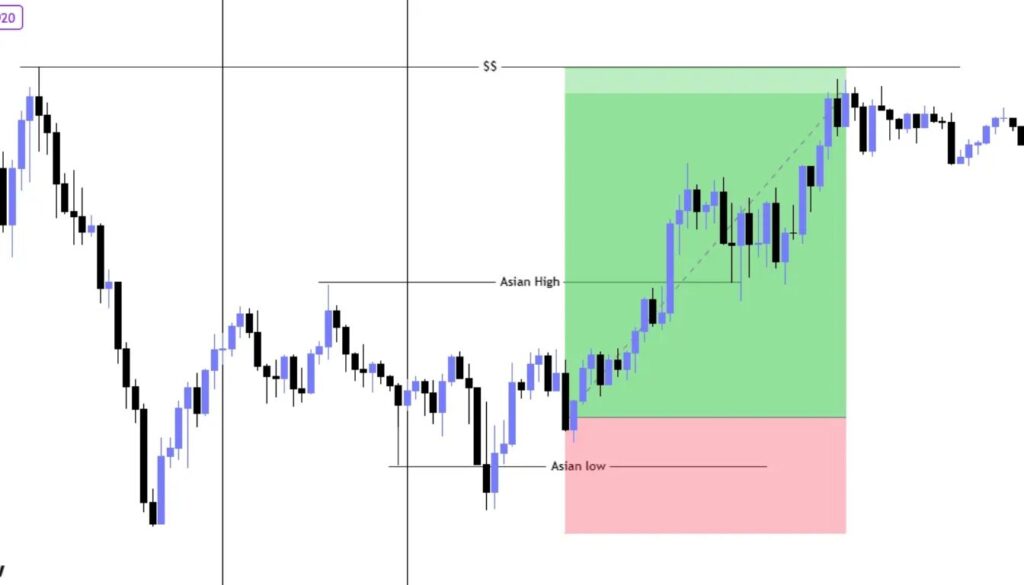
How to Spot a Liquidity Sweep / Stop Hunt
Sometimes price breaks the Asian range, then reverses sharply. This is called a stop hunt or liquidity sweep.
Signs of a False Breakout
Price breaks the range but closes back inside. A long wick appears above the high or below the low. Volume spikes briefly then drops. Price moves fast in one direction, then reverses within minutes.
How to Trade It
Wait for price to return inside the range. Look for a strong rejection candle. Enter in the opposite direction of the initial breakout.
This Asian session price action strategy catches moves that SMC trap trapped other traders.
Combining Asian Range with Higher Timeframe Bias
Always check the bigger picture first. The daily and 4-hour charts show the true trend.
If the daily chart shows an uptrend, only take buys from the Asian low. If the daily shows a downtrend, only take sells from the Asian high. This filter improves your win rate dramatically.
Look for key levels on the higher timeframe. Is price near daily support? Favor buys. Near daily resistance? Favor sells.
This combining approach creates an advanced Asian range strategy that professionals use.
Session Overlap Handling — What To Do at London Open
The London open often breaks the Asian range. Be ready for this moment.
First 30 Minutes Rule
The first 30 minutes of London can be chaotic. Wait for the initial volatility to settle. Watch how price reacts to the Asian range levels.
Breakout Confirmation
If London breaks the Asian high with strong momentum, look to trade the continuation. If it breaks then reverses, treat it as a stop hunt.
This Asian trading hours strategy maximizes opportunities during the overlap.
Essential Filters (ADR, Correlation Check, Volume/Spread Check)
Apply these quick filters before every trade.
ADR filter checks if there is enough room for price to move. Correlation filter ensures you are not taking the same trade on two similar pairs. Volume/spread filter confirms your broker offers good execution during your trading window.
These filters take 30 seconds but save you from bad trades.
A Complete Step-by-Step Trade Example (Bullish & Bearish)
Bullish Example
Asian session creates a range from 1.0800 to 1.0830 on EUR/USD. Daily chart shows uptrend. London opens and price dips to 1.0805. A bullish engulfing candle forms. You enter buy at 1.0810. Stop at 1.0795. Take-profit at 1.0840. Price reaches target in 2 hours. Win.
Bearish Example
USD/JPY Asian range is 150.00 to 150.50. Daily chart shows downtrend. London breaks above 150.50 but immediately reverses. A bearish pin bar forms at 150.55. You enter sell at 150.45. Stop at 150.60. Take-profit at 150.00. Price reaches target. Win.
These examples show the Asian range day trading method in action.
Backtesting the Asian Range Strategy — Simple Plan You Can Do
Backtesting proves the Asian range strategy works. Here is a simple plan.
Go back 3 months on your chart. Mark the Asian range for each day. Record whether a breakout happened and in which direction. Note if the move reached 1:1.5 or 1:2 targets.
Aim for 50-100 trades minimum. This gives you reliable data. Calculate your win rate and average R:R.
A Simple Journal Template (What to Record Every Trade)
Record these items for every trade: Date, pair, HTF bias, Asian high, Asian low, entry price, stop-loss, take-profit, result (win/loss/break-even), R:R achieved, notes on what you learned.
This journal template builds your Asian session trading plan over time.
How to Use the Asian Range Strategy If You Have a 9–5 Job
Set alerts on TradingView or your broker platform. Mark the Asian range before work using your phone. Set alerts at the high and low. Check your phone during breaks. Use limit orders if you cannot watch charts live.
This approach makes the forex Asian range strategy work for busy people.
Common Mistakes & How to Fix Them
Chasing breakouts without confirmation leads to losses. Wait for the candle to close. Using position sizes that are too large causes blown accounts. Stick to 1% risk.
Trading without a stop-loss creates disaster. Always set your stop before entering. Ignoring higher timeframe bias reduces win rate. Check daily chart first. Overtrading during slow days wastes money. If the setup is not there, walk away.
These Asian range trading for beginners tips prevent costly errors.
How to Know When the Setup is Invalid (Clear Invalidation Rules)
Your trade is invalid when price closes cleanly beyond your stop-loss level. If the higher timeframe structure breaks against you, exit immediately. If news suddenly hits the market, consider closing early.
Clear invalidation rules remove emotion from trading.
Adaptations: Scalping vs Swinging with the Asian Range
Scalping Version
Use 5-minute charts. Target 10-15 pips. Take quick profits. Works best on small ADR days. This Asian range scalping technique suits fast traders.
Swing Version
Use 1-hour or 4-hour charts. Target 50-100 pips. Hold trades for days. Works best when daily trend is strong.
Choose your style based on your schedule and personality.
Broker & Trade Execution Checklist (Spread, Slippage, Order Types)
Check that your broker offers low spreads during Asian hours. Spreads often widen when volume is low. Use limit orders to get exact entry prices. Avoid market orders during fast moves. Enable slippage protection if available.
Good execution improves your Asian forex trading system results.
Performance Metrics You Should Track (Win rate, Avg R:R, Expectancy)
Track three numbers. Win rate is total wins divided by total trades. Average R:R is the average reward compared to risk on winning trades. Expectancy combines both: (Win rate × Avg win) – (Loss rate × Avg loss).
Positive expectancy means your Asian range strategy makes money over time.
Psychology Tips for Range Trading — Simple Daily Habits
Range trading can feel boring. Price moves slowly. You might feel tempted to force trades.
Create a pre-trading routine. Review your rules. Mark your levels. Then wait patiently. Take breaks between sessions. Avoid watching charts for hours. Trust your system.
Indicators & Tools That Add Value (But Don’t Overload You)
Use a 200-period moving average on the daily chart for trend direction. Use an ADR indicator to measure volatility. Use session highlighter tools to automatically mark Asian hours.
Keep your charts clean. Three tools maximum.
Frequently Asked Questions & Answers
Question: Can I trade only the Asian session?
Answer: Yes, but breakouts during London often offer better moves.
Question: Does it work on crypto and indices?
Answer: Yes, but test each market separately. Crypto never sleeps, so adapt the timing.
Question: How much capital do I need?
Answer: Start with $500-1000 for proper risk management with micro lots.
Printable Cheat Sheet / Daily Routine
Morning routine: Check HTF bias. Mark Asian high and low. Check ADR. Verify no major news. Set alerts. Wait for confirmation. Execute or skip. Journal the result.
This Asian range strategy explained in one simple checklist.
How to Combine Asian Range with ICT Concepts
ICT concepts fit naturally with the Asian range. Fair value gaps often form during the London breakout. Liquidity pools sit just beyond the Asian high and low.
When price sweeps the Asian low and fills a fair value gap below, look for buys. This combines two powerful ideas into one approach.
When to Scale Up
Trade on demo until you complete 100 trades profitably. Then start with micro lots on a real account. After 3 months of positive results, increase position size gradually.
Never scale up based on feelings or one good week.
Templates & Resources to Save Time
Use Google Sheets for your trading journal. Search for “Asian session highlighter” indicator on TradingView. Set alerts with text like “Price touched Asian High – Check for entry.”
These templates speed up your daily routine.
Next Steps: A 30-Day Practice Plan for New Traders
Week 1: Mark the Asian range every day on three pairs. No trading yet.
Week 2: Backtest 20 trades using historical data. Record results.
Week 3: Trade on demo account. Follow all rules strictly.
Week 4: Review your journal. Identify patterns in wins and losses.
This 30-day plan builds your Asian forex market strategy guide skills step by step.

Final Thoughts — A Simple Strategy That Actually Works
The Asian range strategy isn’t complicated at all — and that’s what makes it powerful. Once you know how to mark the range, wait for a clean setup, and manage your risk, everything becomes easier. The whole goal is to use the quiet Asian hours to prepare for the stronger moves that usually come when London opens.
Think of it like this: your job isn’t to guess where the market will go. Your job is to stay patient, read the levels, and react only when the market shows its hand. When you follow this process consistently, the Asian range becomes a reliable part of your playbook.
You don’t need to rush. You don’t need to force trades. Stick to the rules, trust the method, and give yourself time to grow. With steady practice, journaling, and discipline, this strategy can genuinely make a difference in your trading journey.
Trade smart, stay calm, and keep improving — one day at a time.

[…] secret Asian strategy wins 95% of trades!” – No strategy wins that […]
[…] broker accounts, your returns won’t justify the effort required for successful currency arbitrage strategy […]
[…] first candle range strategy after London opens often gives the cleanest setups. The breakouts are genuine because big banks and […]
[…] Prop Firm Passing Service will tell you what trading strategy they’ll use for your challenge. They usually stick to low-risk methods that follow all prop […]