
Asian Range Strategy: Step-by-Step Forex Guide
What is the Asian Range Strategy?
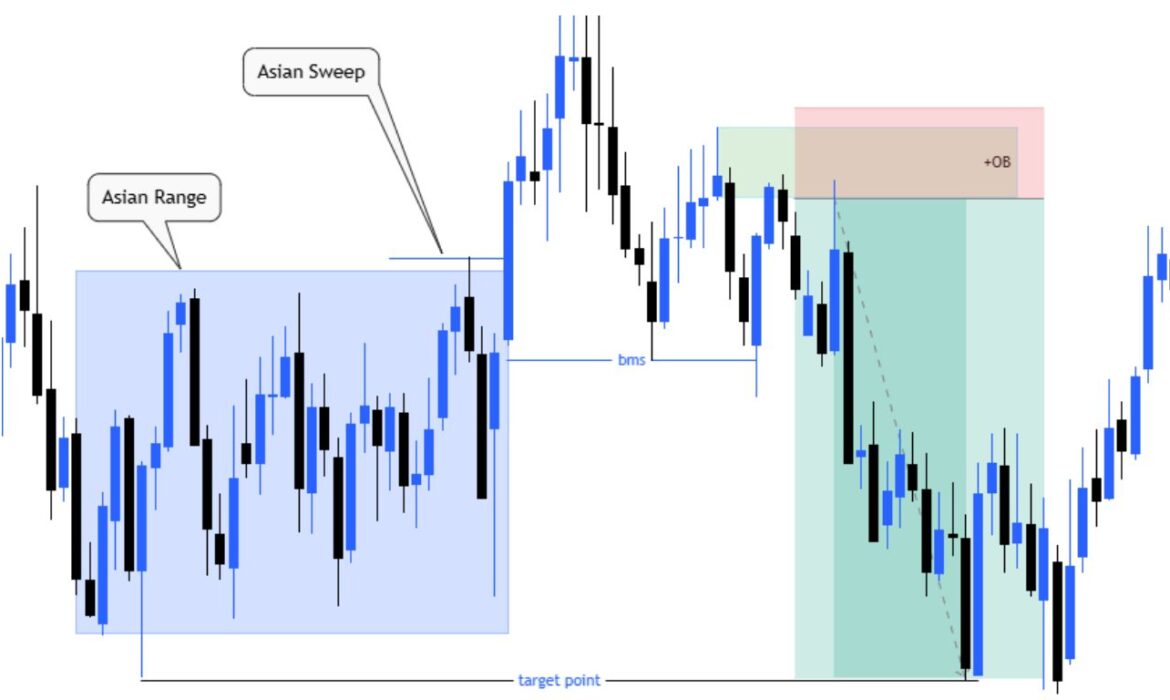
The Asian range strategy is a trading method where you mark the highest and lowest price during the Asian trading session. Then you wait for price to break out of this range during the London or New York session.
Think of it like this. The Asian session is when the market takes a nap. Price moves in a small box. Smart traders draw this box on their charts. When London traders wake up, they often push price out of this box.
The Asian range strategy helps you catch this move. It works because the market follows patterns. Low activity during Asian hours creates a setup. High activity during London hours creates the breakout. This simple idea forms the foundation of profitable Asian session trading.
How to Mark the Asian Range
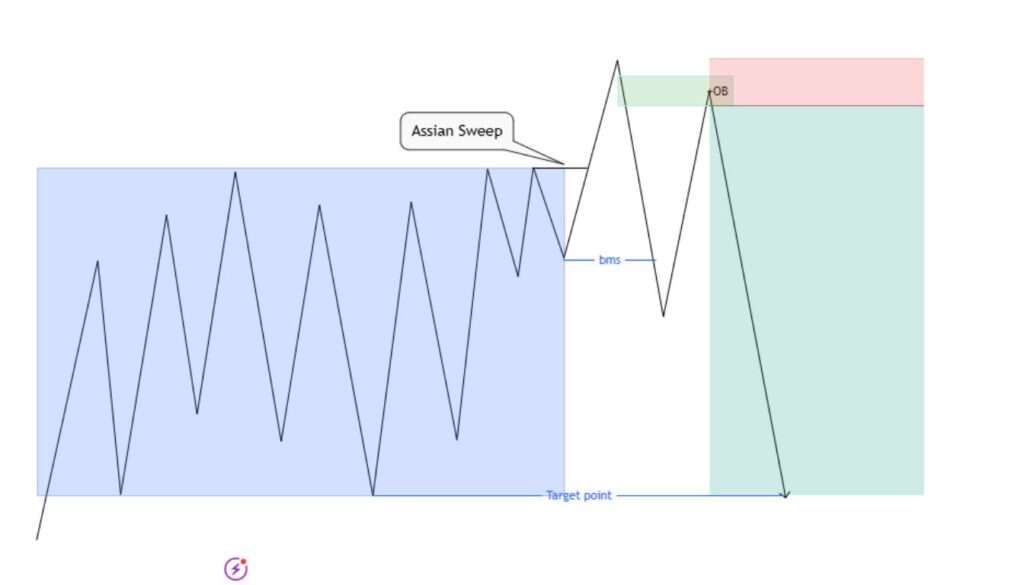
Marking the Asian range is easy. Follow these simple steps every day. This is an important part of the Asian range strategy.
Step 1: Know Your Session Times
The Asian session starts at 00:00 UTC. It ends at 08:00 UTC. In Tokyo time, this is 9:00 AM to 5:00 PM. If you live in New York, this is 7:00 PM to 3:00 AM. Convert these times to your local timezone. Knowing these times helps you apply the Asian range strategy correctly.
Step 2: Draw the High and Low
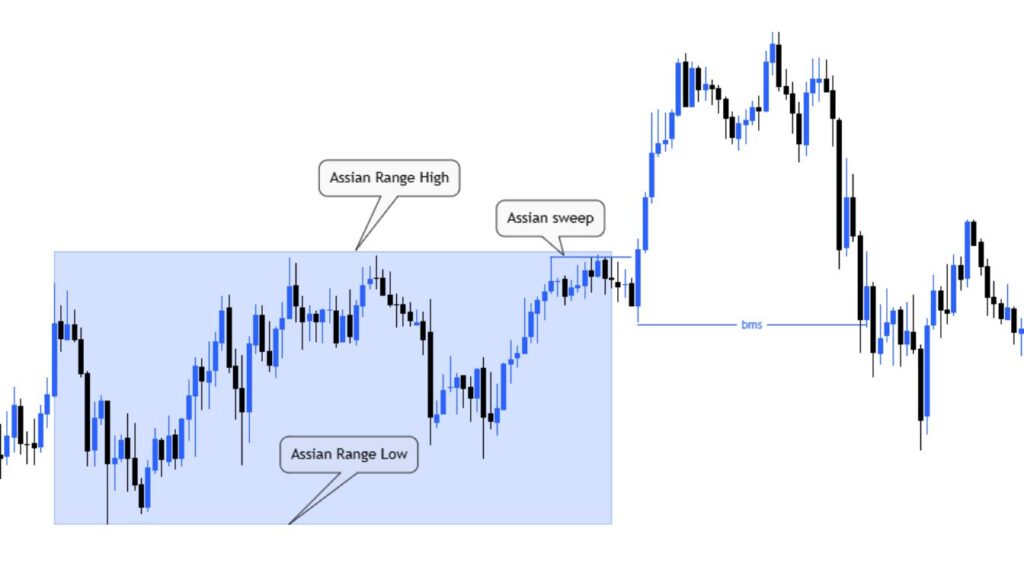
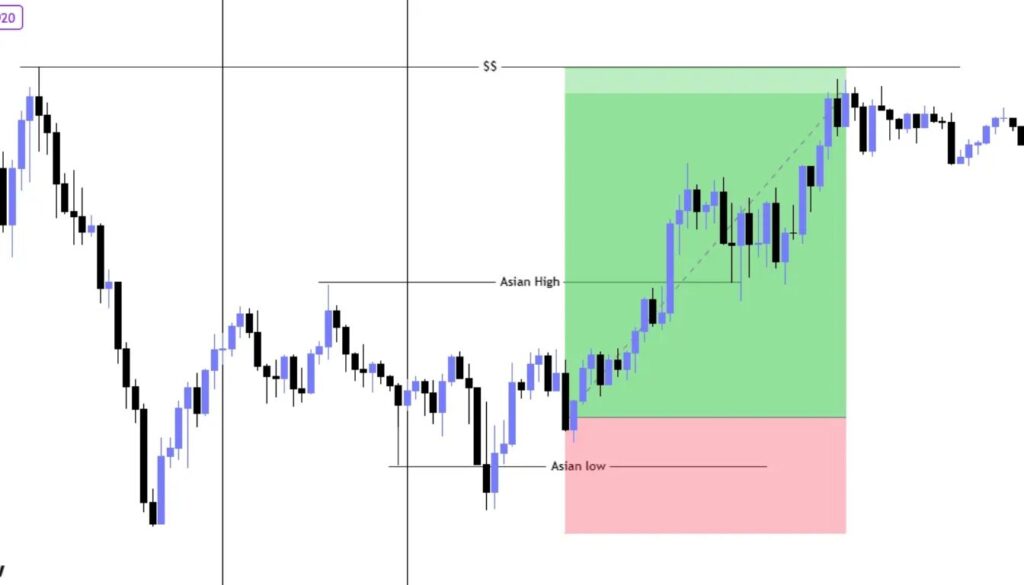
Wait for the Asian session to end. Look at your chart. Find the highest candle wick. Draw a horizontal line there. Find the lowest candle wick. Draw another line there. This box is your Asian range. This step is the core of the Asian range strategy.
Step 3: Label Your Lines
Mark the top line as “Asian High.” Mark the bottom line as “Asian Low.” Use different colors so you can see them clearly. Many traders use blue or green lines.
This simple process takes less than two minutes. Do it every day before London opens. The trading the Asian range method requires this foundation, and it is essential for using the Asian range strategy effectively.
Why the Asian Range Matters
During Asian hours, big banks in London and New York are sleeping. Trading volume drops. Price moves slowly in a tight range. This creates something special for anyone studying or using the Asian range strategy.
Think of a spring being compressed. The less it moves, the more energy builds up. When London opens, this spring releases. Price often shoots in one direction. Smart money waits for this moment.
They know where retail traders placed their stops. These stops sit just above the Asian high or below the Asian low, which is exactly why the Asian range strategy focuses on these levels.
The Asian session forex strategy matters because it gives you a roadmap. You know where price might go. You know where other traders are waiting. This edge makes the Asian range strategy powerful.
Which Pairs Work Best for the Asian Range (and Why)
Not all currency pairs work well for this Asian range strategy . Some pairs move during Asian hours. Others sleep completely.
Best Pairs for Asian Range Trading
JPY pairs work great. Think USD/JPY, EUR/JPY, and GBP/JPY. Japanese traders are active during Asian hours. This creates clean ranges that fit perfectly with the Asian range strategy.
AUD and NZD pairs also work well. AUD/USD and NZD/USD show good movement during the overlap. Australian and New Zealand markets open during Asian hours, making these pairs reliable for the Asian range strategy.
Pairs to Avoid
EUR/USD can be tricky. It often moves too little during Asia. The range becomes too small.
GBP/USD is similar. Low volume makes the range unreliable.
The best Asian range strategy for forex focuses on pairs with natural Asian activity. Stick to JPY, AUD, and NZD crosses for consistent results.
Exact Entry Rules
Follow this checklist for every trade. Do not skip any step.
Entry Checklist
- Wait for price to touch the Asian high or Asian low
- Look for a rejection candle (wick showing price bounced back)
- Check if higher timeframe agrees with your direction
- Wait for a confirmation candle to close in your favor
- Enter on the next candle open
- Set your stop-loss immediately
This Asian session breakout method keeps you disciplined. No confirmation means no trade. Simple rules protect your account and help you execute the Asian range strategy with consistency.
Exact Stop-Loss & Take-Profit Rules (with Examples)
Your stop-loss protects you from big losses. Your take-profit locks in gains. These rules are important when using the Asian range strategy.
Stop-Loss Placement
Place your stop 5–10 pips beyond the opposite side of the range. If you buy at the Asian low, put your stop below the low. Add a small buffer for spread and wicks. This keeps your Asian range strategy trades safe from fake moves.
Take-Profit Targets
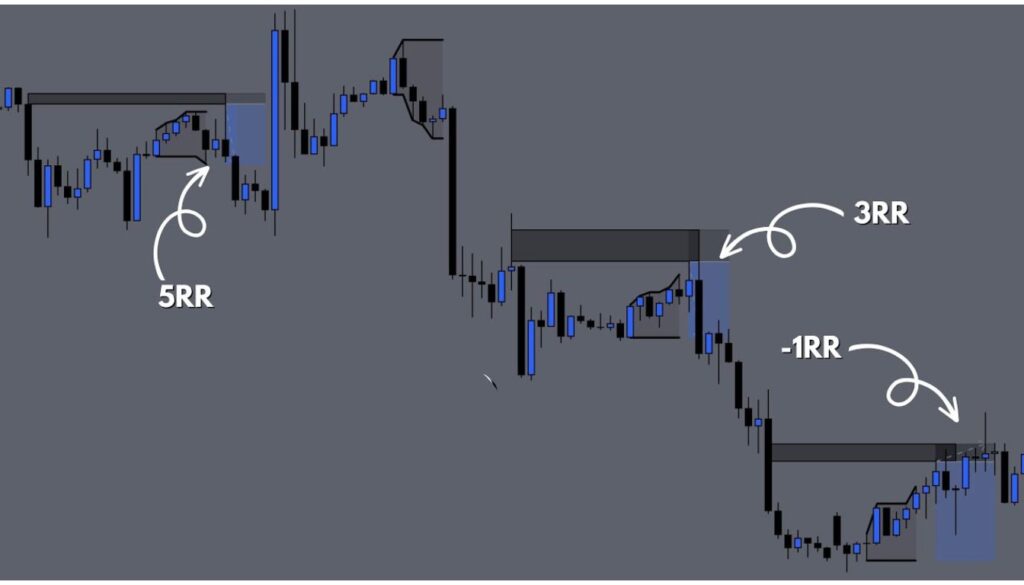
Aim for 1:1.5 or 1:2 risk-to-reward. If your stop is 20 pips, your first target should be 30–40 pips. This aligns well with the Asian range strategy, which often gives clean breakout moves.
Simple Example
Asian high: 1.0850. Asian low: 1.0820. Range size: 30 pips. You enter a buy at 1.0825. Stop-loss at 1.0815 (10 pips below low). Take-profit at 1.0855 (30 pips up). Risk: 10 pips. Reward: 30 pips. R:R = 1:3. This example clearly shows how the Asian range strategy creates high-reward setups with small risks.
This Asian range support and resistance strategy gives you clear numbers every time.
How to Size Your Position (Risk Per Trade, Step-by-Step)
Never risk more than 1-2% of your account per trade. Here is the simple math.
Position Sizing Formula
Account size × Risk percentage = Dollar risk. Dollar risk ÷ Stop-loss in pips ÷ Pip value = Lot size.
Worked Example
Account size: $1,000. Risk: 1% = $10. Stop-loss: 20 pips. Pip value for 0.01 lot on EUR/USD: $0.10.
$10 ÷ 20 pips = $0.50 per pip needed. $0.50 ÷ $0.10 per pip (for 0.01 lot) = 0.05 lots.
Trade 0.05 lots. If you lose, you lose $10. This Asian session risk management tip keeps your account safe.
Trade Management: Scaling, Moving Stops, and Partial Profits
Good traders manage their trades actively. Here are simple rules.
Moving Stop to Break-Even
When price moves 1:1 in your favor, move your stop to break-even. This means you cannot lose money anymore.
Taking Partial Profits
Close 50% of your position at 1:1. Let the rest run to 1:2 or beyond. This locks in some profit while allowing bigger gains.
Scaling In
Only add to winners. Never add to losing trades. If your first entry works, you can add a smaller position on pullbacks.
These trade management rules work for any profitable Asian session strategy.
When to Avoid Trading the Asian Range (News, Holidays, ADR extremes)
Some days are bad for trading. Know when to sit out, especially when using the Asian range strategy.
Skip trading during major news events. Think interest rate decisions, NFP, and CPI releases. These create wild moves that ignore technical levels, making the Asian range strategy less reliable.
Avoid bank holidays. When Japanese or Australian markets close for holidays, volume drops further. Ranges become unreliable, which can disrupt the Asian range strategy setup.
Watch for extreme ADR days. If the average daily range is 80 pips but price already moved 70 pips during Asia, the breakout potential shrinks.
These Asian market trading tips save you from unnecessary losses while keeping your Asian range strategy clean and safe.
How to Spot a Liquidity Sweep / Stop Hunt
Sometimes price breaks the Asian range, then reverses sharply. This is called a stop hunt or liquidity sweep.
Signs of a False Breakout
Price breaks the range but closes back inside. A long wick appears above the high or below the low. Volume spikes briefly then drops. Price moves fast in one direction, then reverses within minutes.
How to Trade It
Wait for price to return inside the range. Look for a strong rejection candle. Enter in the opposite direction of the initial breakout.
This Asian session price action strategy catches moves that SMC trap trapped other traders.
Combining Asian Range with Higher Timeframe Bias
Always check the bigger picture first. The daily and 4-hour charts show the true trend.
If the daily chart shows an uptrend, only take buys from the Asian low. If the daily shows a downtrend, only take sells from the Asian high. This filter improves your win rate dramatically.
Look for key levels on the higher timeframe. Is price near daily support? Favor buys. Near daily resistance? Favor sells.
This combining approach creates an advanced Asian range strategy that professionals use.
Session Overlap Handling — What To Do at London Open
The London open often breaks the Asian range. Be ready for this moment.
First 30 Minutes Rule
The first 30 minutes of London can be chaotic. Wait for the initial volatility to settle. Watch how price reacts to the Asian range levels.
Breakout Confirmation
If London breaks the Asian high with strong momentum, look to trade the continuation. If it breaks then reverses, treat it as a stop hunt.
This Asian trading hours strategy maximizes opportunities during the overlap.
Essential Filters (ADR, Correlation Check, Volume/Spread Check)
Apply these quick filters before every trade.
ADR filter checks if there is enough room for price to move. Correlation filter ensures you are not taking the same trade on two similar pairs. Volume/spread filter confirms your broker offers good execution during your trading window.
These filters take 30 seconds but save you from bad trades.
A Complete Step-by-Step Trade Example (Bullish & Bearish)
Bullish Example
Asian session creates a range from 1.0800 to 1.0830 on EUR/USD. Daily chart shows uptrend. London opens and price dips to 1.0805. A bullish engulfing candle forms. You enter buy at 1.0810. Stop at 1.0795. Take-profit at 1.0840. Price reaches target in 2 hours. Win.
Bearish Example
USD/JPY Asian range is 150.00 to 150.50. Daily chart shows downtrend. London breaks above 150.50 but immediately reverses. A bearish pin bar forms at 150.55. You enter sell at 150.45. Stop at 150.60. Take-profit at 150.00. Price reaches target. Win.
These examples show the Asian range day trading method in action.
Backtesting the Asian Range Strategy — Simple Plan You Can Do
Backtesting proves the Asian range strategy works. Here is a simple plan.
Go back 3 months on your chart. Mark the Asian range for each day. Record whether a breakout happened and in which direction. Note if the move reached 1:1.5 or 1:2 targets.
Aim for 50-100 trades minimum. This gives you reliable data. Calculate your win rate and average R:R.
A Simple Journal Template (What to Record Every Trade)
Record these items for every trade: Date, pair, HTF bias, Asian high, Asian low, entry price, stop-loss, take-profit, result (win/loss/break-even), R:R achieved, notes on what you learned.
This journal template builds your Asian session trading plan over time.
How to Use the Asian Range Strategy If You Have a 9–5 Job
Set alerts on TradingView or your broker platform. Mark the Asian range before work using your phone. Set alerts at the high and low. Check your phone during breaks. Use limit orders if you cannot watch charts live.
This approach makes the forex Asian range strategy work for busy people.
Common Mistakes & How to Fix Them
Chasing breakouts without confirmation leads to losses. Wait for the candle to close. Using position sizes that are too large causes blown accounts. Stick to 1% risk.
Trading without a stop-loss creates disaster. Always set your stop before entering. Ignoring higher timeframe bias reduces win rate. Check daily chart first. Overtrading during slow days wastes money. If the setup is not there, walk away.
These Asian range trading for beginners tips prevent costly errors.
How to Know When the Setup is Invalid (Clear Invalidation Rules)
Your trade is invalid when price closes cleanly beyond your stop-loss level. If the higher timeframe structure breaks against you, exit immediately. If news suddenly hits the market, consider closing early.
Clear invalidation rules remove emotion from trading.
Adaptations: Scalping vs Swinging with the Asian Range
Scalping Version
Use 5-minute charts. Target 10-15 pips. Take quick profits. Works best on small ADR days. This Asian range scalping technique suits fast traders.
Swing Version
Use 1-hour or 4-hour charts. Target 50-100 pips. Hold trades for days. Works best when daily trend is strong.
Choose your style based on your schedule and personality.
Broker & Trade Execution Checklist (Spread, Slippage, Order Types)
Check that your broker offers low spreads during Asian hours. Spreads often widen when volume is low. Use limit orders to get exact entry prices. Avoid market orders during fast moves. Enable slippage protection if available.
Good execution improves your Asian forex trading system results.
Performance Metrics You Should Track (Win rate, Avg R:R, Expectancy)
Track three numbers. Win rate is total wins divided by total trades. Average R:R is the average reward compared to risk on winning trades. Expectancy combines both: (Win rate × Avg win) – (Loss rate × Avg loss).
Positive expectancy means your Asian range strategy makes money over time.
Psychology Tips for Range Trading — Simple Daily Habits
Range trading can feel boring. Price moves slowly. You might feel tempted to force trades.
Create a pre-trading routine. Review your rules. Mark your levels. Then wait patiently. Take breaks between sessions. Avoid watching charts for hours. Trust your system.
Indicators & Tools That Add Value (But Don’t Overload You)
Use a 200-period moving average on the daily chart for trend direction. Use an ADR indicator to measure volatility. Use session highlighter tools to automatically mark Asian hours.
Keep your charts clean. Three tools maximum.
Frequently Asked Questions & Answers
Question: Can I trade only the Asian session?
Answer: Yes, but breakouts during London often offer better moves.
Question: Does it work on crypto and indices?
Answer: Yes, but test each market separately. Crypto never sleeps, so adapt the timing.
Question: How much capital do I need?
Answer: Start with $500-1000 for proper risk management with micro lots.
Printable Cheat Sheet / Daily Routine
Morning routine: Check HTF bias. Mark Asian high and low. Check ADR. Verify no major news. Set alerts. Wait for confirmation. Execute or skip. Journal the result.
This Asian range strategy explained in one simple checklist.
How to Combine Asian Range with ICT Concepts
ICT concepts fit naturally with the Asian range. Fair value gaps often form during the London breakout. Liquidity pools sit just beyond the Asian high and low.
When price sweeps the Asian low and fills a fair value gap below, look for buys. This combines two powerful ideas into one approach.
When to Scale Up
Trade on demo until you complete 100 trades profitably. Then start with micro lots on a real account. After 3 months of positive results, increase position size gradually.
Never scale up based on feelings or one good week.
Templates & Resources to Save Time
Use Google Sheets for your trading journal. Search for “Asian session highlighter” indicator on TradingView. Set alerts with text like “Price touched Asian High – Check for entry.”
These templates speed up your daily routine.
Next Steps: A 30-Day Practice Plan for New Traders
Week 1: Mark the Asian range every day on three pairs. No trading yet.
Week 2: Backtest 20 trades using historical data. Record results.
Week 3: Trade on demo account. Follow all rules strictly.
Week 4: Review your journal. Identify patterns in wins and losses.
This 30-day plan builds your Asian forex market strategy guide skills step by step.

Final Thoughts — A Simple Strategy That Actually Works
The Asian range strategy isn’t complicated at all — and that’s what makes it powerful. Once you know how to mark the range, wait for a clean setup, and manage your risk, everything becomes easier. The whole goal is to use the quiet Asian hours to prepare for the stronger moves that usually come when London opens.
Think of it like this: your job isn’t to guess where the market will go. Your job is to stay patient, read the levels, and react only when the market shows its hand. When you follow this process consistently, the Asian range becomes a reliable part of your playbook.
You don’t need to rush. You don’t need to force trades. Stick to the rules, trust the method, and give yourself time to grow. With steady practice, journaling, and discipline, this strategy can genuinely make a difference in your trading journey.
Trade smart, stay calm, and keep improving — one day at a time.
Candle Range Theory : Master CRT Trading in Simple Steps
What Is a Candle?
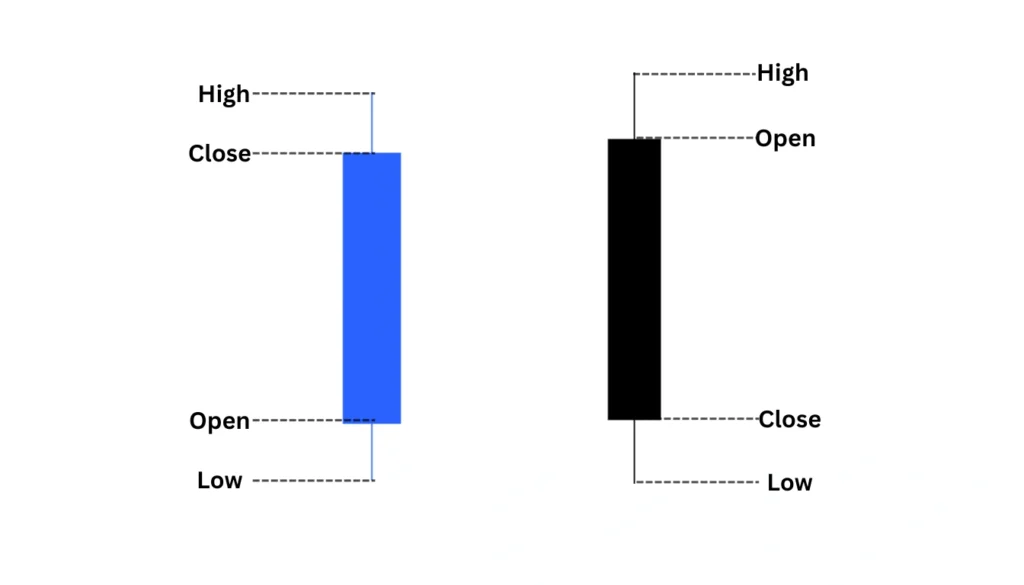
Imagine you’re watching a race. A candlestick is like a picture that shows you where the race started, where it went highest, where it went lowest, and where it finished. In trading, we call this a candle. Each candle tells a story about price movement during a specific time period.
Think of it like a thermometer. The top shows the hottest temperature (highest price), the bottom shows the coldest (lowest price), and the colored box in the middle shows where things started and ended. Green candles mean prices went up, like a happy day. Red candles mean prices went down, like a sad day.
Traders look at these candles every single day. They help us understand what happened with the price. Did it go up fast? Did it go down slowly? Did it jump around a lot? The candle shows everything in one simple picture.
What Is a Candle Range?
A candle range is the distance between the highest and lowest point of a candle. Think of it like measuring how tall a jump was. If you jump from the ground to a table, the range is from the ground to the tabletop.
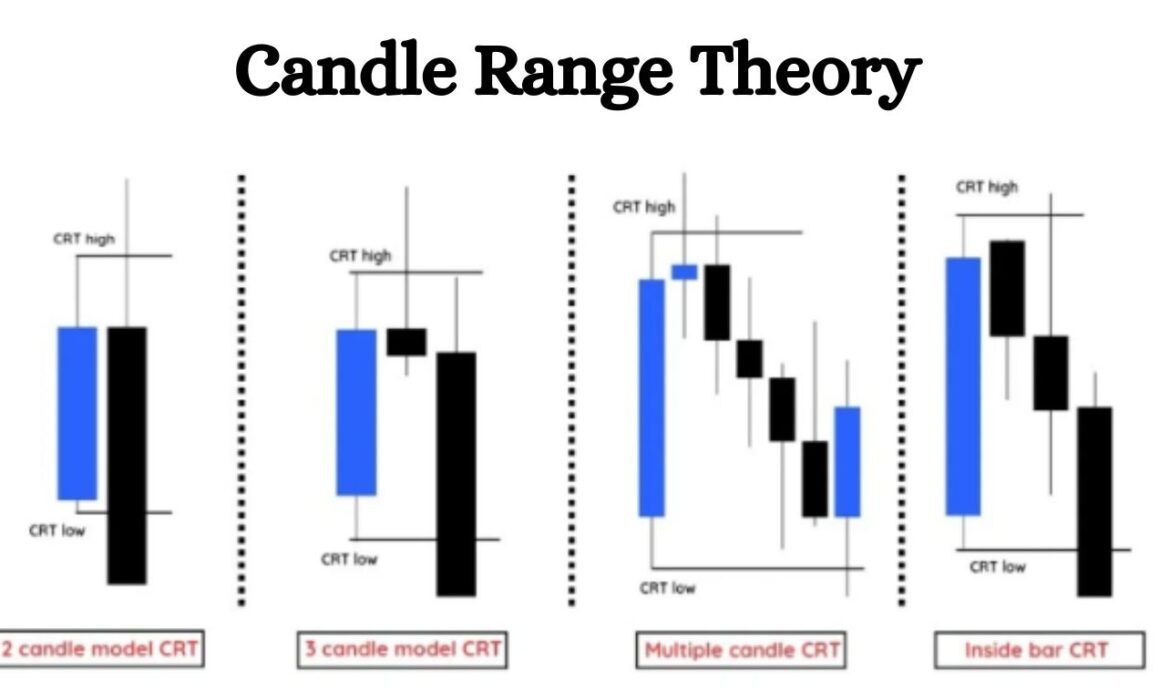
In candle range theory, we look at one special candle and measure from its bottom to its top. This creates an invisible box around that candle. This box becomes very important because price often respects this box later.
The candle range is like drawing a boundary. Imagine drawing two lines on a wall—one at the top of your jump and one at the bottom. Everything between those lines is your range. In trading, everything between the high and low of that candle is the candle range.
This simple measurement helps traders predict where price might go next. It’s like knowing the size of a swimming pool before you dive in.
Why Candle Range Theory Matters
Candle range theory helps us understand where price might move next. It’s like having a map before going on a treasure hunt. Without the map, you’re just guessing. With the map, you know where to look.
When big traders (smart money) want to move the price, they often use candle ranges as their playground. They push price up to the top of the range, then push it down to the bottom, collecting money from confused traders. Understanding candle range theory helps you see what they’re doing.
This candle range theory matters because it shows us hidden patterns. Price doesn’t move randomly. It follows certain rules, and the candle range is one of those rules. When you know the range, you can predict breakouts, reversals, and strong moves.
Many professional traders use candle range theory every single day. It works in forex strategy, stocks, and crypto. Once you understand it, trading becomes less scary and more logical.

How Candle Range Theory Works (Easy Explanation)
Let me tell you a story. Imagine a rubber band stretched between your two hands. The more you stretch it, the more energy it stores. When you let go, it snaps back fast. Candle range theory works exactly like this.
When price moves inside a candle range, it’s like the rubber band being stretched. Energy builds up. Traders are watching, waiting, wondering which way it will snap. The longer price stays inside the range, the more energy accumulates.
Then suddenly, price breaks out of the range—either up or down. This is when the rubber band snaps. The price moves fast and strong because all that stored energy releases at once. Smart traders know this is coming and prepare for it.
The whole idea behind candle range theory is simple: ranges create energy, and breakouts release that energy. By identifying the range early, you can catch the big move when it happens.
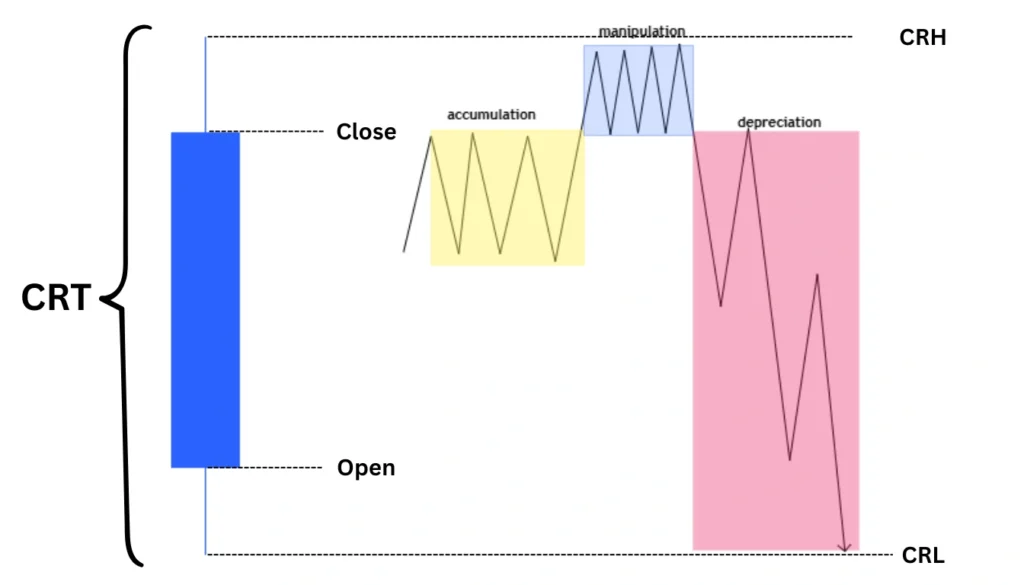
The Simple Rule Behind CRT
Here’s the golden rule that makes everything click: If the price stays inside the candle range, it is gathering energy. When it breaks out, it moves fast.
This one rule explains most of what happens in trading. Think of it like water building up behind a dam. The longer the water stays trapped, the bigger the pressure. When the dam breaks, water rushes out powerfully.
Price behavior follows this same pattern. When candles keep forming inside the range without breaking it, pressure builds. Traders start taking positions. Orders stack up. Everyone waits for the breakout.
When the breakout finally happens, all those waiting orders trigger at once. This creates momentum. The price doesn’t just break out slowly—it explodes out of the range with speed and strength.
Remember this rule every time you trade. If you see price consolidating inside a candle range, get ready. Something big is about to happen.
The 3 Types of Candle Range Theory Moves
Strong Breakout
A strong breakout is like a rocket launching into space. Price breaks the candle range and keeps going without looking back. The candle that breaks out is big and powerful, showing everyone that serious traders are involved.
You know it’s a strong breakout when the volume increases, the candle closes far beyond the range, and price doesn’t return to test the range immediately. This is the breakout everyone dreams of catching because it leads to big profits.
Strong breakouts usually happen when smart money is moving large amounts. They push the price through the range with force, and smaller traders jump in, adding more fuel to the fire.
Weak Breakout
A weak breakout is like trying to jump over a fence but barely making it. Price breaks the candle range but doesn’t go far. It struggles, moves slowly, and looks tired.
These breakouts happen when there’s not enough buying or selling power behind the move. Maybe only small traders are participating. Maybe the big players aren’t interested. The result is a breakout that fails to deliver.
Weak breakouts are dangerous because they often reverse quickly. Price might break the range, trick some traders, then return inside the range and go the opposite direction.
Fake Breakout
A fake breakout is like a magic trick—it looks real but it’s just an illusion. Price breaks the candle range to fool traders, then quickly reverses and goes the other way.
Smart money often creates fake breakouts on purpose. They push price above the range, trigger everyone’s buy orders, then sell heavily, pushing price back down. This manipulation concept catches many beginners.
The best way to avoid fake breakouts is to wait for candle close confirmation. Never enter a trade just because price touched outside the range. Wait until the candle actually closes beyond the range.
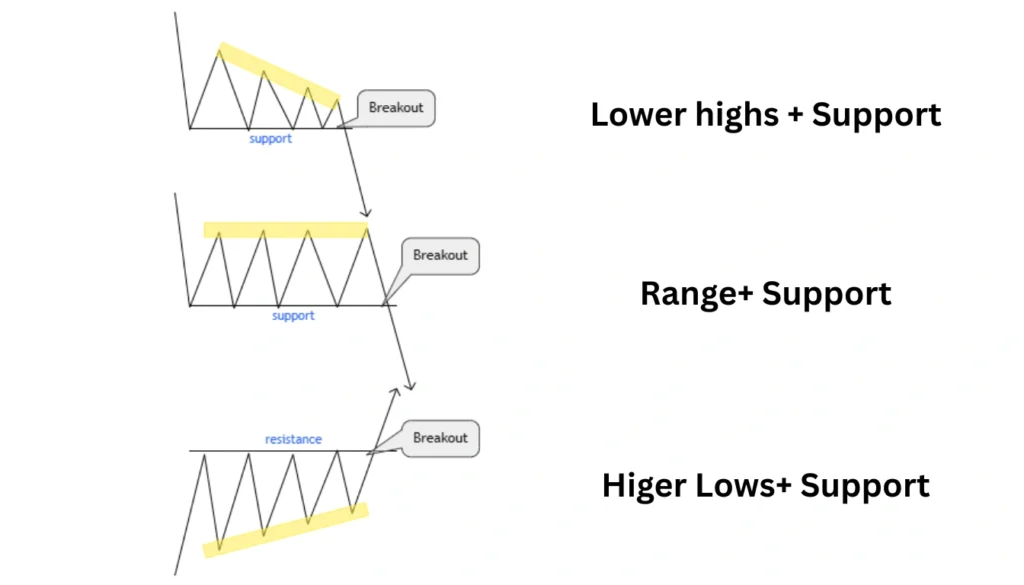
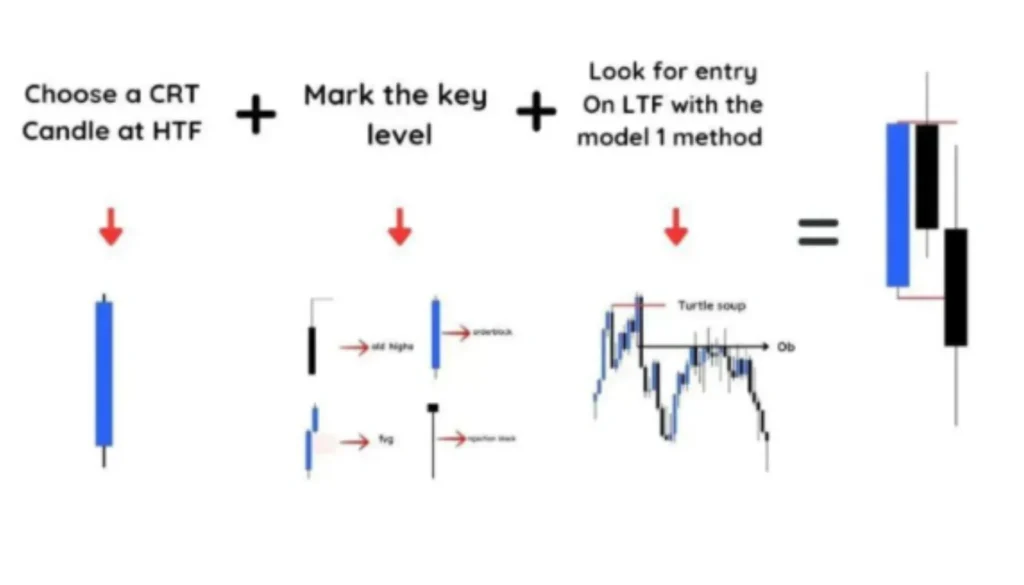
How to Mark a CRT Candle (Step-by-Step Guide)
Marking a candle range is super easy. First, open your trading chart and pick your timeframe. Most traders use M15 or M30 for finding CRT candles.
Look for a candle that stands out. This is usually a candle at the beginning of a trading session, like the London or New York open. This candle should be bigger than the ones around it.
Once you find your special candle, draw a horizontal line at its highest point (the top of the wick). Then draw another horizontal line at its lowest point (the bottom of the wick). These two lines create your range box.
Some traders like to shade the area between the lines to make it more visible. You can use any drawing tool on your platform—rectangle boxes work great for this purpose.
Now watch what happens. Price will move around, but that range box stays there. You’re waiting to see when price breaks out of this box with a strong candle close.
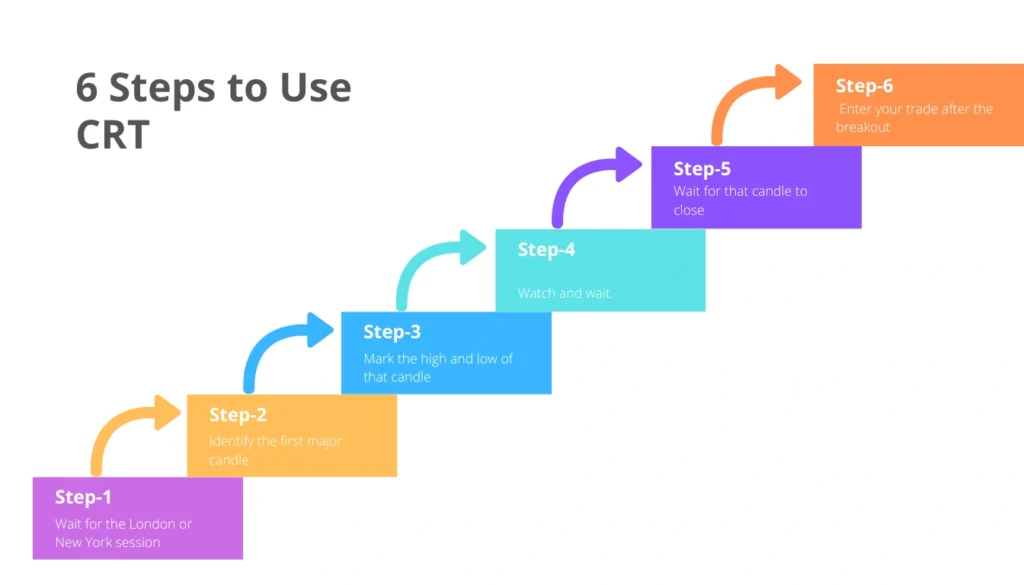
How to Use CRT in Real Trading (Easy 6 Steps)
Step 1: Wait for the London or New York session to open. These are the best sessions for candle range trading.
Step 2: Identify the first major candle that forms. This is usually within the first 15-30 minutes of the session opening.
Step 3: Mark the high and low of that candle to create your range box. Use the indicator drawing tools on your chart.
Step 4: Watch and wait. Don’t trade yet. Let price play inside the range. Be patient like a cat watching a mouse.
Step 5: When price breaks the range with a strong candle, wait for that candle to close. This is your candle range confirmation signal.
Step 6: Enter your trade after the breakout candle closes. Put your stop-loss just inside the range and aim for a target that’s at least twice the range size.
Following these six steps removes emotion from trading. You have clear entry and exit rules. No guessing, no panic, just systematic trading based on candle range analysis.
Simple Example Trade Using Candle Range Theory
Let’s walk through a buy trade together. Imagine the London session opens, and the first M30 candle forms with a high at 1.2500 and a low at 1.2450. You draw your range box between these levels.
For the next hour, price bounces inside this box—up and down, up and down. You do nothing. You just watch. Then suddenly, a strong green candle breaks above 1.2500 and closes at 1.2520.
This is your signal. You enter a buy trade at 1.2520. Your stop-loss goes at 1.2445 (just below the range). Your target is 1.2570 (50 pips up, matching the range size). The trade moves in your favor, and you win.
Now for a sell trade example. The New York session opens with a candle ranging from 1.2600 to 1.2550. Price consolidates inside this intraday candle range setup for some time.
Then a strong red candle breaks below 1.2550 and closes at 1.2530. You enter a sell trade at 1.2530, place your stop at 1.2605 (above the range), and target 1.2480 (50 pips down). Price drops, and you collect profits.
Both examples show the same pattern: identify range, wait for breakout, confirm with candle close, enter trade with proper risk management.
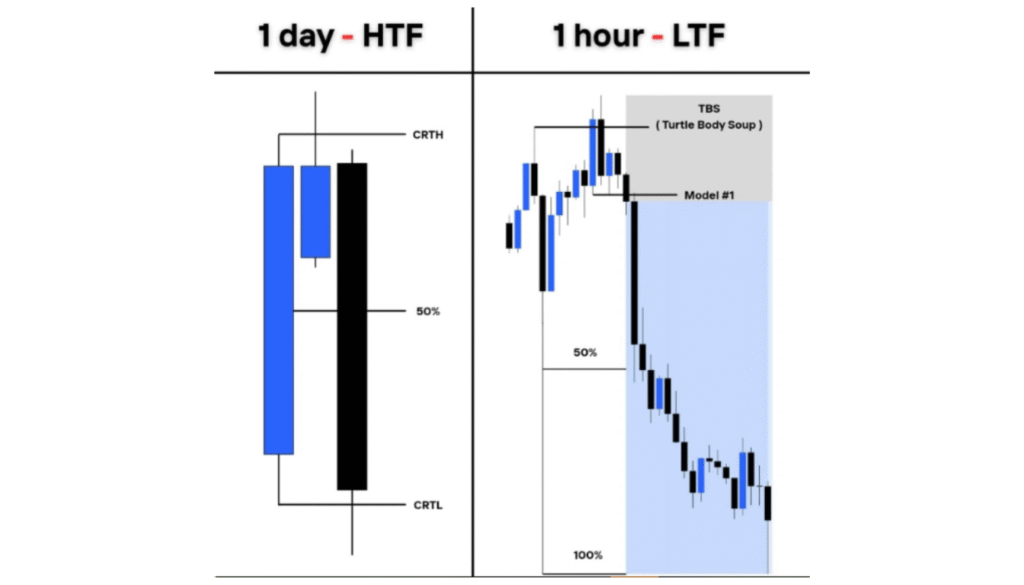
Candle Range Theory in Different Sessions (London, NY, Asian)
The London session is the best time for candle range breakout trading. Why? Because London brings the most volume and liquidity. When European traders wake up and start trading, price moves with real power.
The first candle range strategy after London opens often gives the cleanest setups. The breakouts are genuine because big banks and institutions are actively trading. Fake breakouts happen less frequently during London hours.
The New York session is also excellent, especially the first hour when it overlaps with London. This creates maximum volume and strong directional moves. Daily candle range strategy works beautifully during NY open.
The Asian session is trickier. Volume is lower, ranges are smaller, and movements are often choppy. While candle range theory can work during Asian hours, the breakouts tend to be weaker and more prone to reversals.
For beginners, stick to London and New York sessions. Master candle range theory during high-volume times first. Once you’re consistently profitable, you can experiment with other sessions.
Combining CRT with ICT’s PO3 (Very Simple Version)
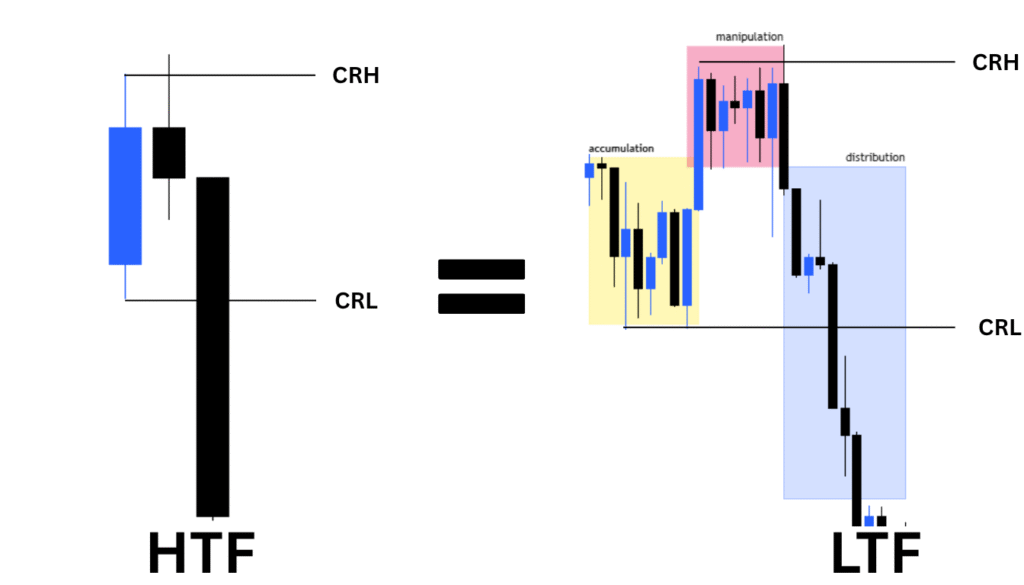
ICT’s PO3 stands for Power of Three: Accumulation, Manipulation, and Distribution. Think of it like a three-act play where smart money follows the same script every time.
Accumulation is when smart money quietly collects positions inside the candle range. They’re building their army, getting ready for battle. Price moves sideways, looking boring.
Manipulation is when they create a fake move to trap regular traders. They might push price above the range to trigger buy orders, then reverse it. This is the candle range manipulation concept at work.
Distribution is when they release their positions in the direction they really want price to go. After trapping traders with manipulation, they push price hard in the true direction, making big profits.
Candle range theory fits perfectly inside this PO3 framework. The range represents accumulation. The first breakout attempt is often manipulation. The second strong move is distribution.
By combining Candle Range Theory with market structure candle range understanding and PO3, you see the complete picture of what smart money is doing.
Multi-Timeframe Candle Range Theory (Made Super Easy)
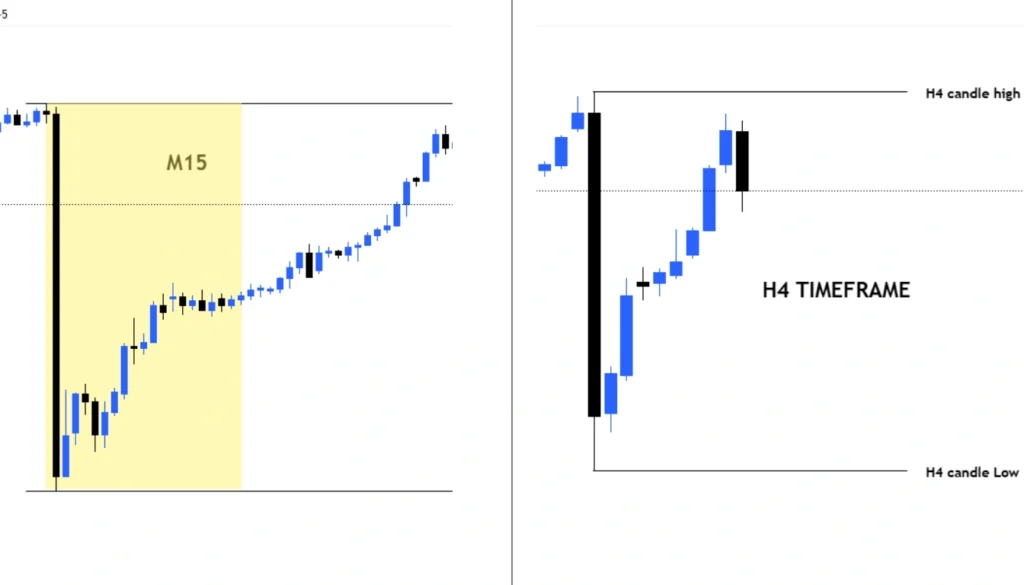
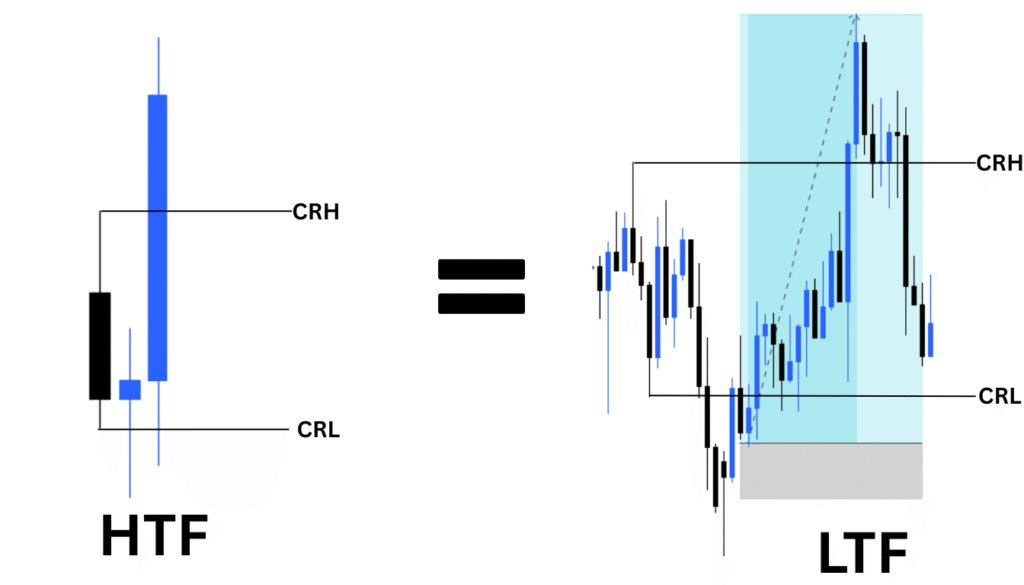
Using multi-timeframe candle range is like using binoculars and a magnifying glass together. The binoculars (higher timeframe) show you the big picture. The magnifying glass (lower timeframe) shows you the exact entry point.
Start by opening the H1 or H4 chart. Look for the main candle range on this higher timeframe. This tells you the overall direction. If price is pushing toward the top of the H4 range, you’re looking for buy opportunities.
Now switch to M15 or M5. Find smaller candle ranges that form in the direction of the bigger range breakout. These smaller ranges give you precise entry points with tight stop-losses.
For example, if the H4 candle range breaks upward, you wait for M15 to form a small range. When M15 breaks that small range to the upside, you enter. This gives you high probability trades with excellent risk-to-reward.
The key is alignment. The HTF Candle Range Theory shows direction, the LTF CRT shows timing. Never trade against the higher timeframe range direction.
Best Timeframes for Candle Range Theory
For finding direction and marking your main candle range, use M15 or M30. These timeframes show clear candle structures without too much noise. The ranges are meaningful and breakouts are reliable.
The M15 timeframe is perfect for beginners learning candle range theory trading. It’s not too fast and not too slow. You have time to think and react without missing opportunities.
For precise entries, drop down to M1 or M5. Once you know direction from M15, use M5 to find the exact moment to enter. This combination gives you the best of both worlds.
Some advanced traders use H1 for direction and M15 for entries. This works well for swing trading or if you can’t watch charts constantly. The H1 candle range breakout zones are powerful and give bigger profit targets.
Avoid using very high timeframes like H4 or D1 for CRT unless you’re a very experienced trader with large capital. The ranges are huge, requiring big stop-losses that beginners can’t afford.
Start with M15 for direction and M5 for entry. Practice with this combination until you’re consistently profitable, then experiment with other timeframe combinations.
Where to Use CRT and Where NOT to Use It
Use candle range theory during trending markets when price shows clear direction. The best time is during session opens—London and New York—when volume is high and institutions are active.
Use Candle Range Theory when you see clean candle structures with respect for previous ranges. If price consistently reacts to old range levels, it’s a good environment for candle range trading strategy.
Use Candle Range Theory after news releases have settled and price establishes a new range. Wait about 30 minutes after major news, then look for the new CRT candle to form.
Do NOT use CRT during ranging markets where price is trapped between strong support and resistance with no clear direction. In these conditions, breakouts fail constantly, leading to candle range reversal signals that lose money.
Do NOT use CRT during major news releases. Price spikes violently in both directions, creating false breakout zones that have nothing to do with real market structure.
Do NOT use Candle Range Theory during very low volume times like late Friday or holidays. Without volume, ranges are meaningless and breakouts lack follow-through.
Do NOT use Candle Range Theory when multiple ranges overlap and conflict with each other. Confusion leads to bad decisions. Wait for clarity.
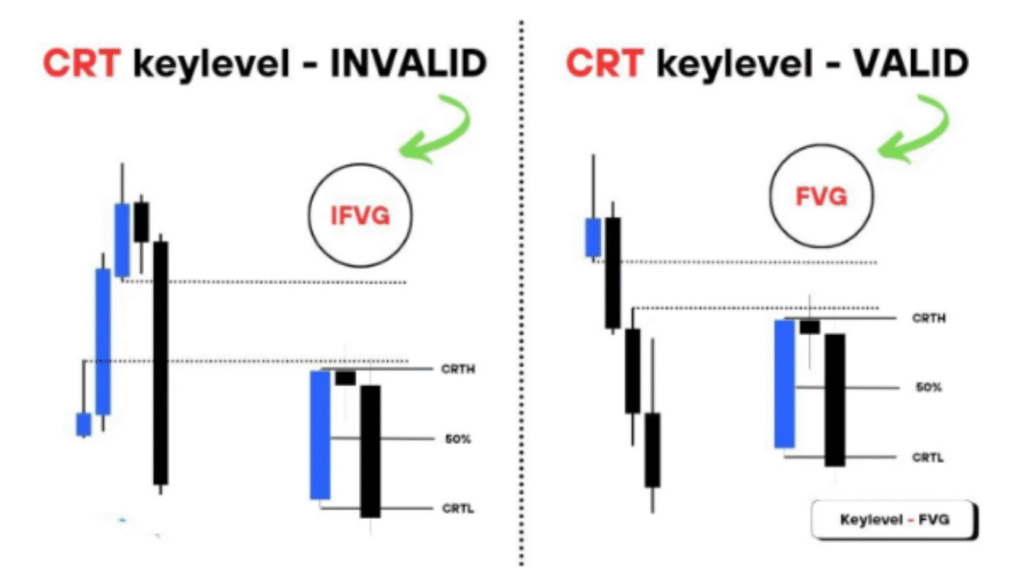
Common Mistakes Traders Make with Candle Range Theory
The biggest mistake is entering too early—before the breakout candle closes. Beginners see price touching the range boundary and jump in immediately, only to watch it reverse. Always wait for candle close confirmation.
Another common error is using ranges from random candles instead of significant session candles. Not every candle matters. Focus on the first candle of major sessions or candles that form at important price levels.
Many traders ignore candle range volume analysis. A breakout without volume increase is likely fake. Always check if volume supports the breakout before entering.
Some beginners chase breakouts after they’ve already moved far from the range. If the breakout candle is already 2-3 times the range size, you’re too late. The risk-to-reward becomes terrible.
Traders often forget about risk management for CRT. They risk too much per trade or don’t use stop-losses properly. Every CRT trade should have a fixed stop-loss just inside the range.
Another mistake is using CRT without considering overall market structure. A range breakout against the daily trend will struggle. Always trade with the higher timeframe direction.
Finally, many traders give up too quickly. Candle range theory requires practice. You’ll make mistakes at first. This is normal. Keep a trading journal, learn from losses, and gradually improve.
Risk Management for CRT
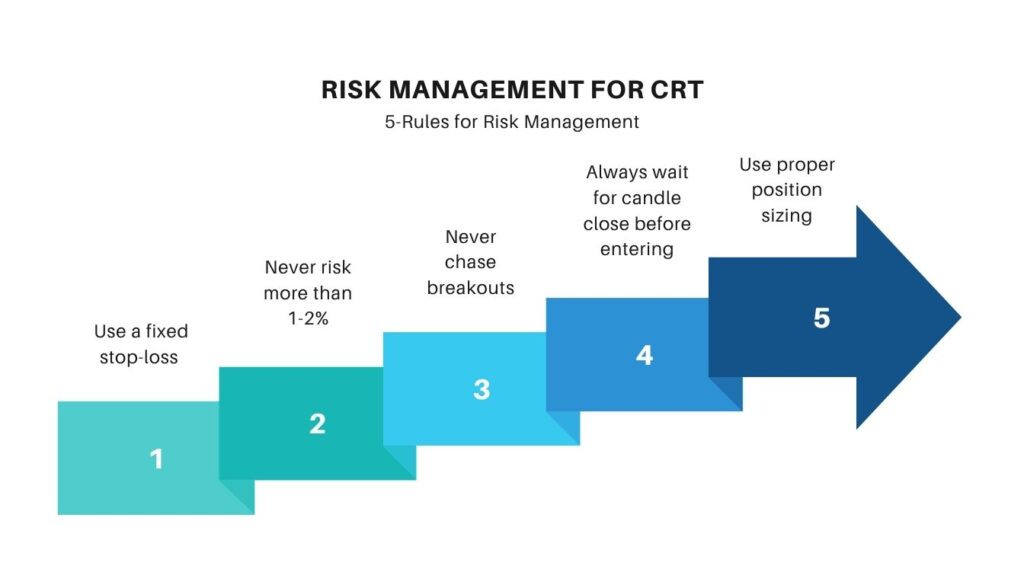
Always use a fixed stop-loss for every CRT trade. Place it just inside the candle range—about 5-10 pips inside the opposite boundary. This protects you if the breakout fails.
Never risk more than 1-2% of your account on a single Candle Range Theory trade. Even the best setups can fail. Proper position sizing keeps you in the game long-term.
Never chase breakouts after they’ve moved significantly. If you miss the entry near the breakout point, let it go. There will be another trade. Chasing leads to poor risk-to-reward ratios and emotional trading.
Always wait for candle close before entering. This single rule eliminates most fake breakouts. Price might spike outside the range temporarily, but if the candle closes back inside, there’s no valid breakout.
Use proper position sizing based on your stop-loss distance. If the range is 50 pips and you’re risking $100, calculate your lot size accordingly. Never use fixed lot sizes regardless of range size.
Set realistic targets—usually 1.5 to 2 times the range size. Don’t be greedy. Collect consistent wins and move on to the next trade.
Consider using trailing stops once price moves in your favor. This locks in profits while giving the trade room to continue.
CRT vs ICT Opening Range
Both CRT and ICT opening range look at the beginning of sessions, but they have important differences. Understanding these differences prevents confusion.
ICT opening range focuses specifically on the first few minutes of major session opens—especially the first M1 or M5 candle. It’s very precise timing-based. Traders mark this exact opening range and wait for manipulation and distribution.
Candle range theory is more flexible. Candle Range Theory can use opening candles, but it also works with any significant candle throughout the session. You might mark a CRT candle at 3 PM if conditions are right.
ICT opening range typically uses much smaller timeframes (M1, M5) for the initial range. Candle Range Theory traders often prefer M15 or M30 for their main range candles.
Both concepts share the idea that ranges create trading opportunities through breakouts. Both involve watching for manipulation before true directional moves.
The main difference is flexibility. ICT opening range is strict about timing. Candle Range Theory gives you more freedom to choose which candles to mark based on price action and market conditions.
Many professional traders use both. They mark the ICT opening range at session opens, then also mark CRT candles throughout the session when significant candle structures form.
CRT vs Normal Candle Patterns
Normal candle patterns like doji, hammer, or engulfing patterns show you what one or two candles look like. They give hints about possible reversals or continuations.
Candle range theory is more powerful because it creates a framework—a range box—that price respects over multiple candles. Instead of just looking at one candle’s shape, you’re watching how price behaves around a defined zone.
Candle patterns alone are weaker because they don’t give you clear entry and exit rules. A hammer candle might mean reversal, but where do you enter? Where’s your stop-loss? How far should you target?
Candle Range Theory gives you everything: the range boundaries define your stop-loss, the breakout point defines your entry, and the range size helps you calculate your target. It’s a complete trading system.
Another advantage of CRT is that it works with market structure and liquidity concepts. Smart money respects ranges. They manipulate ranges. Candle patterns don’t account for this manipulation.
That said, you can combine both approaches. If you see a strong candle pattern forming at a CRT range boundary, it adds confirmation to your trade. The pattern plus the range creates high-probability setups.
Think of candle patterns as individual puzzle pieces. Candle range theory is the picture on the box that shows you how all the pieces fit together.
FAQs (Simple, Child-Level Answers)
Why does Candle Range Theory work?
Candle Range Theory works because big traders use ranges to accumulate positions and trap smaller traders. When they’re ready to move price, they break the range with force. By following the range, you’re following where the smart money is going.
Do I need indicators?
No! Candle range theory doesn’t need any fancy indicators. You only need price action—the candles themselves. Just draw lines at the high and low of your chosen candle. That’s it. Keep it simple.
What is the best session for Candle Range Theory?
The London session is best, followed by New York. These sessions have high volume and strong liquidity. The Asian session works too, but breakouts are weaker. Start with London and NY until you master the basics.
How long does a candle range stay valid?
Usually until the end of that trading session or until a strong breakout occurs. Some ranges stay relevant for several hours. If price respects the range, keep watching it. If price breaks and completely forgets about the range, mark a new one.
Can CRT work with stocks and crypto?
Yes! Candle range theory works on any market—forex, stocks, crypto, commodities. The concepts are universal because they’re based on how price moves and how traders behave, which is the same everywhere.
What if the breakout fails?
If the breakout fails and price returns inside the range, close your trade with a small loss. Don’t hope it comes back. Failed breakouts often lead to strong moves in the opposite direction. Accept the loss and look for the next opportunity.
How many Candle Range Theory trades should I take per day?
Quality over quantity. One or two good Candle Range Theory trades per day is perfect. Wait for the best setups during session opens. Don’t force trades just to be busy. Patience pays in trading.
Final Thoughts
Candle range theory is one of the simplest yet most powerful concepts in trading. By understanding how price respects ranges and how breakouts work, you gain a real edge in the markets.
The beauty of Candle Range Theory is its simplicity—no complex indicators, no confusing calculations, just pure price action based on candle structures.

Start by practicing on demo accounts, mark your ranges during London and New York sessions, wait patiently for confirmed breakouts, and always use proper risk management.
With time and practice, candle range theory can transform your trading from guessing to systematic profitability. Remember, every expert trader was once a beginner who refused to give up. Your journey with CRT starts today!

Best Prop Firm Passing Service: A Complete Guide
Getting a funded trading account can feel like climbing a mountain. But what if someone could help you reach the top? That’s exactly what a prop firm passing service does. Let’s explore everything you need to know in the simplest way possible.
What Is a Prop Firm Passing Service? (Simple Explanation)
A prop firm passing service is like having a helpful friend who’s really good at tests. Imagine you want to trade with real money, but first you need to pass a trading challenge. This Prop Firm Passing Service helps you pass that test so you can start trading a funded account.
They use their skills and experience to complete the challenge for you, following all the rules carefully. Once they pass, you get access to trade real money from the prop firm.
Who It’s For
This Prop Firm Passing Service works great for three types of people. First, beginners who are still learning how to trade but want to get started with a funded account.
Second, part-time traders who have regular jobs and don’t have enough time to focus on prop firm challenge passing themselves. Third, full-time traders who want to save time and energy by letting experts handle the challenge phase while they focus on other things.
How It Works in 3 Steps
The process is super simple.
Step one: You sign up with the consistent funded account passing service and tell them what you need.
Step two: Their professional traders complete the prop firm challenge for you, following all the trading rules perfectly.
Step three: Once they pass, you receive your funded account and can start trading to make real profits. It’s that easy!

Quick Start: 7-Step User Journey
Let’s walk through exactly what happens when you use a prop firm passing service, step by step.
Step 1: Signup & Verification — What Documents You Need
First, you’ll create an account with the Prop Firm Passing Service. They’ll ask for basic information to verify who you are. You’ll typically need a government ID like a passport or driver’s license, proof of address like a utility bill, and your email address and phone number.
Some guaranteed funded account services might also ask for your prop firm account details. This keeps everything safe and legal.
Step 2: Choose Account Size and Plan — Simple Decision Tips
Next, you pick what size account you want to get funded. Start small if you’re new—maybe a $10,000 or $25,000 account. Bigger accounts cost more to pass but give you higher profit potential.
Think about your budget and how much risk you’re comfortable with. If you’re unsure, ask the Prop Firm Passing Service which size most beginners start with. Most people begin with smaller accounts and scale up later.
Step 3: Strategy Setup — What Strategy They’ll Use for You
The Prop Firm Passing Service will tell you what trading strategy they’ll use for your challenge. They usually stick to low-risk methods that follow all prop firm rules carefully.
They might trade during specific market hours, use certain currency pairs, or follow trend-following systems. You don’t need to understand every detail, but they should explain their approach in simple words so you feel comfortable.

Step 4: Challenge Execution — How They Trade the Challenge
Now the real work begins. Professional traders from the Prop Firm Passing Service will log into your prop firm challenge account and start trading. They’ll follow the rules exactly—staying within daily loss limits, hitting profit targets, and trading only allowed instruments.
You can usually watch their progress through updates or live tracking. This phase typically takes anywhere from a few days to several weeks depending on the account size and challenge requirements.
Step 5: Verification & Proof — How Results Are Recorded
Once they hit the profit target and meet all requirements, the results get verified. The Prop Firm Passing Service will show you screenshots of the completed challenge, trading statements from the broker, and proof that all rules were followed.
Many Prop Firm Passing Services also provide third-party verification links like Myfxbook so you can see the trades yourself. This transparency helps you trust the process.
Step 6: Funded Account Handover — What Changes After Funding
Congratulations! Your challenge passed and now you have a funded account. The prop firm will verify everything and activate your funded status. At this point, the account is yours to trade.
Some Prop Firm Passing Services offer to keep helping you manage it, while others hand it over completely. You’ll get new login details and instructions for your funded account. The rules might be slightly different now, so read them carefully.
Step 7: Ongoing Management & Payouts — How Profit Split Works
After you’re funded, you start trading and making profits. Most prop firms split profits with you—you might keep 70-90% of what you earn. When you want to withdraw money, you request a payout through the prop firm’s system.
Some best Prop Firm Passing Services offer ongoing prop firm account growth support to help you keep growing your funded account. They might adjust strategies, give trading advice, or help if you face any issues. Your first payout is usually the most exciting moment!

Compare Plans Side-by-Side (Pricing & What’s Included)
Understanding what different plans offer funded account challenge helps you make smart choices.
Clear Table: Price, Account Size, High Win-Rate Challenge Passing Guarantee, Timeframe, Support Level, Included Broker Fees
Here’s how plans typically compare:
Basic Plan: Usually $300-$500 for a $10,000 account, includes prop firm evaluation passing guarantee, takes 1-3 weeks, email support only, broker fees sometimes included.
Standard Plan: Around $800-$1,200 for a $25,000 account, includes passing guarantee plus one retry, takes 2-4 weeks, email and chat support, broker fees usually included.
Premium Plan: About $1,500-$2,500 for a $50,000 account, includes passing guarantee plus two retries, takes 3-6 weeks, priority support with phone access, all fees included.
VIP Plan: $3,000+ for $100,000+ accounts, complete guarantee, 4-8 weeks, dedicated account manager, everything included.
Each Prop Firm Passing Service has different pricing, so always compare what’s included before choosing.
What’s Optional: Extra Retries, One-on-One Coaching, VIP Support
Beyond the basic plans, many best Prop Firm Passing Services offer add-ons. Extra retries cost additional money but give you more chances if the first attempt doesn’t pass. One-on-one coaching helps you learn to trade yourself while the Prop Firm Passing Service handles the challenge.
VIP support gets you faster responses and direct contact with senior traders. Some Prop Firm Passing Services also offer post-funding management where they keep trading your account for a percentage of profits. Decide what extras matter to you based on your goals and budget.
Value Calculator: Simple Example Showing Cost vs. Expected Payout Split
Let’s do simple math. Say you pay $1,000 for a Prop Firm Passing Service to pass a $25,000 challenge. The prop firm’s first target is usually 10%, meaning you need to make $2,500. If you have an 80% profit split, you’d keep $2,000 from that first target.
You’ve already earned back double your cost! If you keep trading successfully, monthly profits of even $1,000 (which you keep $800 of) add up quickly. Within three months, you could earn $2,400, more than doubling your initial investment.
That’s why many traders see this as a smart shortcut.

How to Pick the Right Provider (Checklist)
Not all Prop Firm Passing Services are created equal. Here’s how to spot the good ones.
Proof to Ask For: Dated Screenshots, Broker prop firm account verification service, Myfxbook or Statement Links
Always ask to see evidence before paying. Request screenshots of completed challenges with dates visible. Ask for broker verification—real trading platforms show verified account numbers.
Myfxbook links are excellent because they show live trading data that can’t be faked easily. Trading statements directly from the prop firm are the gold standard.
If a Prop Firm Passing Service hesitates to show proof or makes excuses, that’s a bad sign. Good Prop Firm Passing Services are proud to share their success records.
Reliable Prop Firm Passing Team Checks: Trader Backgrounds, Certifications
Find out who will actually trade your challenge. Do they have years of experience? Have they passed multiple challenges before? Some Prop Firm Passing Services share trader profiles or certifications.
While trading doesn’t always require formal certificates, experienced traders often have track records they can prove. Ask about the team size—bigger teams can usually handle more clients and have backup traders if someone gets sick.
A Prop Firm Passing Service with only one trader might struggle if they get busy.
Policy Checks: Refund Rules, Guarantee Fine Print, Handling of Losses
Read the fine print carefully. What exactly does the guarantee cover? If they fail the challenge, do you get a full refund or just another attempt? How long do refunds take to process?
What happens if the challenge is passed but the prop firm doesn’t approve it for some reason?
Understanding these policies protects you from surprises. Good Prop Firm Passing Services have clear, written policies that answer all these questions.
Red Flags: No Proof, Unrealistic Passing Rates, Pressure to Pay Offsite
Watch out for warning signs. If a service claims 100% success rate, be skeptical—even the best traders have occasional losses. Pressure to pay through non-secure methods like cryptocurrency or wire transfers to personal accounts is suspicious.
No contact information or only WhatsApp contact is risky.
Copied testimonials that appear on multiple websites are fake. Services that promise to pass any challenge in just days might be using illegal methods. Trust your gut—if something feels wrong, it probably is.

Proof & Real Case Studies
Real examples help you understand what’s actually possible.
Short Case Studies: 3–5 Real Examples with Dates, Account Size, Timeline, and Final Payout
Case 1: Sarah from the UK, September 2024, $10,000 FTMO challenge passing service, passed in 12 days, received funded account October 2024, first payout of $750 in November 2024.
Case 2: Ahmed from Pakistan, August 2024, $25,000 MyForexFunds challenge passing, passed in 18 days, funded mid-September 2024, made $1,200 profit in first month with 80% split keeping $960.
Case 3: Maria from Brazil, October 2024, $50,000 challenge, took 28 days to pass, funded November 2024, scaled to $100,000 account by January 2025 after consistent performance.
Case 4: John from Australia, July 2024, $100,000 challenge, passed in 35 days, has made over $8,000 in payouts since funding in August 2024.
These are the kinds of real results good Prop Firm Passing Services can show you.
How We Verify Results: Explain Audit Logs, Broker Statements in Simple Words
Verification isn’t complicated. Audit logs are like report cards showing every trade made—the time, price, profit, and loss. Broker statements are official documents from the trading platform confirming real trades happened.
Third-party tools like Myfxbook connect directly to trading accounts and display data that can’t be edited. Together, these create an impossible-to-fake record. When a best Prop Firm Passing Service shares all three, you can trust the results are real.
Before & After Charts: Simple Visuals Showing Challenge and Funded Performance
Visual proof is powerful. Before charts show the challenge phase—steady growth hitting profit targets while respecting loss limits. After charts show funded account performance—continued profitable trading with payouts marked.
Good Prop Firm Passing Services create simple graphs anyone can understand. You’ll see green lines going up (profits), red lines showing where risk limits kept them safe, and markers showing when payouts happened. These charts tell the whole story at a glance.
Plain-English Terms, Ethics & What’s Not Allowed
Understanding the rules keeps everyone safe and successful.
Allowed Behavior vs Cheating (e.g., Click-Trading, Account Sharing)
Allowed behavior means trading fairly according to prop firm rules. This includes normal trading strategies, proper risk management, and following all timing and instrument restrictions.
Not allowed is cheating like click-trading (placing opposite trades on different accounts to guarantee profit on one), account sharing (having multiple people trade the same account), or using prohibited Expert Advisors.
Also forbidden are high-frequency scalping if banned, trading during news if restricted, or exceeding leverage limits. Good Prop Firm Passing Services only use allowed methods.
What Happens If Rules Are Broken: Clear List of Consequences
If you or the Prop Firm Passing Service breaks rules, consequences are serious. The prop firm will immediately close your account and keep all profits. You’ll lose your funded status and might get banned from that firm permanently.
Some firms share information, so you could be blacklisted from multiple companies. The Prop Firm Passing Service might refuse to offer refunds if you broke rules after receiving the funded account. Legal action is possible in extreme fraud cases. Simply put—don’t cheat. It’s never worth it.
Why Rules Exist: Protect Traders and Prop Firms
Rules aren’t meant to annoy you. They protect prop firms from losses so they can keep funding traders. They also protect you by teaching proper risk management. Without rules, traders might blow accounts recklessly since it’s not their money.
Rules create a fair system where skilled, disciplined traders get rewarded. Think of them like traffic laws—they keep everyone safe and help things run smoothly.
Scam Red Flags & How to Check Them
Protect yourself by knowing what to look for.
Top 10 Warning Signs: Copied Testimonials, No Contact Phone, Fake Verification
- Testimonials with stock photos or copied from other websites
- No phone number or physical business address
- “Verification” links that don’t actually connect to real trading platforms
- Pressure to buy right now with countdown timers
- Payment only through untraceable methods
- Promises that sound too good to be true (pass in 24 hours guaranteed!)
- Poor website with spelling errors and broken links
- No clear refund policy or terms of best Prop Firm Passing Service
- Can’t find any real reviews or mentions outside their own site
- They ask for your full trading account password (never necessary)
Quick Checks You Can Do: Ask for Broker Trade IDs, Check Dates, Request Live Stream Proof
Before paying, do these quick tests. Ask for specific broker trade IDs from recent challenges—you can verify these with the prop firm. Check that dates on screenshots match the calendar (weekends, holidays).
Request a live stream or screen recording of recent trading—scammers can’t fake this. Search the company name with words like “scam” or “review” and see what comes up. Check if their social media accounts are active with real engagement.
Message their support with a question—fast, helpful responses are good signs. These checks take 30 minutes but could save you hundreds of dollars.

Risk & Limitations (Simple)
Every investment has risks. Here’s what you need to know.
What You Can Lose: Money, Time, Chance to Trade
The most obvious risk is losing the money you pay for the Prop Firm Passing Service. If the challenge fails and there’s no refund, that money is gone. You also lose time waiting for results that might not come.
Some prop firms limit how many times you can attempt their challenges, so a failed attempt might cost you a future opportunity with that firm.
There’s also opportunity cost—money spent here could have been invested elsewhere. These are real risks to consider carefully before committing.
No 100% Guarantees: Explain Guarantees in Simple Terms
Even Prop Firm Passing Services offering “guarantees” have limits. A guarantee usually means they’ll retry the challenge if the first attempt fails, not that you’ll definitely end up profitable. Markets are unpredictable—even expert traders have losing streaks.
No Prop Firm Passing Service can guarantee the prop firm will approve your funded account or that you’ll make money after getting funded.
Guarantees typically cover the trusted prop firm account passing phase only, not your long-term trading success. Read guarantee terms carefully to understand exactly what’s covered and what isn’t.
How to Reduce Risk: Start Small, Practice Demo, Read T&Cs
Smart traders reduce risk in several ways. Start with the smallest account size available—if things go wrong, you lose less. Practice on a demo account yourself first so you understand how trading works.
Read all terms and conditions completely before paying anything. Ask questions until you fully understand the process. Only invest money you can afford to lose completely.
Check multiple reviews and compare several services before choosing. Starting cautious and small is always smarter than jumping in with large amounts.

DIY vs. Using a Prop Firm Passing Service
Should you do it yourself or hire prop trading challenge help? Let’s compare honestly.
Pros & Cons Chart: Cost, Learning Curve, Time, Skill Development
DIY Pros: No Prop Firm Passing Service fees, you learn valuable trading skills, full control over your strategy, sense of accomplishment, all profits are yours from day one.
DIY Cons: Takes much longer to pass, high failure rate for beginners, stressful and emotionally draining, might never pass without proper skills, need to learn risk management and strategy.
Service Pros: Much faster to get funded, higher pass rate with funded account passing experts, less stress and time commitment, can focus on other things while they work, usually some guarantee or retry option.
Service Cons: Upfront cost reduces initial profits, you don’t learn as much, dependent on their skill and honesty, still need to trade the funded account yourself, might feel less accomplished.
When DIY Is Better, When a Prop Firm Passing Service Helps More
DIY is better if you have time to learn and practice, enjoy the challenge of trading, want to develop genuine skills, or have limited budget upfront.
Use a Prop Firm Passing Service when you’re short on time, have failed challenges multiple times already, want to get started earning quickly, or are confident in your trading but struggle with the challenge format.
If you’re a busy professional or parent with little free time, a service makes sense. If you’re young with time to learn and grow, DIY might build better long-term skills. Be honest about your situation when deciding.

Preparation Checklist (Before You Pay)
Get ready before spending money. This preparation saves problems later.
Skills to Practice (Demo Trades, Risk Rules)
Before hiring a Prop Firm Passing Service, practice basic trading on a demo account. Understand what entries and exits look like. Learn about stop losses and take profits.
Practice following risk rules—like never risking more than 1-2% per trade. Understand drawdown limits and how to calculate them. Even if the service passes your challenge, you’ll trade the funded account yourself, so you need basic skills.
Spend at least a few weeks on a demo practicing discipline and patience. This makes you ready to manage the funded account successfully.
Documents & Setup: ID, Broker Account, Platform Login
Gather everything you’ll need beforehand. Have your government ID ready in clear photos. Prepare proof of address less than three months old. Create accounts with the prop firms you’re interested in.
Download and learn the trading platform (usually MT4 or MT5). Verify your email and phone number.
Some Prop Firm Passing Services need you to set up the challenge account yourself first, so understand that process. Having everything ready speeds up the whole journey and avoids delays.
Money & Mindset: What to Budget and How to Prepare Mentally
Budget for more than just the service fee. Include the prop firm’s challenge fee, potential retry costs, and a buffer for platform fees or small expenses.
Financially, only invest money you won’t need for months—it takes time to earn back through payouts. Mentally, prepare for a wait of several weeks or even months. Don’t expect instant riches.
Understand that even after funding, making consistent profits takes skill and discipline. Come in with realistic expectations and patience. This mindset prevents disappointment and helps you make better decisions.
What Happens After You’re Funded
Getting funded is just the beginning. Here’s what comes next.
Trading Rules Summary: Max Drawdown, Allowed Instruments
Your funded account has rules you must follow forever. Maximum drawdown means you can’t lose more than a certain percentage (usually 5-10%) from your starting balance or high-water mark.
Daily loss limits restrict how much you can lose in one day. You can only trade allowed instruments—usually major forex pairs, sometimes gold and indices. Some firms restrict trading during major news events.
Trading hours might be limited. Consistency rules might apply, meaning you can’t make all your profit in one or two lucky trades. Read these rules carefully and follow them strictly to keep your funded status.
Profit Split Explained with Examples
Profit splits determine how much money you keep. An 80/20 split means you keep 80% of profits, the prop firm keeps 20%. Example: You make $1,000 profit this month with an 80/20 split—you get $800, the firm keeps $200.
Most firms pay you monthly or bi-weekly. Your first payout might require a minimum profit threshold, like $100 or $200. Some firms improve your split after proving consistency—starting at 80/20 and moving to 90/10 after three successful months.
Calculate your realistic monthly earnings by multiplying expected profits by your split percentage.
Scaling Up: How to Get Bigger Accounts
Prove yourself and grow. After trading profitably for several months, many prop firms offer account scaling. If you consistently make 10% monthly on your $10,000 account, they might upgrade you to $25,000.
Keep performing well and you could reach $100,000 or more. Some firms have specific scaling rules—like after five profitable payouts, you get doubled. Others are more flexible based on your performance.
Scaling is where real money happens. A good trader on a $200,000 account making 5% monthly earns $10,000, keeping $8,000 with an 80% split. That’s life-changing income.
If Performance Drops: Steps the Service Takes
If your funded account starts losing money or breaking rules, what happens? Most best Prop Firm Passing Services that offer ongoing prop firm challenge management will step in to help.
They might adjust your strategy, reduce risk per trade, or take a break from trading to reassess. If you’re trading solo and struggling, contact them for advice. If you hit maximum drawdown, the account closes—game over for that account.
Some Prop Firm Passing Services offer to help you pass a new challenge at a discount if you failed. The key is catching problems early and adjusting before you lose funding completely.

Supported Platforms & Instruments
Know what tools and markets you’ll work with.
List of Platforms: MT4/MT5, cTrader, TradingView (If Supported)
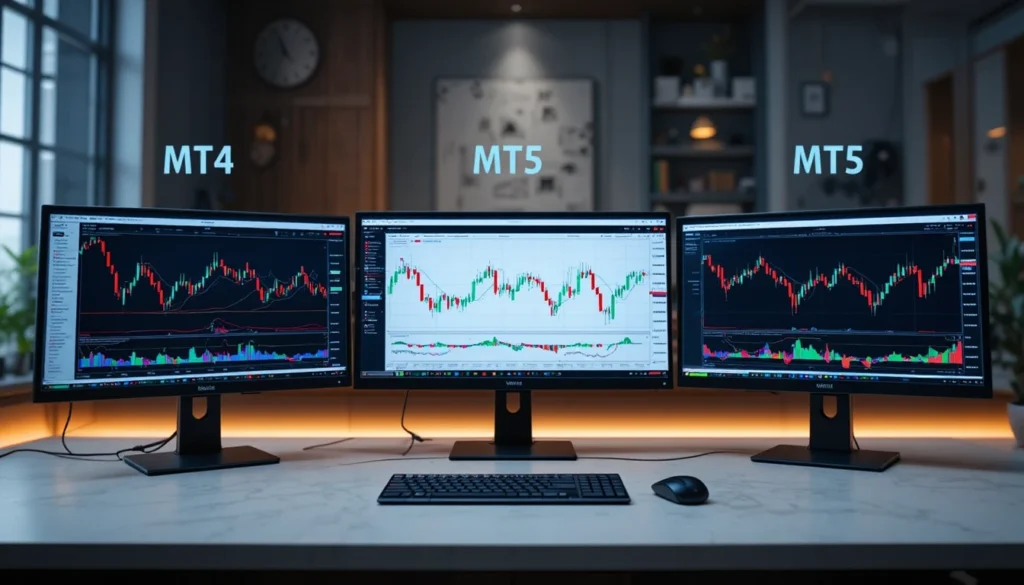
Most prop firms use MetaTrader 4 (MT4) or MetaTrader 5 (MT5)—these are the industry standards. They’re free to download and work on computers and phones. Some firms use cTrader, which is newer and faster but less common.
A few modern firms work with TradingView, which has better charts but limited availability. The Prop Firm Passing Service should support whatever platform your chosen prop firm uses. MT4 and MT5 are most important to know. They look similar and both work well once you learn the basics.
Instruments Allowed: Forex, Indices, Crypto, Stocks (Clarify Per Plan)
What can you actually trade? Forex (currency pairs like EUR/USD) is allowed by almost every prop firm. Indices (like S&P 500, NASDAQ) are common on larger accounts.
Commodities like gold and oil are sometimes included. Crypto is rare and usually restricted. Individual stocks are occasionally allowed on specialized prop firms.
Each firm has its own list—always check before starting. The Prop Firm Passing Service will trade only allowed instruments during your challenge. Ask specifically what markets they’re most experienced with.
Realistic Timeframes by Account Size
Bigger accounts take longer. Here’s what to expect realistically.
Small Accounts (≤$10k): Typical Days/Weeks
Small accounts usually pass fastest. A $5,000 to $10,000 challenge typically takes 7 to 21 days. The profit targets are smaller and easier to hit safely. Experienced traders can sometimes complete these in under two weeks.
If the Prop Firm Passing Service is busy, add wait time for them to start. Total timeline from signup to funded status: 2 to 4 weeks including prop firm approval time. These are great for getting started quickly and learning the system.
Medium Accounts ($10k–$50k): Expected Weeks
Medium-sized accounts need more patience. A $25,000 to $50,000 challenge usually takes 2 to 6 weeks to complete. The profit targets are larger and require more careful trading to avoid hitting loss limits.
Most services complete these in about a month. Adding verification and approval time, expect 5 to 8 weeks total from start to funded. This is the sweet spot for many traders—large enough to make good money but not so big that it takes forever.
Large Accounts (>$50k): Realistic Timeline and Why It’s Longer
Big accounts require serious time. A $100,000+ challenge can take 6 to 10 weeks or more. Why so long? Larger profit targets need more trades done carefully.
Risk management is tighter because one mistake could blow the challenge. The service wants to be extra careful with expensive challenges. Including all approval steps, you’re looking at 2 to 4 months total.
But remember—a funded $100,000 account can generate $5,000+ monthly income, so the wait pays off. Don’t rush big accounts.
Refunds, Guarantees & Examples
Understand exactly what happens if things don’t go as planned.
What the Guarantee Covers: Explicit Conditions
Most guarantees cover only the challenge passing phase. If the Prop Firm Passing Service fails to pass your challenge on the first try, they’ll either retry for free or refund your money.
Read carefully—does the guarantee include unlimited retries or just one or two? Does it cover only outright failure, or also situations where they break rules? Time limits matter too—guarantees might expire after 90 days.
Guarantees typically do NOT cover: your own trading mistakes after funding, prop firm approval issues beyond passing metrics, or your inability to trade the funded account profitably. Know exactly what’s protected.
How Refunds Work: Timeline, Proof Required
If you request a refund, what happens? Most professional funded account services require you to submit proof showing they failed to deliver. This might be screenshots of the failed challenge or correspondence with the prop firm.
Refund processing usually takes 5 to 30 business days depending on payment method. Credit cards and PayPal are faster; bank transfers take longer.
Some Prop Firm Passing Services charge a processing fee, keeping 5-10% even on refunds. Read the refund policy before paying so you understand the timeline and any fees. Get everything in writing.
Example Scenarios: “If We Fail Phase 1 on Day X, Here’s What Happens”
Let’s walk through real scenarios. Scenario 1: Prop Firm Passing Service fails Phase 1 on day 15. Result: They start a free retry immediately, no cost to you.
Scenario 2: Service passes Phase 1 but fails Phase 2 on day 28. Result: They retry Phase 2 only, you don’t pay for a full new challenge.
Scenario 3: Service passes both phases but prop firm rejects due to a technical issue. Result: Prop Firm Passing Service provides proof of proper passing; you work with prop firm; service may assist but typically not responsible for prop firm internal issues.
Scenario 4: Service completes challenge but you realize you chose wrong prop firm. Result: No refund; you’re responsible for choosing the right firm from the start. Understanding these prevents confusion later.
Security, Privacy & Account Access
Your security matters. Here’s how good Prop Firm Passing Services protect you.
How We Protect Your Info in Simple Steps
Reputable Prop Firm Passing Services use multiple security layers. Your personal information is encrypted (scrambled so hackers can’t read it). Passwords are never stored in plain text.
Payment processing uses secure systems like Stripe or PayPal, not exposed card numbers. Trading account credentials are stored in secure databases with limited staff access.
Communications happen through encrypted channels. Regular security audits check for vulnerabilities. These steps keep your identity, money, and trading accounts safe from theft or misuse.
Do You Need to Share Your Password? — Safer Alternatives (Read-Only Access, Trade Copier)
You should NEVER share your full trading password with anyone. Good Prop Firm Passing Services use safer quickest prop firm passing methods. Read-only access (investor password) lets them view your account and trades without being able to withdraw money.
Trade copiers automatically copy their trades to your account without needing your credentials. Some prop firms allow authorized trader access where you approve specific people.
If a Prop Firm Passing Service insists on your full password, especially one that allows withdrawals, run away. That’s a major security risk no legitimate service needs.
GDPR/Privacy Short Note: What Data Is Stored
For users in Europe and many other regions, GDPR (data protection laws) apply. Services should tell you what personal data they collect: usually your name, email, ID documents, trading account numbers.
This data is stored securely and used only for providing the legit best prop firm passing service. You have rights: to see what data they have, request corrections, or ask for deletion.
Data shouldn’t be sold to third parties. Read their privacy policy—it should explain everything clearly. If there’s no privacy policy or it’s vague, that’s concerning.

Tax & Legal Basics (Super Simple)
Don’t let taxes surprise you. Here are the basics.
Do I Pay Tax? — Short Answer: Usually Yes; Check Local Laws
In most countries, yes, you pay tax on trading profits. If you’re making money from a funded account, that’s income. Some countries tax it as business income, others as capital gains.
Tax rates vary widely—5% to 50% depending on where you live. The prop firm usually doesn’t withhold taxes, so you’re responsible for reporting and paying. Even if the prop firm is in another country, your own country’s tax laws apply to you. This isn’t legal advice—just a heads-up that taxes exist.
What to Keep for Taxes: Receipts, Payout Statements
Keep records of everything. Save receipts for any fees you paid to the Prop Firm Passing Service or prop firm. Keep all payout statements showing how much profit you received and when.
Download monthly trading statements from your broker. Save emails confirming account status and payouts. Create a simple spreadsheet tracking income and expenses.
Having organized records makes tax time much easier and protects you if tax authorities ask questions. Store everything digitally with backups.
When to Ask a Tax Pro
Hire a tax professional if you’re making significant income (varies by location, maybe over $5,000-$10,000 yearly), trading across multiple countries, unsure about reporting requirements, or facing an audit.
Accountants specializing in trading or international income are best. Yes, it costs money, but proper tax filing saves you from penalties that cost much more. Think of it as insurance for your trading business. Many traders skip this step and regret it later when tax problems arise.

Common Mistakes Traders Make
Learn from others’ errors and skip the painful lessons.
Top 8 Mistakes (Overleveraging, Emotional Trading, Not Following Rules)
Mistake 1: Overleveraging — Using too much leverage and risking huge percentages per trade. This blows accounts fast.
Mistake 2: Emotional Trading — Trading based on fear or greed instead of strategy. Chasing losses is especially destructive.
Mistake 3: Ignoring Rules — Breaking prop firm rules thinking you won’t get caught. You always get caught.
Mistake 4: Overtrading — Taking too many trades trying to hit targets quickly. Quality beats quantity.
Mistake 5: No Risk Management — Not using stop losses or risking too much per trade. One bad trade shouldn’t kill your account.
Mistake 6: Impatience — Expecting to make $10,000 immediately. Trading is a marathon, not a sprint.
Mistake 7: Revenge Trading — Trying to immediately win back a loss with bigger, riskier trades. This creates bigger losses.
Mistake 8: Not Keeping Records — Failing to track trades and learn from mistakes. You repeat the same errors forever.
How to Avoid Them: Small Tips
Avoid these mistakes with simple habits. For overleveraging: Never risk more than 1-2% of your account per trade, no matter how confident you feel.
For emotional trading: Take a 15-minute break after any losing trade before placing another.
For rule-breaking: Print the prop firm rules and tape them where you can see them while trading.
For overtrading: Set a maximum number of trades per day (maybe 3-5) and stick to it.
For risk management: Always set a stop loss before entering any trade—make it automatic.
For impatience: Set realistic monthly goals like 3-5% instead of dreaming of 50%.
For revenge trading: Have a rule that after two losses in a row, you’re done for the day.
For record-keeping: Spend 10 minutes each evening writing what you traded and why. These small habits build discipline that separates successful traders from failures.
FAQ — Organized for Beginners to Pros
Quick answers to the questions everyone asks.
Beginner FAQs: “What Is a Challenge?”, “How Much Do I Need to Know?”
Question: What exactly is a challenge?
Answer: It’s a test where you trade a demo account following specific rules. If you hit the profit target without breaking rules, you get a real funded account.
Question: How much trading knowledge do I need?
Answer: If using a Prop Firm Passing Service, you need basic understanding since they pass it for you. But you’ll trade the funded account yourself, so learn basics like entries, exits, and risk management first.
Question: How much money do I need to start?
Answer: Prop Firm Passing Service fees range from $300-$3,000+ depending on account size. Start with what you can afford to lose completely.
Question: How long until I make money?
Answer: Realistically 2-4 months from starting to your first payout, depending on account size and processing times.
Question: Is this legal?
Answer: Using a Prop Firm Passing Service exists in a grey area. The service should trade according to all prop firm rules. Some prop firms don’t like it but can’t tell who’s actually trading. Check your specific prop firm’s terms.
Advanced FAQs: “How Do You Adjust Strategies Mid-Challenge?”
Question: How do you adjust strategies if the market changes during my challenge?
Answer: Professional Prop Firm Passing Services monitor markets constantly. If volatility spikes or trends shift, they adjust position sizes, tighten stops, or pause trading temporarily. They prioritize protecting the challenge over forcing trades in bad conditions.
Question: Can I request specific trading styles or instruments?
Answer: Most services have proven strategies they stick to. Some premium Prop Firm Passing Services allow customization, but this usually costs extra and may affect pass rates.
Question: What happens if there’s a major news event during my challenge?
Answer: Good Prop Firm Passing Services avoid trading during major news releases (like central bank announcements) because volatility makes risk management difficult. They’ll pause and wait for calmer conditions.
Question: Can I watch the trades happen live?
Answer: Some Prop Firm Passing Services offer live viewing access or send daily updates with screenshots. Others work privately and update you weekly. Ask about transparency before paying.
Question: Do you use bots or manual trading?
Answer: Most reputable safe challenge passing services use human traders, sometimes assisted by analysis tools. Pure bot trading often struggles with prop firm challenges because rules are complex and need human judgment.
Contact & Escalation: How to Talk to Support and When to Ask for a Manager
Question: How fast should support respond?
Answer: Email support should respond within 24 hours on business days. Chat support should respond within a few hours. Phone support should be immediate during business hours.
Question: When should I escalate to a manager?
Answer: Escalate if your issue isn’t resolved after 2-3 attempts, if you’re not getting refunds promised, if you suspect rule violations, or if support is rude or unhelpful. Ask politely for a supervisor or manager.
Question: What if I have a dispute about money?
Answer: Document everything with screenshots and emails. Request a formal written response. If unresolved, you can dispute through your payment provider (credit card chargeback, PayPal dispute) within their time limits (usually 60-180 days).
Alternatives & Next Steps
Prop Firm Passing Services aren’t the only path. Here are other options.
Other Ways to Get Funded: Contests, Prop Firm Direct Trials, Investor Pitching
Trading Contests: Some platforms run free contests where top performers win funded accounts. These require real skill but cost nothing to enter. Competition is tough.
Direct Prop Firm Trials: A few firms offer discounted or free trial challenges if you have verifiable trading history. Show them your profitable track record and they might waive fees.
Investor Pitching: If you have strong results on a personal account, pitch real investors or family offices. They might fund you directly without prop firm rules. This requires networking and proven history.
Earn-While-Learning Programs: Some educational companies offer funded accounts to students who complete their training programs successfully.
Start Small Yourself: Save money and trade your own small account while building skills. Once profitable consistently, scale up with your own capital or apply to prop firms with real experience.
Free Resources to Learn: Demo Plans, Backtesting, Communities
Demo Accounts: Every broker offers free demo accounts with fake money. Practice there for months before risking real capital.
Backtesting: Test strategies on historical data using free tools. See what would have worked in past markets.
Trading Communities: Join free forums like Reddit’s r/Forex, BabyPips forum, or TradingView community. Learn from experienced traders’ discussions.
YouTube Education: Thousands of free trading courses and explanations exist. Find reputable educators who show real results, not just theory.
Prop Firm Webinars: Many prop firms offer free webinars explaining their challenges and giving strategy tips. Attend these before paying.
Paper Trading Competitions: Sites like TradingView offer competitions using fake money. Practice under pressure without risk.

Transparency & How We Show It
Good Prop Firm Passing Services prove their claims. Here’s how to verify everything.
Where to Find Proof Links on the Site
Legitimate Prop Firm Passing Services display proof prominently. Check their homepage or “Results” page for Myfxbook links showing live trading data. Look for a “Testimonials” or “Case Studies” section with dated examples.
Find their “About Us” page listing real team members with LinkedIn profiles. Check for trust badges showing payment security or business registration.
If proof is hidden, buried in fine print, or requires contacting them to see it, that’s suspicious. Everything should be public and easy to verify.
How to Request Third-Party Verification (What to Ask For)
Don’t just trust what they show you—verify independently. Ask for: Myfxbook account links you can check yourself, direct broker statement exports you can upload to verification sites, contact information for prop firms they’ve worked with, video screen recordings of recent challenges with dates visible.
Say something like: “Can you provide Myfxbook verification for the last three challenges you completed? I’d like to verify the results independently before purchasing.” Professional Prop Firm Passing Services welcome these requests because they have nothing to hide.
Regular Reporting Cadence: Weekly/Monthly Updates Explained
During your challenge, expect updates. Weekly reports typically include: current profit/loss, number of trades taken, compliance with rules, expected completion date.
Monthly reports (for longer challenges) add: strategy adjustments made, market condition notes, comparison to targets. After funding, monthly reports show: account performance, any rule concerns, upcoming payout estimates.
This transparency keeps you informed and builds trust. If a Prop Firm Passing Service goes silent for weeks with no updates, that’s concerning.
Simple Glossary
Trading terms made simple enough for anyone to understand.
Challenge, Drawdown, Account-Size, Funded Account — 1-Line Kid-Friendly Definitions
Challenge: A trading test you must pass to get a funded account, like a game level you need to beat.
Drawdown: How much money you’ve lost from your highest point, like going from $100 down to $90 is 10% drawdown.
Account Size: The total amount of money in your trading account that you can use to trade with.
Funded Account: A real money account that the prop firm gives you to trade after you pass the challenge.
Prop Firm: A company that gives traders money to trade with, sharing the profits you make.
Profit Target: The amount of money you need to make to pass the challenge or get a payout.
Daily Loss Limit: The maximum amount you’re allowed to lose in one single day before you fail.
Leverage: Borrowing power that lets you control more money than you actually have, like using $100 to control $10,000.
Lot Size: How much of something you’re trading, bigger lots mean bigger profits but also bigger losses.
Payout: Money the prop firm sends you from the profits you made trading.
Verification Phase: A second challenge phase some firms require after you pass the first one.
Scaling: Growing your account size over time as you prove you can trade successfully.
Mini-Toolbox: Quick Calculators & Checklists
Practical tools you can use right now.
Cost vs. Payout Calculator (Example Formulas)
Basic Formula:
- Prop Firm Passing Service Cost: $1,000
- Account Size: $25,000
- Profit Target: 10% = $2,500
- Your Split: 80%
- Your Earnings from Target: $2,500 × 0.80 = $2,000
- Profit After Cost: $2,000 – $1,000 = $1,000
Monthly Income Calculator:
- Funded Account: $50,000
- Monthly Profit Goal: 5% = $2,500
- Your Split: 80% = $2,000 per month
- Annual Income: $2,000 × 12 = $24,000
Break-Even Calculator:
- Prop Firm Passing Service Cost: $800
- Monthly Expected Income: $1,200
- Months to Break Even: $800 ÷ $1,200 = 0.67 months (about 3 weeks)
Use these formulas to calculate your own situation before investing.
Mini Checklist to Print Before Sign-Up (PDF or Copyable Bullet List)
Pre-Purchase Checklist:
- Researched at least 3 different Prop Firm Passing Services
- Verified proof of successful challenges (Myfxbook, statements)
- Read full terms and conditions
- Understood refund policy completely
- Checked reviews on independent sites
- Confirmed support response time
- Calculated break-even timeline
- Have ID and documents ready
- Set up prop firm account
- Downloaded trading platform
- Practiced on demo account for at least 2 weeks
- Understand what happens after funding
- Know the profit split percentage
- Budgeted for total costs including retries
- Prepared mentally for 2-3 month timeline
- Have emergency fund separate from trading investment
- Asked all my questions and got clear answers
Print this list and check each item before paying anything!

Localized Notes (Optional)
How this works in different parts of the world.
How This Works in Pakistan / Bangladesh / Other Regions: Payment Methods, Tax Pointers, Language Support
Pakistan: Most prop firm challenge completion services accept PayPal, credit cards, or cryptocurrency. Bank transfers can be slow due to international regulations. Tax laws are complex—funded trading income may be taxable; consult a local accountant.
Some Prop Firm Passing Services offer Urdu support. Internet stability matters—ensure reliable connection for platform access. Local time zones affect support availability.
Bangladesh: Payment through mobile banking like bKash sometimes works, but international cards are more reliable. Forex trading regulations exist—verify you’re allowed to participate.
Tax reporting may be required for foreign income. English support is standard. Power and internet reliability are considerations.
Other Regions: Europe has strong consumer protections (GDPR, payment security). African countries may face payment processing challenges; cryptocurrency becomes important.
Latin America—inflation makes dollar-earning attractive; verify local forex regulations. Middle East—some countries restrict forex trading; check local laws first. Asia-Pacific—generally friendly to online trading; check specific country regulations.
General Advice: Always verify forex trading is legal in your country. Understand your local tax obligations. Check if the Prop Firm Passing Service supports payment methods available to you.
Ask about support in your time zone and language. Consider internet reliability for trading platform access.

Contact & Support Paths
Know exactly how to get help when you need it.
When to Use Chat vs Email vs Phone
Use Live Chat For: Quick questions, checking challenge status, technical issues with website, pre-sale questions. Response time: minutes to hours. Best for: urgent but simple issues.
Use Email For: Detailed questions requiring explanation, sending documents or screenshots, formal requests like refunds, keeping written records. Response time: 24-48 hours. Best for: complex issues needing documentation.
Use Phone For: Urgent problems affecting active trades, disputes needing immediate resolution, situations where back-and-forth conversation helps, when written communication hasn’t worked. Response time: immediate during business hours. Best for: emergencies and serious concerns.
Use Ticketing Systems For: Technical problems needing escalation, tracking complex issues over time, when you need a reference number. Best for: issues requiring multiple steps to resolve.
Escalation Flow: Who to Contact for Refunds or Disputes
Level 1 – Standard Support: Start here for all issues. Most problems get solved at this level.
Level 2 – Supervisor/Manager: If unsatisfied after 2-3 attempts with standard support, ask to speak with a supervisor. Say: “I’ve contacted support three times without resolution. May I please speak with a supervisor?”
Level 3 – Company Leadership: For serious disputes, refunds denied incorrectly, or potential legal issues, contact company owners/directors. Find this contact in their Terms of Prop Firm Passing Service or About page.
Level 4 – Payment Provider: If the company won’t resolve a clear violation, file a dispute with your credit card company or PayPal within their timeframes (usually 60-180 days from purchase).
Level 5 – External: For fraud or scams, report to consumer protection agencies in their business location, file complaints with online trading forums, warn others in trading communities.
Always stay professional, document everything, and give each level reasonable time to respond before escalating.
Final Thoughts
Finding the best prop firm passing service requires research, patience, and smart decision-making. Start by verifying proof, understanding guarantees, and choosing a affordable prop firm passing service that matches your goals and budget.
Remember that getting funded is just the beginning—the real challenge is trading profitably and consistently over time.
Use this guide as your roadmap. Check off items from the preparation checklist, ask the tough questions, and never invest more than you can afford to lose.

Whether you choose to use a Prop Firm Passing Service or attempt challenges yourself, focus on learning proper risk management and developing real trading skills.
The funded trading world offers incredible opportunities for those who approach it wisely. Take your time, do your homework, and make informed choices. Your future funded account awaits!
