
What Does DMA Mean in Forex Trading?
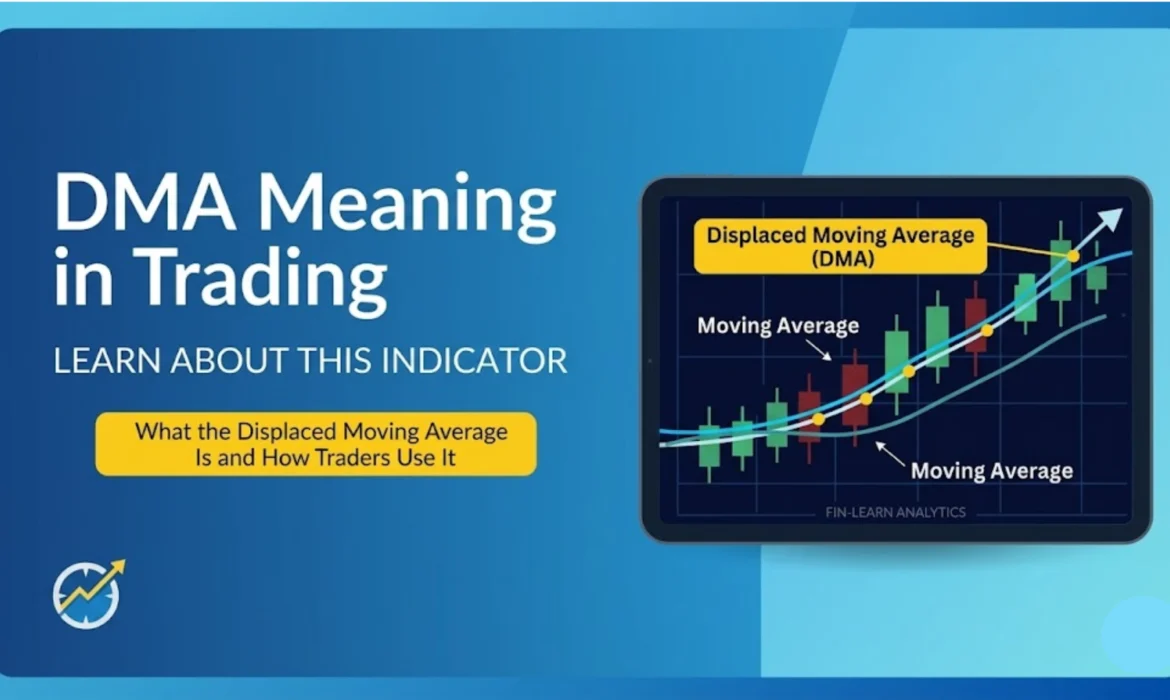
If you search “what is a DMA” in forex, you might feel confused. That is because DMA has two different meanings in trading.
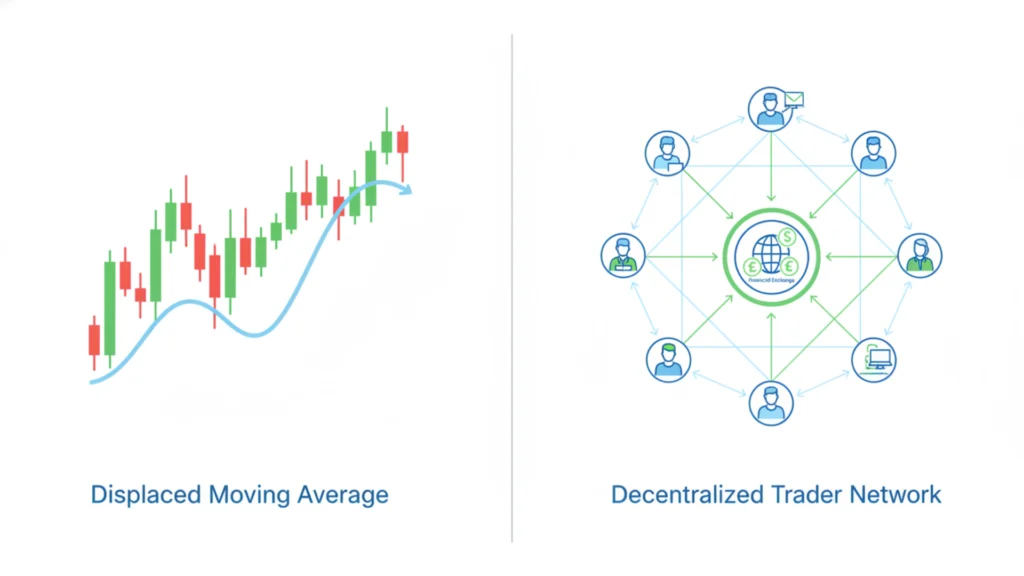
The first meaning is a chart tool called the Displaced Moving Average. It helps you see price trends on a chart. The second meaning is Direct Market Access, which is how your trade gets sent to the market.
Both are very useful. But they work in completely different ways. Let us break them down one by one so everything becomes clear.
DMA in Forex: Two Types Explained Simply
Type 1: Displaced Moving Average (Chart Tool)
This is a line on your chart. It is just like a normal moving average, but it is shifted forward or backward in time. Traders use it to predict where the price might go next.
Type 2: Direct Market Access (Execution Method)
This is about how your trade reaches the market. With dma in forex, your order goes straight to real buyers and sellers. No middleman. No delay.
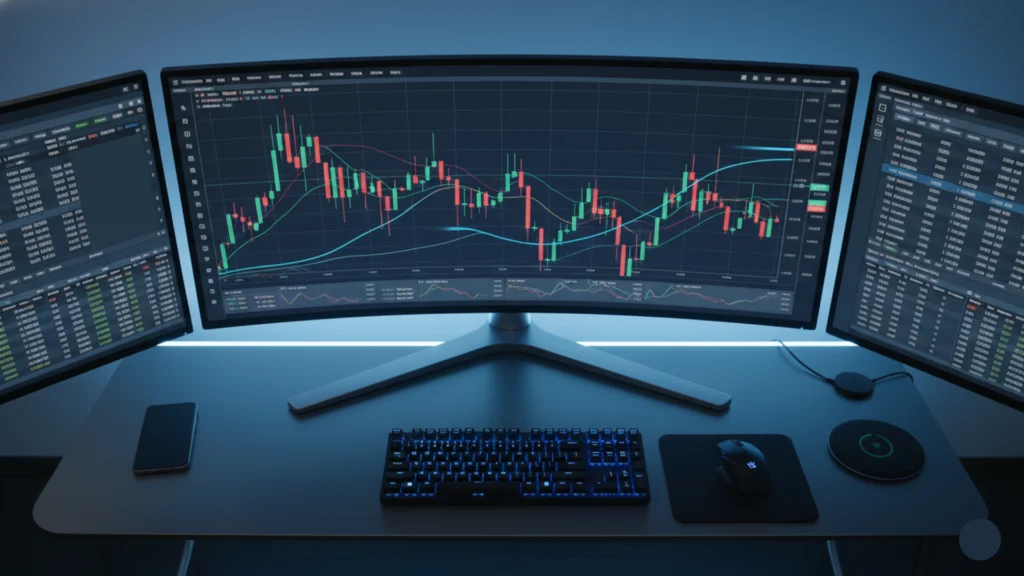
These two types are totally different things. One is a technical indicator in forex trading. The other is a trading method. Always check which one people mean when they say DMA.
Displaced Moving Average (DMA) Made Easy
A Displaced Moving Average is simply a moving average that has been moved. You take a regular moving average and shift it a few periods ahead or behind.
Think of it like this. Imagine drawing a line through past prices. Now slide that line forward by 5 days. That is your DMA. The displaced moving average explained in the simplest way is: a shifted version of a normal average line.
Why shift it? Because sometimes the regular line reacts too slowly. By shifting it, traders try to get better signals earlier.
Simple Example of DMA in Forex
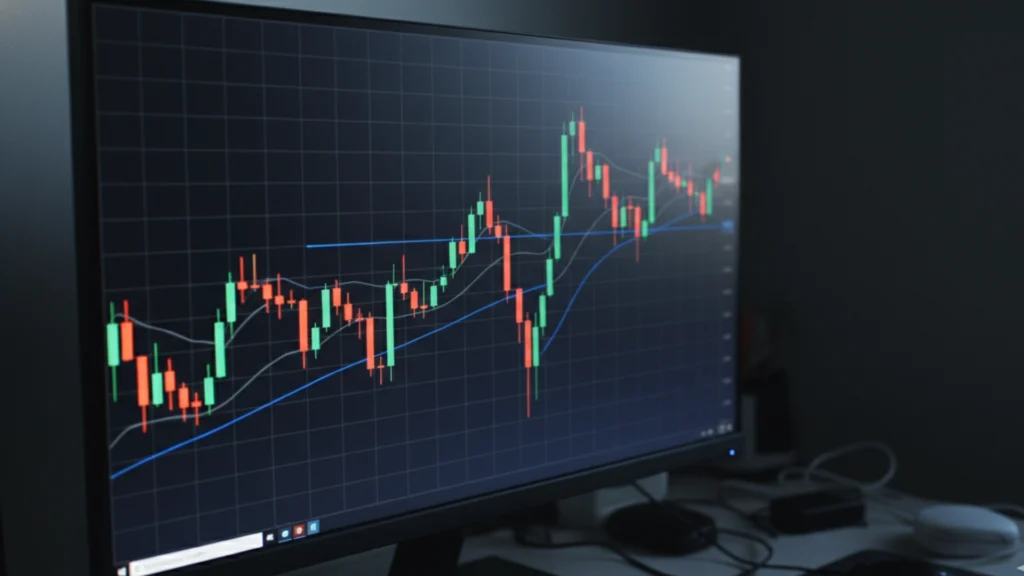
Let us use EUR/USD as an example. Say you add a 20-period moving average and shift it forward by 5 periods. Now you have your DMA line on the chart.
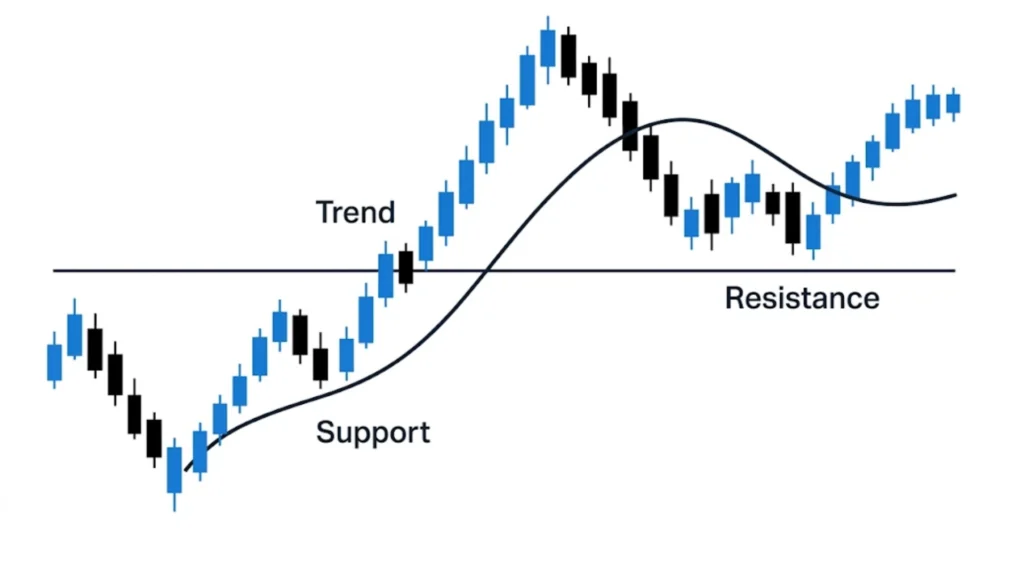
When the EUR/USD price moves above the DMA line, it is a sign that buyers are in control. When the price drops below the DMA line, sellers might be taking over.
This is a basic DMA trading example that even beginners can understand. You are just watching where the price is compared to the shifted line. Simple as that.
How to Use DMA on a Forex Chart
Adding and Setting Up the DMA Indicator
Here is how to read a DMA chart and set it up:
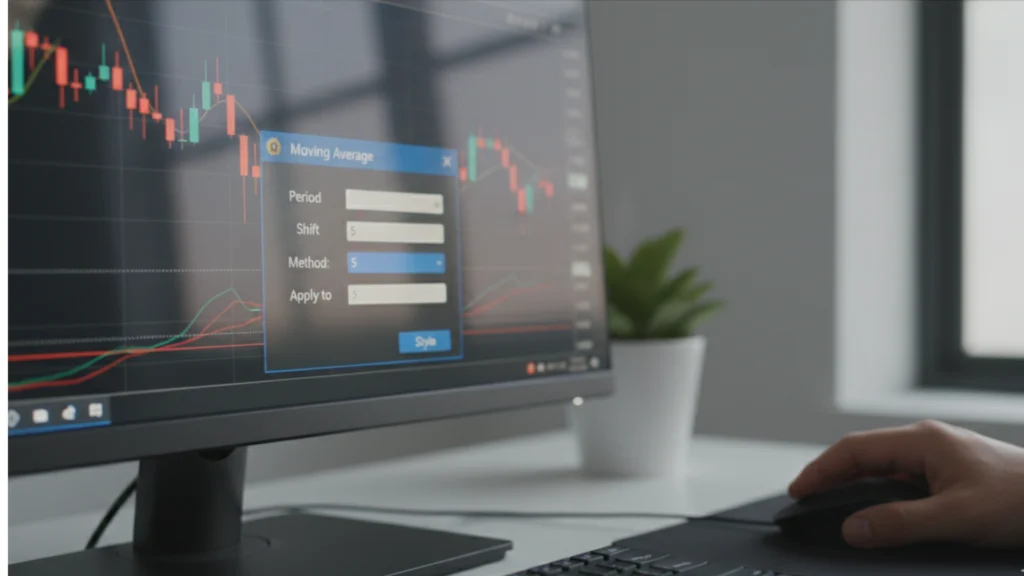
Step 1: Open your forex chart on any platform like MetaTrader 4 or 5.
Step 2: Add a Simple Moving Average (SMA) or Exponential Moving Average (EMA) to your chart.
Step 3: Go to the indicator settings and find the “Shift” box.
Step 4: Enter a number like 5 or 10 to shift the line forward.
Step 5: Watch how price interacts with the shifted line. When price crosses it, that is your signal.
These DMA settings for forex are easy to change. Start with small shifts until you find what works best for your trading style.
How DMA Helps You Find Trends
The DMA indicator in forex is great for spotting trends. Here is the simple rule:
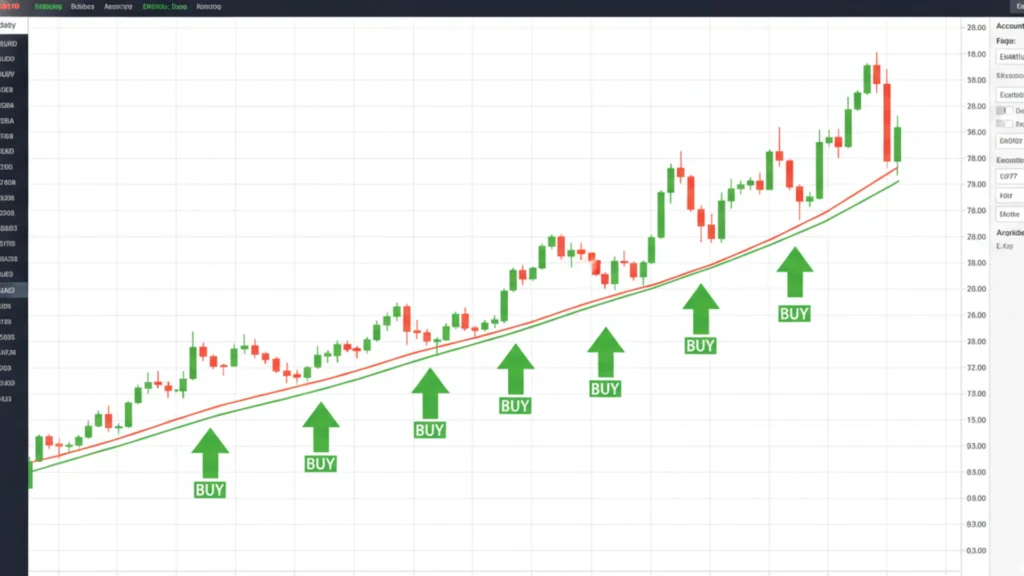
- Price above DMA line = Uptrend (prices are going up)
- Price below DMA line = Downtrend (prices are going down)
This is the core idea behind DMA indicator signals. You do not need to do any complicated math. Just look at where the price is sitting compared to the line.
This is also how moving average displacement meaning works in real trading — the shifted line acts like a dynamic support or resistance level.
Simple DMA Trading Strategy for Beginners
The DMA Crossover Strategy
Here is a best DMA strategy for beginners that is easy to follow:
- Buy Signal: When the price crosses above the DMA line, consider buying.
- Sell Signal: When the price crosses below the DMA line, consider selling.
This is the basic DMA crossover strategy. It works well on 1-hour or 4-hour forex charts. Always use a stop loss. Never risk more than you can afford to lose.
This DMA trading strategy is simple but powerful when used with other signals like support and resistance levels.
DMA vs Other Moving Averages (SMA, EMA)
DMA vs SMA vs EMA Comparison
Here is a simple comparison to understand the DMA vs SMA comparison and DMA vs EMA difference:
| Feature | SMA | EMA | DMA |
|---|---|---|---|
| Speed | Slow | Fast | Adjustable |
| Smoothness | Very smooth | Less smooth | Depends on shift |
| Best for | Long-term trends | Short-term signals | Custom signal timing |
| Complexity | Simple | Moderate | Simple with shift |
The simple moving average vs displaced moving average difference is just the time shift. EMA gives more weight to recent prices. DMA shifts any average to match the market better.
For forex trading with moving averages, DMA gives you more flexibility because you can adjust the shift to match different market conditions.
Common Mistakes When Using DMA
Avoid These DMA Errors
Even good tools can cause problems if used wrong. Here are the limitations of displaced moving average use:
Mistake 1 – Using DMA alone. Never rely only on one indicator. Always combine it with other tools like RSI or support levels.
Mistake 2 – Ignoring news events. Big news can break any technical signal. Always check the economic calendar.
Mistake 3 – Wrong shift settings. A shift that is too large or too small can give bad signals. Test your settings first on a demo account.
These are the most common reasons why beginners struggle with the DMA indicator in forex.
What Is Direct Market Access (DMA) in Forex?
Now let us talk about the second meaning. Direct market access forex means your trade order goes directly to the real market — banks, other traders, and liquidity providers — without a middleman.
What does DMA stand for in trading here? It stands for Direct Market Access. This is a professional-level trading method. You see the real prices from real liquidity providers DMA systems are connected to. No price manipulation. No dealing desk.
This is very different from trading with a regular broker who acts as the middleman. With DMA trading, you get real-time pricing DMA directly from the market.
How DMA Works with Forex Brokers
ECN Brokers and Order Execution
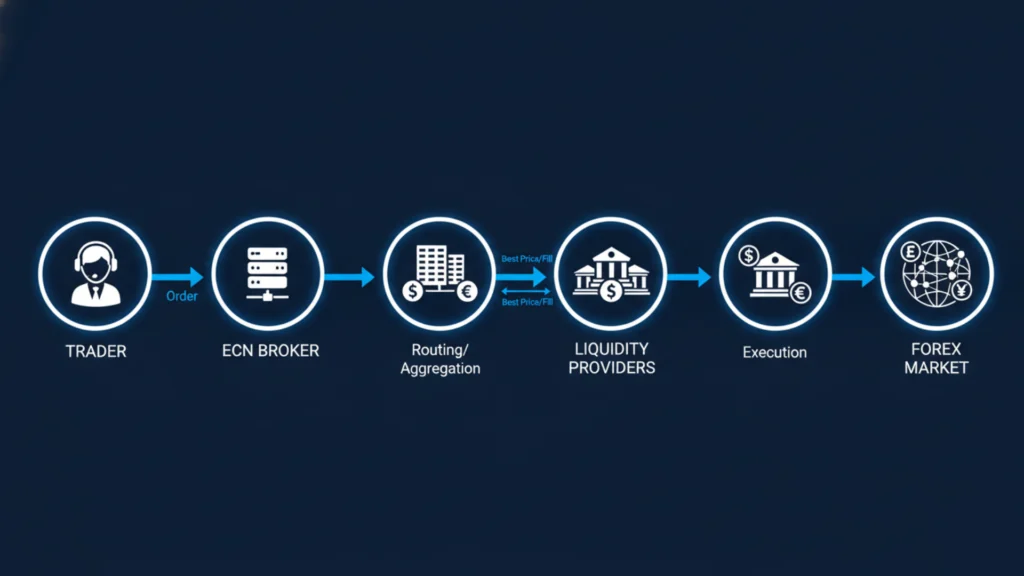
ECN vs DMA trading is closely related. ECN stands for Electronic Communication Network. ECN brokers use DMA execution in trading to connect you directly to the market.
Here is how it works simply:
- You place a trade order.
- Your broker sends it to liquidity providers.
- The order gets filled at the best available price.
This is called what is direct access trading in action. With DMA forex brokers, there is no dealer sitting between you and the market. Your spread and slippage in DMA trading are usually lower too.
DMA vs Market Maker Brokers
This is a very important comparison for all forex traders. Here is the simple truth about DMA vs market maker brokers:
- Market Maker Brokers create their own prices. They are the “middleman.” They take the other side of your trade.
- DMA Brokers connect you directly to real market prices. No conflict of interest.
With market makers, there can be price manipulation or wider spreads. With direct market access brokers, you get fair pricing from real liquidity sources.
Most professional traders prefer DMA forex brokers list options because of the transparency and speed they offer.
Benefits of DMA in Forex Trading
Why Traders Love Direct Market Access
The advantages of DMA in forex trading are very clear:
- Faster execution – Your trade goes through instantly with no dealer delay.
- Better prices – You see real market prices, not broker-adjusted ones.
- More control – You can set your own price using limit orders.
- Transparency – You know exactly where your order is going.
- Algorithmic trading DMA – DMA platforms support automated trading systems easily.
These benefits of direct market access make it a top choice for serious forex traders who want full control over their trades.
Risks of Using DMA
What to Watch Out For
Nothing is perfect. Here are the DMA trading risks you should know:
- Needs experience – DMA is not ideal for complete beginners. The speed can be overwhelming.
- Can be fast and risky – Prices move fast. Mistakes happen quickly.
- Minimum deposit requirements – Many DMA platforms require a larger deposit.
- Technology dependency – If your internet goes down, trades can go wrong.
Always ask yourself: is DMA good for beginners in your situation? If you are just starting, practice on a demo account first.
Which DMA Should You Use?
This section helps you decide. Here is a very simple guide:
- Beginner Trader? → Use the Displaced Moving Average (the chart indicator). It is safe, visual, and easy to learn.
- Experienced Trader? → Use Direct Market Access (the execution method). It gives you speed, better prices, and more control.
How to use DMA indicator as a beginner is much simpler than setting up a DMA broker account. Start small, learn well, then move up.
Best Settings for DMA in Forex
Recommended DMA Settings
Here are some simple and popular DMA settings for forex:
- 20 DMA – Good for short-term trades. Reacts faster to price changes.
- 50 DMA – Good for medium-term trends. More reliable signals.
- 200 DMA – Used by professional traders to spot long-term trends.
Start with the 20 DMA if you are new. It gives clear signals without too much noise. Always test any setting on a demo chart before going live.
When NOT to Use DMA
Avoid DMA in These Situations
The DMA indicator in forex does not work well in all conditions. Avoid using it when:
- The market is sideways – When prices are moving in a flat range, DMA signals are unreliable.
- Big news is coming – Before major economic news like NFP or interest rate decisions, avoid DMA signals.
- Spread is very high – In volatile conditions, DMA execution costs can rise sharply.
Knowing when not to trade is just as important as knowing how to trade.
Quick Summary (Easy Recap)
Here is everything you need to remember about what is a DMA:
- ✅ DMA has two meanings — a chart indicator and a trading access method.
- ✅ Displaced Moving Average is a shifted moving average used to spot trends.
- ✅ Direct Market Access lets you trade directly with the real market.
- ✅ DMA indicator signals help you find buy and sell opportunities.
- ✅ DMA brokers offer faster execution and better prices than market makers.
- ✅ Beginners should start with the DMA indicator, not direct market access.
Beginner-Friendly FAQ
Q: What is a DMA in simple words? A: DMA means either a shifted moving average line on your chart, or a way to trade directly with the market without a middleman.
Q: Is DMA better than EMA? A: It depends. EMA reacts faster to prices. DMA lets you control the timing. Both are useful in the right situation.
Q: What does DMA stand for in trading? A: It stands for either “Displaced Moving Average” (an indicator) or “Direct Market Access” (a trading method).
Q: Can beginners use DMA? A: Yes! Beginners can easily use the Displaced Moving Average on charts. Direct Market Access is better for more experienced traders.
Q: How do I choose a DMA broker? A: Look for ECN brokers with low spreads, fast execution, and good regulation. Check if they offer real-time pricing DMA and connect to strong liquidity providers.
Q: What are the best DMA settings for forex? A: Start with a 20-period DMA for short-term trading or a 50-period DMA for medium-term trends. Shift it by 5 to 10 periods and test on a demo account first.
