
Introduction to Smart Money Concepts
What Are Smart Money Concepts?
Smart money concepts are a way of reading the market the same way big banks and institutions do. Instead of using fancy indicators, you learn to read price movement directly. You follow the footprints of the big players. This method helps you understand why the market moves, not just how it moves.
What Does “Smart Money” Mean?
Smart money refers to large financial institutions, hedge funds, central banks, and professional traders. These players have billions of dollars. They move markets with their trades. Retail traders like you and me are the “dumb money” — not because we’re silly, but because we don’t have the same tools or information. Smart money trading means learning to think like these big players.
Why Smart Money Concepts Are Popular
Smart money concepts are popular because they actually explain market manipulation. They show why price does fake moves before going in the real direction. More and more traders are ditching old indicators and learning SMC. It works in forex, crypto, and stocks — making it one of the most flexible trading strategies today.

Smart Money Concepts Explained for Beginners
SMC in Simple Words (Easy Explanation)
Think of the market like a big game. Big banks need lots of buyers and sellers before they can fill their huge orders. So they push the price to areas where retail traders have placed stops. Then they go in the opposite direction. Smart money concepts teach you to spot these traps and trade with the big players instead of against them.
How Big Traders Move the Market
Big institutions can’t just buy or sell all at once. They need to spread out their orders. So they create fake breakouts to collect liquidity. They push price up to grab stop losses from short sellers. Then they sell. This is called a liquidity grab, and it’s a key part of institutional trading strategy.
Why Most Retail Traders Lose Money
Most retail traders follow indicators like RSI or MACD. These tools lag behind price. When a retail trader sees a signal, smart money has already moved. Smart money vs retail traders is an unfair game — unless you know the rules. Smart Money Concepts teaches you those rules.

How the Market Works (Simple Basics)
Market Structure (Uptrend and Downtrend)
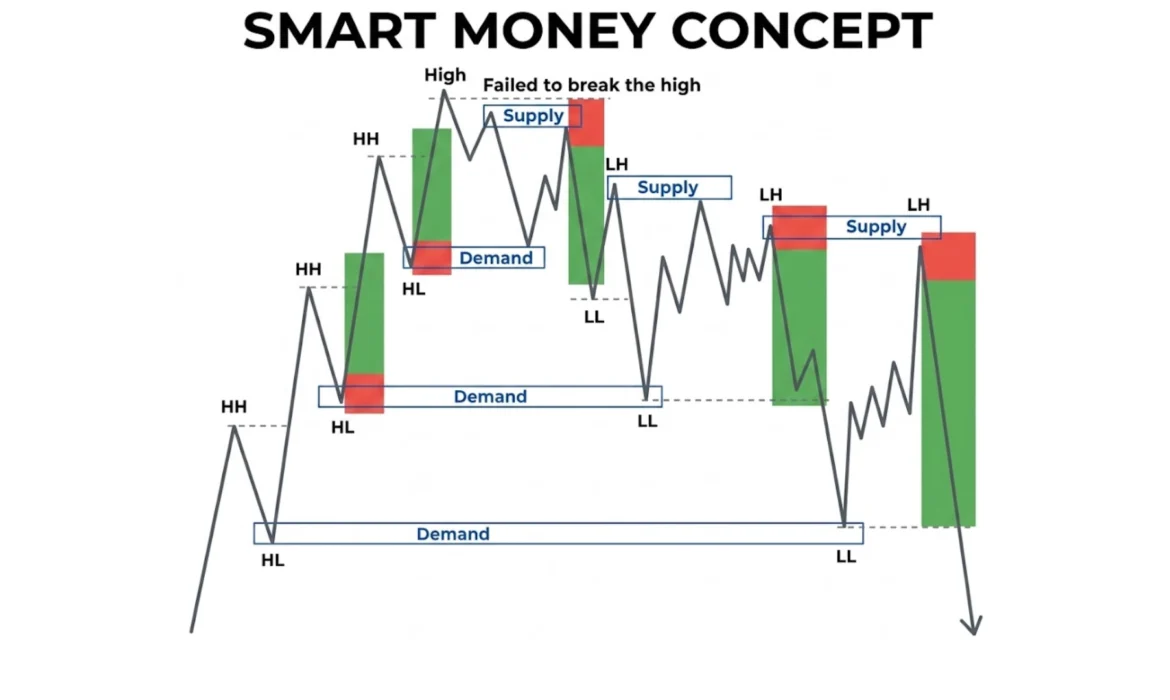
The market moves in waves. In an uptrend, price makes higher highs and higher lows. In a downtrend, it makes lower lows and lower highs. This is called smart money market structure. Understanding this helps you know which direction the big money is pushing price.
Who Controls the Market?
Banks and institutions control the market. They decide where price goes. They have access to huge amounts of data and capital. Retail traders react to price. Smart money creates price. This is the key difference.
What Is Liquidity in Trading?
Liquidity in trading means areas where lots of buy or sell orders are sitting. These are usually above recent highs or below recent lows. Smart money goes to these areas to fill their orders. Once they collect that liquidity, price reverses sharply.
Core Smart Money Concepts (Easy Guide)
Market Structure Basics
Higher Highs and Lower Lows
In an uptrend, each new high is above the last. Each new low is also above the previous low. This pattern tells you buyers are in control. In a downtrend, the opposite happens. Spotting this helps you trade in the right direction.
Break of Structure (BOS)
A break of structure trading signal happens when price breaks beyond a previous high or low. This confirms the trend is continuing. For example, if price is going up and breaks above the last high, that’s a BOS to the upside. It tells you the trend is still strong.
Change of Character (CHoCH)
Change of character trading is when the market shifts direction. If price was making higher highs but then breaks below a recent low, that’s a CHoCH. It signals that smart money may be switching direction. This is one of the most powerful signals in Smart Money Concepts.

Liquidity Concepts
Equal Highs and Equal Lows
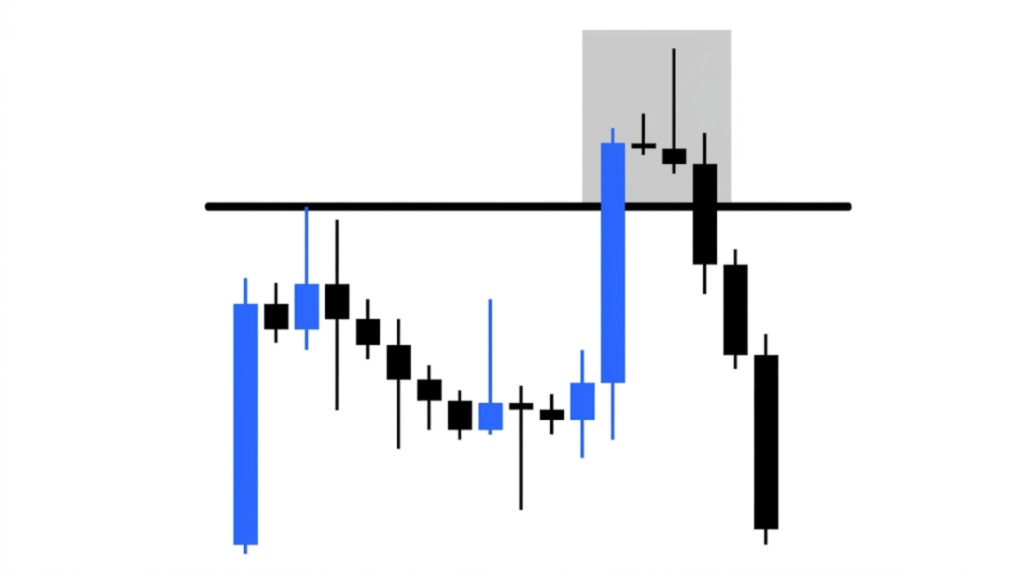
When price touches the same high or low level two or more times, it creates equal highs or equal lows. These are liquidity pools. Smart money often targets these zones because many retail traders place stops just above or below them.
Liquidity Sweeps
A liquidity grab trading strategy involves spotting when price briefly breaks above equal highs or below equal lows, then reverses fast. This sweep collects the stops. After the sweep, you look for a reversal entry. This is one of the cleanest setups in smart money trading.
Key Trading Zones
Order Blocks
An order block trading strategy focuses on the last candle before a big move. This candle marks where institutions placed their orders. When price comes back to test that area, it often reverses. Order blocks are like hidden support and resistance levels.
Supply and Demand Zones
Supply zones are areas where price dropped hard from. Demand zones are where price shot up from. These are similar to order blocks but slightly different in how they’re drawn. Both mark areas where institutional order flow trading happened.
Premium and Discount Zones
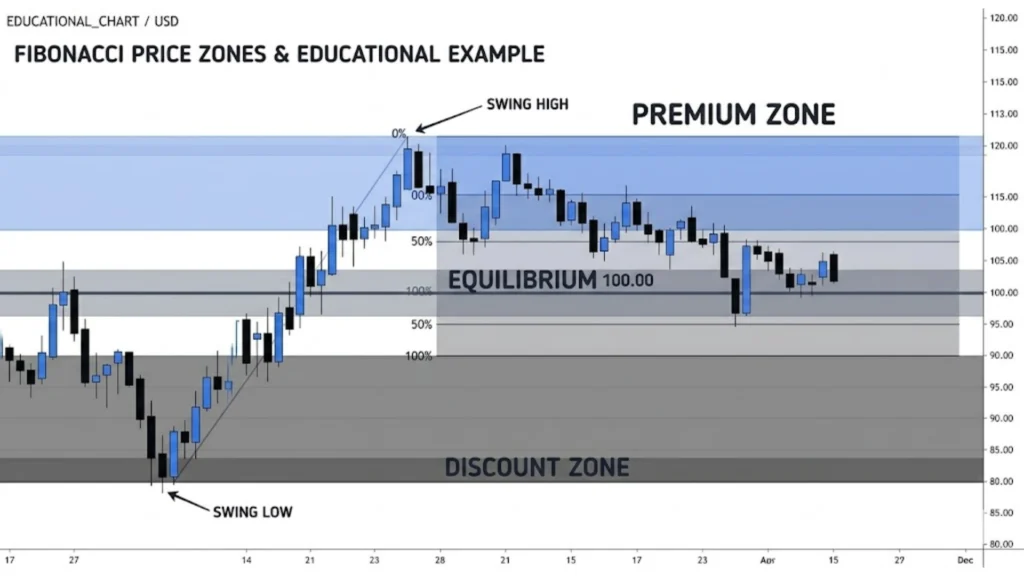
Premium and discount zones trading is based on a simple idea. The middle of any price range is the equilibrium. Above the middle is the premium zone — price is expensive. Below the middle is the discount zone — price is cheap. Smart money buys in discount and sells in premium.
Imbalances in the Market
Fair Value Gaps (FVG)
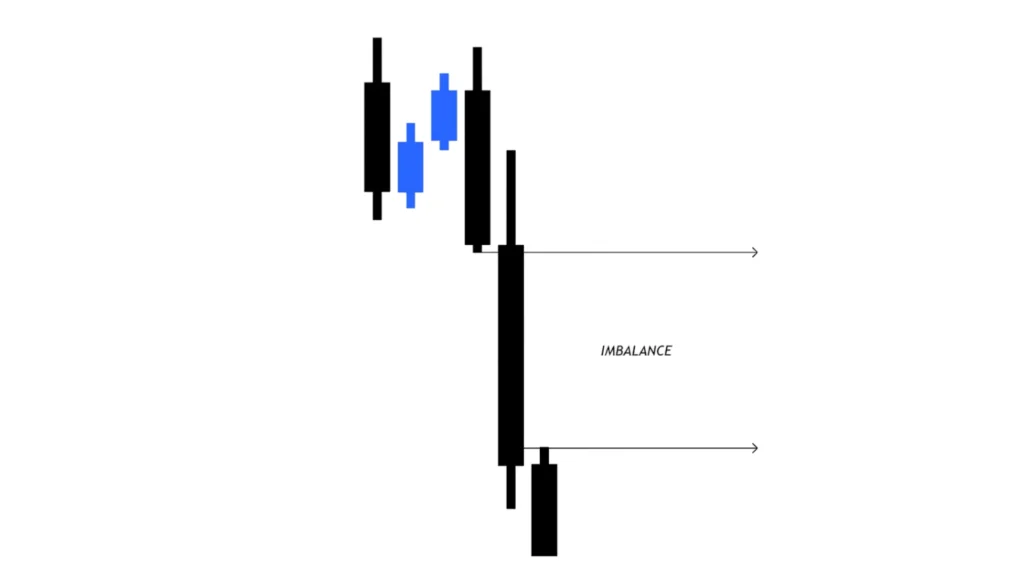
A fair value gap trading setup appears when price moves so fast that it leaves a gap between candles. This gap is called an imbalance. Price often comes back to fill this gap before continuing. Fair value gaps are great entry areas for smart money traders.
Price Rebalancing
Price rebalancing means price returning to fill an imbalance trading strategy area. Think of it like a rubber band. Price stretches far, then snaps back. After rebalancing, price continues in its original direction. This is a very reliable pattern.
What Smart Money Concepts Look Like on a Chart
How to Spot Market Structure
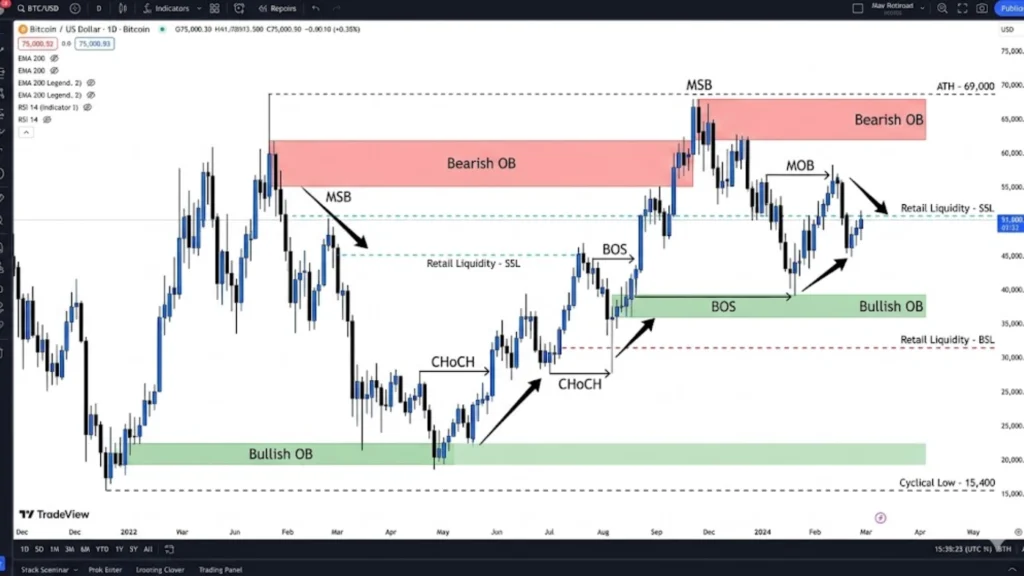
Look at the chart from left to right. Mark every swing high and swing low. Connect the dots. See if price is making higher or lower points. This gives you the overall trend and helps with smart money price action reading.
How to Identify Liquidity Areas
Look for equal highs or equal lows on the chart. Look for areas with many stop orders. These are usually just above resistance or below support levels. Mark these with a simple horizontal line. These are your liquidity targets.
How to Mark Order Blocks Correctly
Find the last bearish candle before a strong bullish move, or the last bullish candle before a strong bearish move. That candle is your order block. Draw a box around it. When price returns to that box, watch for a reaction.
Step-by-Step Smart Money Trading Strategy
Step 1: Identify the Trend
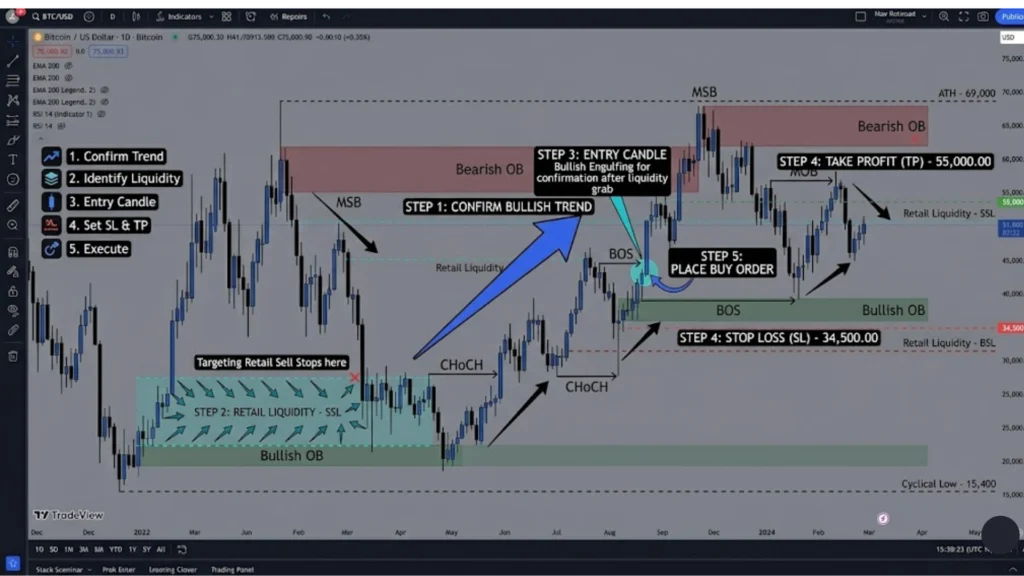
Start on a higher timeframe like the daily or 4-hour chart. Determine if price is going up or down using market structure. Only trade in the direction of the trend. This is the foundation of any smart money trading strategy explained properly.
Step 2: Mark Liquidity Zones
Look for areas where price has made equal highs or equal lows. Also mark any previous major highs and lows. These are the targets smart money will likely move toward.
Step 3: Find Key Entry Areas
Drop down to a lower timeframe. Look for order blocks, fair value gaps, or demand zones in the direction of the trend. These are your potential entry areas.
Step 4: Wait for Confirmation
Don’t enter right away. Wait for price to sweep a liquidity level, then show a CHoCH or BOS on the lower timeframe. This confirmation tells you smart money has entered. Now it’s time to join them.
Step 5: Execute the Trade
Enter after the confirmation. Place your stop loss below the order block or above the liquidity sweep. Set your take profit at the next liquidity area. This is the how to trade smart money concepts method in action.
Simple Entry Models for Beginners
Confirmation Entry vs Anticipation Entry
A confirmation entry waits for price to sweep liquidity and then show a CHoCH before entering. It’s safer. An anticipation entry gets in earlier, before the confirmation happens. Beginners should always use confirmation entries. It reduces risk and improves accuracy.
One Easy Smart Money Concepts Setup for Beginners
Here is a simple smart money concepts for beginners setup. Wait for price to sweep a previous high or low. Then look for a fair value gap or order block on the 15-minute chart. Wait for a bullish or bearish engulfing candle. Enter on the close of that candle. Simple and clean.
Stop Loss and Take Profit (Easy Method)
Where to Place Stop Loss
Always place your stop loss below the order block or beyond the liquidity sweep candle. This protects you if the setup fails. Smart money risk management starts with a logical stop loss placement, not a random number.
How to Set Take Profit Using Liquidity
Set your take profit at the next liquidity level. Look for equal highs above if you’re in a long trade, or equal lows below if you’re in a short trade. This is where smart money will be selling or buying, which could reverse price.
Understanding Risk-to-Reward Ratio
Aim for at least 1:2 risk-to-reward. This means for every $1 you risk, you aim to make $2. This way, even if you lose more trades than you win, you can still be profitable. Good risk-to-reward is the backbone of smart money trading.
Multi-Timeframe Analysis (Made Simple)
Why Multi-Timeframe Analysis Matters
Multi-timeframe analysis trading helps you see the full picture. The higher timeframe shows the big trend. The lower timeframe shows your entry point. Using only one timeframe is like looking at a map with only one zoom level — you miss important details.
The Top-Down Approach (Easy Steps)
Start from the daily chart. Identify the trend. Move to the 4-hour chart. Mark key zones. Drop to the 1-hour or 15-minute chart. Find your entry. This top-down approach is used by most smart money traders around the world.
Best Timeframes for Beginners
For smart money concepts forex, use the daily, 4-hour, and 15-minute charts. For smart money concepts crypto, the same works well. For smart money concepts stocks, use the weekly, daily, and 1-hour charts. Keep it simple — three timeframes are enough.
Best Trading Sessions for SMC
London Session Behavior
The London session starts at 8 AM GMT. It’s one of the most active sessions. Price often sweeps Asian session highs or lows in the first hour. This is called a London liquidity sweep. It creates great SMC setups.
New York Session Behavior
The New York session starts at 1 PM GMT. It often reverses the London session move or creates a second wave in the same direction. Volatility is high. Smart money is very active during this time.
Best Time to Trade
The best times to trade using Smart Money Concepts are during the London open (8–10 AM GMT) and the New York open (1–3 PM GMT). Avoid trading during low volume conditions or just before major news events.
Advanced Smart Money Concepts (Simple Explanation)
Breaker Blocks
A breaker block is a failed order block. When price breaks through an order block instead of respecting it, that old order block becomes a breaker. Price often comes back to test it from the other side. These are advanced smart money concepts but very powerful.
Mitigation Blocks
A mitigation block is where smart money comes back to fix a loss. When institutions get stuck in bad trades, they return to the area to “mitigate” their position. Price often reacts strongly at these levels.
Inducement
Inducement is a fake setup designed to lure retail traders in early. Smart money creates a move that looks like a breakout. Retail traders enter. Then price reverses and takes their stops. Knowing about inducement helps you avoid being trapped.
SMT Divergence
SMT divergence happens when two correlated markets (like EUR/USD and GBP/USD) move differently. One makes a new high, the other doesn’t. This shows weakness and signals a possible reversal. It’s one of the best advanced SMC confirmation tools.
Real Trade Example (Step-by-Step)
Finding the Setup
On the 4-hour EUR/USD chart, price is in an uptrend. You spot equal highs that haven’t been swept. You wait for price to pull back and form an order block in the discount zone. A fair value gap also forms nearby.
Entry and Stop Loss
Price sweeps the equal highs, then quickly drops back. On the 15-minute chart, a CHoCH forms. You enter at the order block. Your stop loss goes below the liquidity sweep candle. Risk is 20 pips.
Taking Profit
Your take profit targets the next liquidity area — a previous high. That’s 60 pips away. Your risk-to-reward is 1:3. The trade hits target. Clean, simple, and effective. This is how smart money trading examples look in real life.
Common Beginner Mistakes in SMC
Marking Too Many Zones
Beginners often mark 20 order blocks on one chart. This creates confusion. Mark only the freshest, most relevant zones. Less is more in Smart Money Concepts.
Ignoring Higher Timeframes
Entering trades based only on the 5-minute chart is a common mistake. Always check higher timeframes first. Ignoring them leads to trading against the trend.
Entering Too Early
Entering before confirmation is a fast way to lose money. Wait for the CHoCH. Wait for the candle to close. Patience is a key part of smart money trading psychology.
Overtrading
Not every day has a perfect setup. Smart money traders wait. They might trade only two or three times per week. Quality over quantity always wins.
Risk Management (Simple Rules)
Risk Small, Win Big
Never risk more than you can afford to lose. A small loss doesn’t hurt much. A big loss can wipe out your whole account. Keep risks small and let winners run.
How Much to Risk Per Trade
The golden rule is to risk only 1–2% of your account per trade. If you have $1,000, risk no more than $10–$20 per trade. This keeps you in the game for the long run.
Protecting Your Trading Account
Use stop losses on every trade. Never move your stop loss to make it wider. Follow your plan. Protecting capital is more important than making profits.
Trading Psychology (Stay in Control)
Fear and Greed in Trading
Fear makes you exit trades too early. Greed makes you hold too long. Both hurt your results. Smart money trading psychology is about staying calm and trusting your plan.
Handling Losing Trades
Losses are normal. Even the best traders lose. What matters is how you respond. Don’t chase losses. Take a break if needed. Come back with a clear head.
Staying Patient and Disciplined
Discipline means only taking A+ setups. Patience means waiting for them. Most days, the best trade is no trade at all. These two qualities separate successful traders from struggling ones.
Best Tools and Platforms for SMC
Charting Platforms
TradingView is the best platform for SMC traders. It’s free, clean, and powerful. You can mark zones, draw order blocks, and analyze all timeframes easily. MetaTrader 4 or 5 also works for forex.
Basic Setup for Beginners
Keep your chart clean. Use just candlestick charts. Add horizontal lines for liquidity. Use boxes for order blocks. No cluttered indicators needed. A clean chart helps you think clearly.
Do You Need Indicators?
No. Smart money concepts indicators are optional. Some traders use volume tools or session indicators. But core SMC is based on pure price action. You don’t need anything fancy to start.
Smart Money Concepts vs Other Trading Methods
SMC vs Price Action
Price action trading reads candles and patterns. Smart Money Concepts goes deeper — it explains why those patterns form. SMC is basically an evolved version of price action. They work great together.
SMC vs Indicator Trading
Indicator trading uses tools like MACD, RSI, or Bollinger Bands. These lag behind price. SMC uses raw price data. It’s forward-thinking, not reactive. Most professional traders prefer price-based methods.
Which One Is Better?
SMC is better for understanding market manipulation. But the best strategy is one you understand and trust. Some traders blend SMC with indicators for extra confirmation. Choose what makes sense to you.
When NOT to Use Smart Money Concepts
Sideways Markets
When price is ranging with no clear structure, SMC setups are unreliable. Wait for a clear trend to form before trading.
News Events
Big news like central bank decisions can cause wild price movements. Avoid entering trades just before or during major news events. Price can spike both ways with no logical structure.
Low Volume Conditions
During holidays or off-peak hours, volume is low. Price can be choppy and unpredictable. SMC works best when institutions are actively trading.
How to Practice Smart Money Concepts
Using a Demo Account
Start on a demo account. Apply everything you learn with zero real money at risk. Practice marking zones, identifying structure, and executing trades. Spend at least one to two months here.
Backtesting Strategies
Go back in chart history and test your setup. See how many times it worked. This builds confidence. Backtesting is one of the best free education tools available.
Replay Practice
TradingView has a bar replay feature. Use it to simulate live trading on past data. It builds your decision-making skills under realistic conditions. This is like a flight simulator for traders.
Smart Money Concepts Glossary (Simple Terms)
BOS, CHoCH, FVG Explained
- BOS (Break of Structure): Price breaks beyond a previous high or low, confirming the trend continues.
- CHoCH (Change of Character): Price reverses structure, signaling a possible trend change.
- FVG (Fair Value Gap): A price gap or imbalance left behind by fast price movement.
Order Blocks and Liquidity
- Order Block: The last candle before a major move; where institutions placed big orders.
- Liquidity: Areas with lots of buy/sell orders, usually above highs or below lows.
Other Important Terms
- Premium Zone: Price is expensive; smart money sells here.
- Discount Zone: Price is cheap; smart money buys here.
- Inducement: A fake move designed to trap retail traders.
- Breaker Block: A failed order block that flips to the opposite side.
Frequently Asked Questions (FAQs)
Does Smart Money Concepts Really Work?
Yes, SMC works — but only with proper practice and discipline. It won’t make you rich overnight. It’s a framework for understanding market behavior. Thousands of traders around the world use it successfully in forex, crypto, and stocks.
Is SMC Good for Beginners?
SMC can feel overwhelming at first. But if you start with the basics — market structure, liquidity, and order blocks — it becomes manageable. This smart money concepts tutorial-style guide is a great starting point for any beginner.
Which Market Is Best for SMC?
SMC works in all markets. Smart money concepts forex is the most popular. Smart money concepts crypto is growing fast. Smart money concepts stocks also work well, especially with major indices. Start with one market and master it.
How Long Does It Take to Learn SMC?
Most traders start understanding the basics in one to three months. Getting consistently profitable takes six months to a year or more. There are no shortcuts. Be patient and keep learning every day.
Final Summary
Key Takeaways
Smart money concepts teach you to trade like the big players. You learn to read market structure, identify liquidity, use order blocks, and find high-probability entries. SMC works in forex, crypto, and stocks. It’s based on price action and institutional trading strategy, not lagging indicators.
The most important ideas are: follow the trend, wait for liquidity sweeps, enter at order blocks or fair value gaps, use proper risk management, and control your emotions.
Simple Action Plan for Beginners
- Learn market structure first.
- Understand what liquidity is and where it sits.
- Practice marking order blocks on a clean chart.
- Use a demo account for three months.
- Backtest your setups on past data.
- Only trade during London and New York sessions.
- Risk 1–2% per trade.
- Be patient. Wait for A+ setups only.
Smart money concepts are not magic. They are a clear, logical way to understand how markets really work. Start simple, stay consistent, and always keep learning.
