
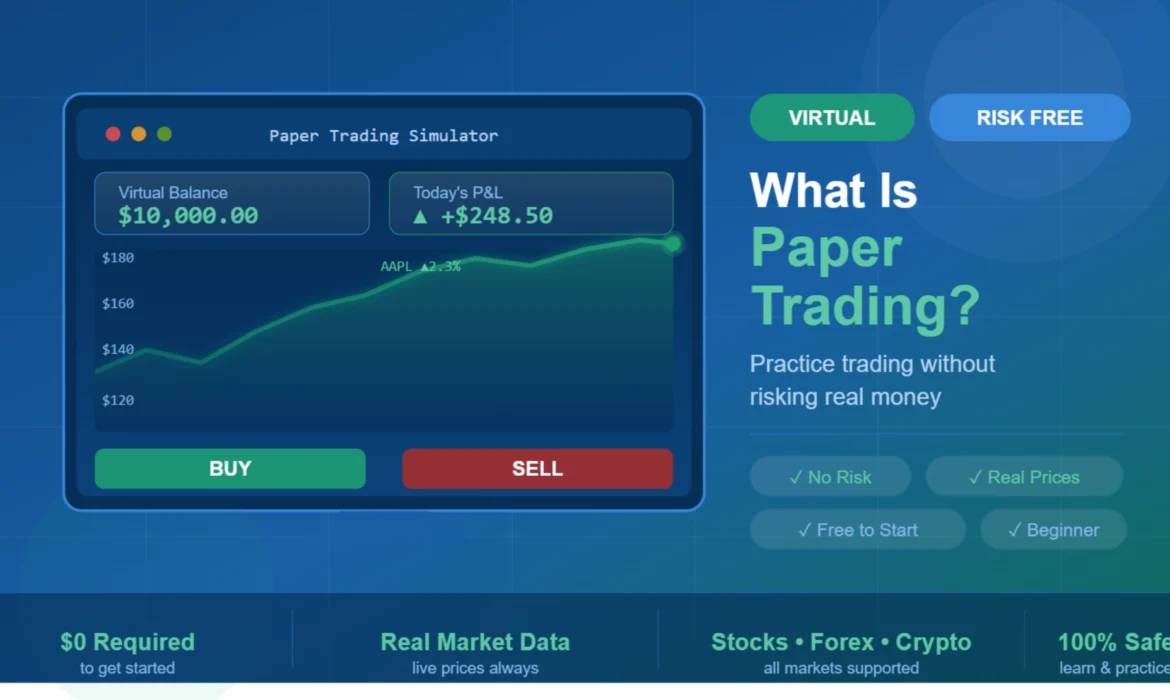
What Is Paper Trading?
Paper trading means practicing buying and selling stocks, forex, or crypto without using real money. You use fake or virtual money to trade in a real market. Think of it like a flight simulator for pilots — you learn all the skills without any real danger.
In simple words, what is paper trading? It is a safe way to learn trading without risking a single rupee or dollar.
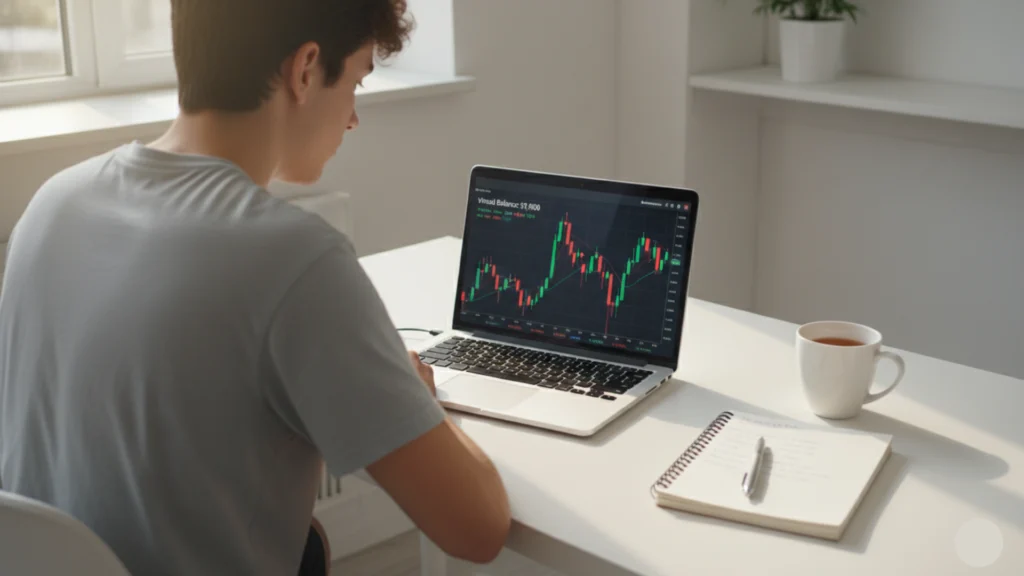
Paper Trading in One Simple Example
Meet Ali. He is 20 years old and wants to learn stock trading. But he is scared of losing money.
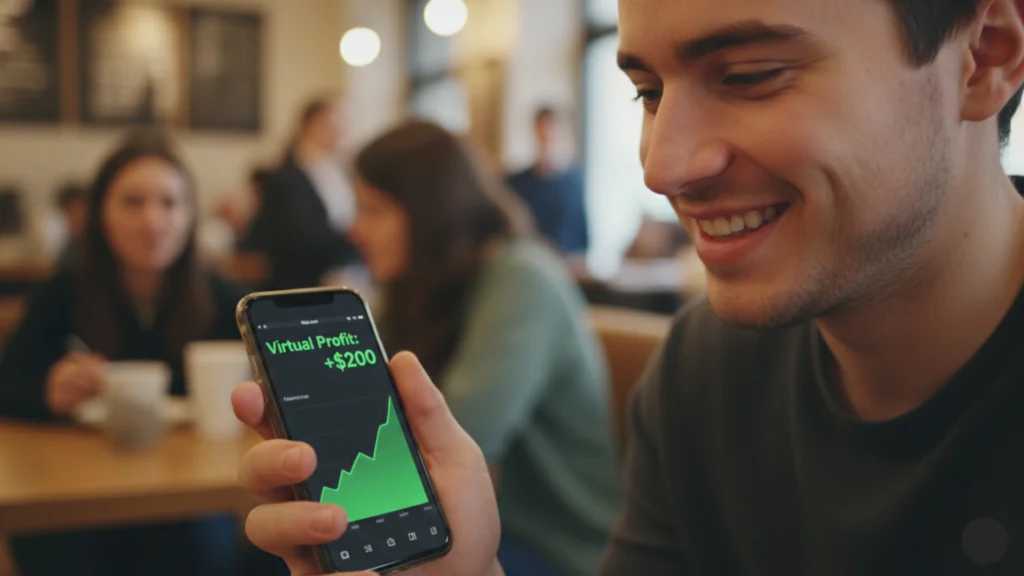
So Ali opens a demo trading account on a free app. The app gives him $10,000 in virtual money. He watches Apple’s stock price go up. He “buys” 10 shares at $150 each. A few days later, the price goes to $170. He “sells” and makes a $200 virtual profit.
No real money was used. No real money was lost. But Ali learned how buying and selling works. That is exactly what a paper trade is — real experience, fake money.
Why Do People Use Paper Trading?
People use paper trading for three big reasons:
It helps beginners learn. The stock market can be confusing. Paper trading lets you understand how things work — without any pressure.
There is no risk of losing money. You use virtual money. So even if you make a bad trade, you lose nothing real. This makes it the safest way to learn trading for beginners.
It builds confidence. When you practice regularly, you start to feel more comfortable. You stop feeling scared. You start making better decisions.
This is why virtual trading for beginners is always recommended before jumping into real markets.

How Does Paper Trading Work?
Paper trading works in a very simple way:
- You get virtual money (like $10,000 or $50,000 fake dollars)
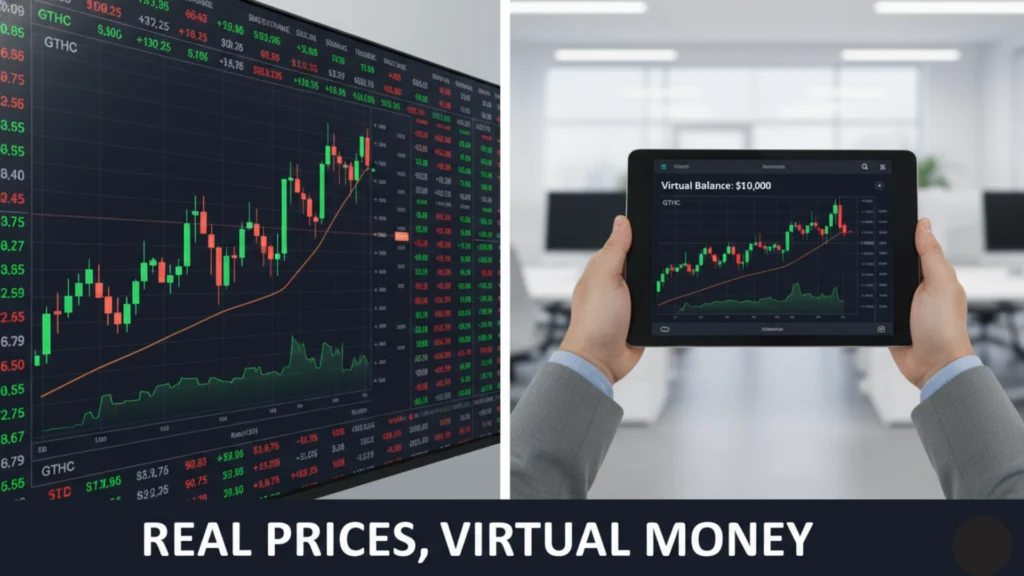
- The platform uses real market prices from actual stock, forex, or crypto markets
- You practice buying and selling just like a real trader
- Your profits and losses are calculated — but with fake money
So the market is real. The prices are real. Only the money is not real. This is what makes a simulated trading platform so powerful for learning.
Step-by-Step Guide to Start Paper Trading
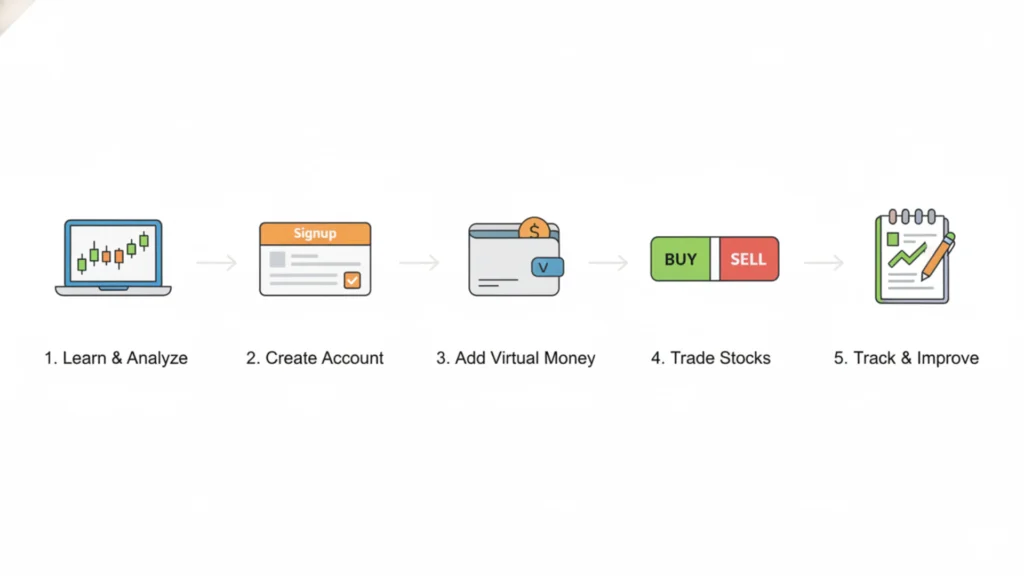
Here is how you can start paper trading today — in just five easy steps:
Step 1: Choose a Platform
Pick a good simulated trading platform or stock market simulator. Some popular ones are Thinkorswim, Webull, or TradingView.
Step 2: Create a Free Demo Account
Sign up for a free demo account. Most platforms do not need your credit card or real money.
Step 3: Add Virtual Money
The platform will give you virtual funds. Some give $10,000, others give $100,000 in fake money to practice with.
Step 4: Start Placing Trades
Now start buying and selling. Pick stocks, forex pairs, or crypto. Watch what happens. Learn from every trade.
Step 5: Track Your Results
Keep a simple journal. Write down what you bought, why you bought it, and what happened. This is the fastest way to improve.
Best Free Paper Trading Platforms for Beginners
There are many great free paper trading apps available. Here are a few worth knowing:
- Thinkorswim by TD Ameritrade — Great charts, very detailed, loved by serious beginners
- Webull — Clean design, easy to use, good for stock trading practice
- TradingView — Best for chart lovers, supports stocks, forex, and crypto
- Investopedia Stock Simulator — Perfect for absolute beginners learning the basics
- eToro Demo Account — Good for paper trading in forex and crypto
All of these are free or very low cost. They give real-time data so your practice trading without money feels as close to real as possible.
Key Features of Paper Trading
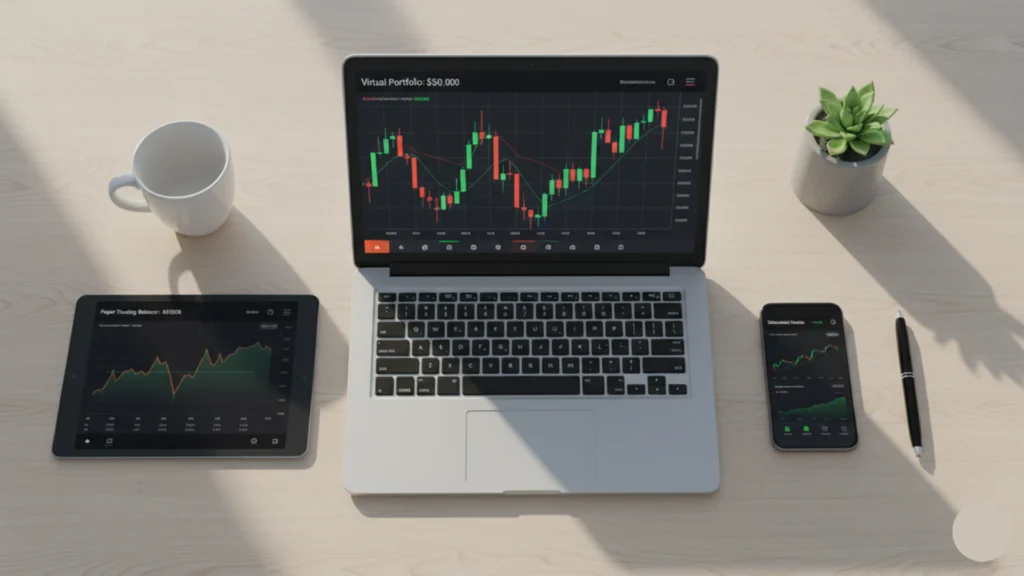
A good online trading simulator will always have these features:
- Virtual money — Fake funds to practice with
- Real-time charts — Live prices from the real market
- Risk-free practice — No real money at stake
- Trade tracking — History of all your practice trades
These features make the simulated stock market experience as close to real trading as possible.
Benefits of Paper Trading (Pros)
Here is why paper trading is so helpful:
Safe learning environment. You can make mistakes freely. No one loses real money. This is the best way to learn.
No financial risk. You will not go into debt. You will not lose your savings. It is completely risk-free trading practice.
Good for testing strategies. Want to try a new trading strategy? Test it in paper trading first. See if it works before using real money.
Helps build trading skills. The more you practice, the better your decision-making becomes. Skills grow with experience.
Limitations of Paper Trading (Cons)
Paper trading is great, but it is not perfect. Here are the real limitations of paper trading:
No real emotions. When real money is on the line, you feel fear and greed. These emotions do not exist in paper trading. So you may behave differently when you switch to real trading.
Can feel too easy. Since there is no risk, beginners sometimes take wild bets they would never take with real money. This builds bad habits.
Not exactly like real trading. Order fills, slippage, and broker fees are different in real accounts. Paper trading skips many of these real-world challenges.
Paper Trading vs Real Trading
| Feature | Paper Trading | Real Trading |
|---|---|---|
| Money | Virtual | Real |
| Risk | None | High |
| Emotions | Low | High |
| Learning | Good | Intense |
Paper trading vs real trading — the biggest difference is emotion. In real trading, every loss hurts. Every gain excites you. Those feelings change your decisions. Paper trading cannot teach you that part fully.
Paper Trading vs Demo Account (Clear Difference)
Many beginners ask: are paper trading and demo accounts the same thing?
Yes — mostly. Both use virtual money and real market prices. The only small difference is the name. Brokers often call it a “demo account.” Traders usually call it “paper trading.” They work the same way and serve the same purpose.
So if someone says demo account trading explained, they are talking about the same thing as paper trading.
Common Mistakes Beginners Make in Paper Trading
Watch out for these common mistakes:
Not taking it seriously. Some people treat it like a game. But if you do not practice like it is real, you will not learn properly.
Trading randomly. Clicking buy and sell without any reason is not practice. It is just noise. Always have a reason for every trade.
Not learning from mistakes. The biggest value of paper trading is learning from errors. If you ignore your losses, you waste your practice time.
Tips to Get the Best Results from Paper Trading
Follow these paper trading tips for beginners to grow faster:
- Treat it like real money. Act as if every dollar matters. This builds good habits.
- Keep a trading journal. Write down every trade and what you learned.
- Practice daily. Even 30 minutes a day makes a big difference over time.
- Learn from losses. Every bad trade teaches you something. Do not ignore them.
These simple habits can turn beginner trading practice into real skill.
How Long Should You Practice Paper Trading?
There is no fixed rule. But here is a simple guide:
- Minimum 1–3 months for basic understanding
- 3–6 months if you want to test proper strategies
- Longer if needed — consistency matters more than speed
Do not rush. The goal is to feel comfortable and confident — not to finish fast.
When Should You Switch to Real Trading?
You are ready for real trading when:
- You understand the basics of how markets work
- You are consistent — making good trades more often than bad ones
- You can manage risk — you know how much to risk per trade
- You have a simple trading plan you follow every day
Do not switch too early. Is paper trading useful? Yes — but only if you take the time to really learn from it.
Is Paper Trading Real or Fake?
Great question. Here is the honest answer:
- The prices are real — taken from live markets
- The money is not real — it is virtual and has no value
- The experience is partly real — you learn skills, but not emotions
So paper trading sits in the middle. It is real enough to teach you skills, but not real enough to prepare you for the emotional side of trading.
What Makes a Good Paper Trading Platform?
A great simulated trading platform should have:
- Easy-to-use interface — no confusing buttons
- Real market data — live prices, not delayed
- Fast order execution — trades should fill quickly
- Free or low cost — beginners should not pay a lot to practice
If a platform has all four of these, it is a great choice for practice day trading without money.
Mini Checklist Before You Start Real Trading
Before moving to real money, ask yourself:
- ✅ Do I understand how buying and selling works?
- ✅ Do I have a simple trading strategy I follow?
- ✅ Can I control my emotions during losses?
- ✅ Am I consistent in my practice results?
- ✅ Do I know how to manage risk and use stop-losses?
If you can say yes to all five — you are ready.
Frequently Asked Questions (FAQs)
Question: Is paper trading free?
Answer: Yes! Most free paper trading apps and platforms offer demo accounts at no cost. You do not need to pay or deposit real money.
Question: Can I make real money from paper trading?
Answer: No. Paper trading uses virtual money only. You cannot withdraw any profits. But the skills you build can help you make real money later.
Question: Is it good for beginners?
Answer: Absolutely. Paper trading for beginners is the safest and smartest way to start learning. It removes the fear of losing money.
Question: Is it enough to learn trading?
Answer: It is a great start, but not 100% complete. You still need real trading experience to understand emotions and real market behavior.
Conclusion
So, what is paper trading? It is simply practicing trading with virtual money in a real market. It is safe, free, and perfect for beginners.
You learn how markets work. You test your strategies. You build your confidence. And you do all of this without risking a single dollar.
If you are new to trading, start with a demo trading account today. Pick a platform, get your virtual money, and start practicing. The more you practice, the more confident you will become.
Take your time. Be patient. Learn from every trade. When you are ready — and only when you are truly ready — take the next step into real trading.
The market will always be there. Make sure you are prepared when you arrive. 🚀
